February 2026 motoring law changes: what UK drivers need
UK motorists face key February 2026 law changes: tougher driving-test booking rules, EV Vehicle Excise Duty updates, and wider speed limiter rollout.

Amara Okafor
5 May 2026
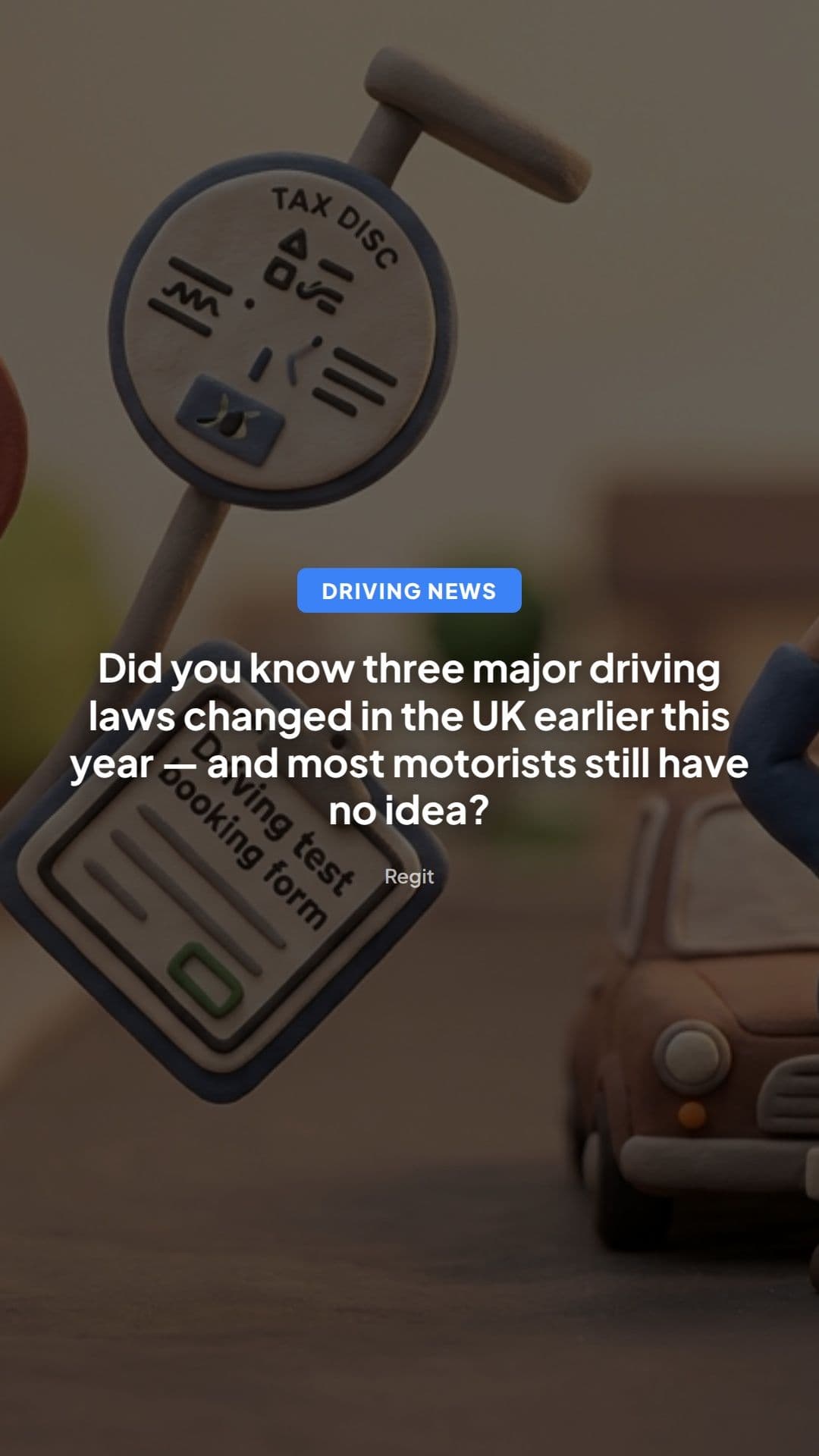
UK Motorists Face Major Law Changes in February 2026: What You Need to Know
The Road Is Shifting Beneath Your Wheels
If you thought 2025 was a busy year for motoring legislation, brace yourself. February 2026 marks one of the most significant packages of driving law updates in recent memory — a cluster of changes that will affect how you book your driving test, how your electric vehicle is taxed, and how the car itself responds when you press the accelerator. These aren't minor tweaks buried in a government gazette. They represent a fundamental shift in how the UK regulates road use, and millions of drivers will feel the impact whether they realise it or not.
Reported by Regit, the February 2026 updates cover three core areas: revised driving test booking procedures, updated vehicle tax treatment for electric vehicles, and the broader rollout of Intelligent Speed Assistance (ISA) technology. Let's break down what each change actually means — not just in headline terms, but in practical, legal, and financial reality.
What's Actually Changing: The Core Story
Driving Test Booking Reforms
The DVSA has long struggled with a backlog crisis that left learner drivers waiting months for test slots, while a grey market of third-party resellers profited by bulk-buying appointments and flogging them at a premium. The February 2026 reforms introduce stricter booking rules designed to close that loophole.
Under the updated framework, test bookings are more tightly linked to individual learner identities, and the resale of test slots — already technically a violation of DVSA terms — faces more robust enforcement mechanisms. Waiting times have been a genuine scandal: at peak points in 2023 and 2024, some learners faced waits exceeding six months, pushing many towards unofficial channels. These reforms are long overdue.
EV Vehicle Tax Updates
April 2025 already brought Electric Vehicles into the Vehicle Excise Duty (VED) net for the first time, ending years of exemption. The February 2026 updates refine how certain EVs are categorised and taxed, particularly around the Expensive Car Supplement — the additional annual charge applied to vehicles with a list price above £40,000. Given that many popular EVs sit at or above that threshold, this adjustment has real financial consequences for hundreds of thousands of drivers.
ISA and Speed Limiter Expansion
Perhaps the most talked-about element is the continued rollout of Intelligent Speed Assistance technology. Under EU regulations that the UK retained post-Brexit through the Automated and Electric Vehicles Act 2018 and subsequent type-approval frameworks, all new vehicles sold in the UK must now be equipped with ISA systems. February 2026 marks a tightening of how these systems are monitored and reported, with greater emphasis on ensuring the technology is functioning — not simply installed.
Why It Matters: The Bigger Picture
The Driving Test Crisis Isn't Over
The DVSA's booking reforms sound straightforward, but the underlying problem runs deep. There are currently an estimated 1.5 million learner drivers in the UK at any given time, and test centre capacity has not kept pace with demand. Third-party booking services exploited this gap legally — or at least in a grey area — for years. The Consumer Rights Act 2015 technically offers some protection against unfair trading practices, but enforcement against test slot resellers was patchy at best.
The new rules strengthen the DVSA's hand, but critics argue that until physical test centre capacity increases, reforming the booking system is treating the symptom rather than the disease. Learner drivers who have been paying driving instructors for months while waiting for a test slot are losing hundreds of pounds in unnecessary lessons — a genuine financial injustice that tighter booking rules alone won't fix.
EV Taxation: The Honeymoon Is Definitively Over
The removal of VED exemptions for EVs was always coming. The Treasury cannot afford to maintain a zero-tax position as EV adoption scales up — road tax revenue from conventional vehicles was already under pressure from improved fuel efficiency, and the accelerating shift to electric threatened a multi-billion-pound hole in public finances.
What's changed in February 2026 is more granular, but no less significant for affected drivers. The Expensive Car Supplement, which adds roughly £620 per year to VED bills for five years on vehicles with a list price over £40,000, now applies more consistently across the EV market. Previously, some anomalies in how "list price" was calculated for EVs meant certain models escaped the surcharge. Those gaps are now closing.
For company car drivers, the Benefit in Kind (BIK) rates for EVs are also on a pre-announced upward trajectory under HMRC's schedule, rising gradually through to 2028. February 2026 represents another step along that path, eroding the tax advantage that made EVs so attractive to fleet operators and salary sacrifice scheme participants.
ISA: The Technology Drivers Love to Hate
Intelligent Speed Assistance is genuinely controversial. The system uses GPS data and camera-based sign recognition to detect speed limits and either warn the driver or — in more interventionist configurations — actively limit vehicle speed. Proponents argue it could prevent thousands of casualties annually. Critics, including many motoring organisations, raise concerns about system accuracy, driver autonomy, and the risk of over-reliance on technology that isn't infallible.
The legal basis for ISA in the UK flows from UN Regulation No. 130 on lane departure warning systems and the broader General Safety Regulation framework that the UK adopted through its post-Brexit type-approval legislation. Crucially, current UK rules require ISA to be overridable by the driver — you can press the accelerator past the system's resistance or switch it off. This distinguishes ISA from a hard speed limiter. However, the February 2026 updates place greater scrutiny on whether manufacturers are correctly implementing and maintaining these systems, which has implications for how faults are reported and remedied.
The Legal Angle: Rights, Responsibilities, and Regulations
What the Law Says About ISA
Under the current framework, drivers remain legally responsible for their speed even when ISA is active. If the system incorrectly reads a speed limit sign and you exceed the legal limit as a result, the defence of "my car told me it was fine" will not hold up. This is a critical point that many drivers misunderstand.
The Road Traffic Act 1988 places the duty to comply with speed limits squarely on the driver. Technology can assist, but it cannot transfer legal liability. If your ISA system malfunctions, you should report it to your manufacturer under the Consumer Rights Act 2015, which requires goods to be of satisfactory quality and fit for purpose — but this doesn't absolve you of a speeding offence in the interim.
EV Tax: Know Your Exact Liability
For EV owners navigating the updated VED rules, the key legislation is the Vehicle Excise and Registration Act 1994 as amended. DVLA records the list price of your vehicle at point of first registration, and this figure — not what you actually paid — determines whether the Expensive Car Supplement applies. Drivers who purchased EVs through manufacturer discount schemes or dealer negotiations may find their list price still triggers the surcharge even if their actual purchase price was lower. This is worth checking directly with DVLA if you're uncertain.
What Drivers Should Know: Practical Advice
Here's what you should actually do in response to these changes:
- Check your EV's registered list price with DVLA to understand your VED liability going forward. You can do this via the government's vehicle enquiry service online.
- Review your ISA settings in your vehicle's onboard menu. Most manufacturers allow you to adjust the default behaviour of ISA — whether it provides audio warnings, haptic feedback, or speed intervention. Understand what your car is doing before you assume it's keeping you legal.
- If you're a learner driver, book your test directly through the official DVSA website only. Any third-party service charging above the standard DVSA fee of £62 (weekdays) or £75 (evenings and weekends) is operating in territory that the new rules are specifically targeting.
- Company car drivers should model their BIK tax liability under the updated rates before their next salary review or vehicle choice decision. The EV advantage hasn't disappeared — it's simply narrowing.
- If your ISA system gives incorrect speed limit information, document it carefully: note the location, time, and what the system displayed versus the actual posted limit. Report it to your manufacturer in writing. This creates a paper trail that could be relevant if you receive a penalty notice.
Looking Ahead: What February 2026 Signals
These changes don't exist in isolation. They're part of a broader regulatory trajectory that will reshape UK motoring over the next decade. The government's Net Zero Strategy and the 2035 ban on new petrol and diesel car sales are the backdrop against which every EV tax decision must be understood. As the EV fleet grows, so does the Treasury's incentive to extract revenue from it — and the February 2026 updates are an early signal of how that will unfold.
On ISA, expect the technology to become more sophisticated and — eventually — harder to override. The current "driver can always override" position reflects a political compromise between road safety advocates and civil liberties concerns. That balance may shift as autonomous vehicle technology matures and public acceptance grows.
For learner drivers, the booking reforms are welcome but insufficient. The real test of the DVSA's commitment to fairness will be whether test centre capacity genuinely expands in 2026 and beyond, or whether the reforms simply redistribute a scarce resource more equitably without actually increasing supply.
The road ahead is more regulated, more taxed, and more technologically mediated than ever before. Understanding these changes isn't just useful — for many drivers, it's financially essential.
Written by
Amara Okafor
Council Liaison Officer
Ready to Challenge Your Ticket?
Let our AI analyse your PCN and generate a professional appeal letter in minutes.
Start Free Appeal