Experts: EVs Aren’t Causing Britain’s Pothole Crisis
Are heavier EVs and SUVs really behind Britain’s pothole crisis? Experts say poor road maintenance and funding pressures are the bigger causes for councils.

The Parking Ticket Pal Editorial Team
25 August 2026
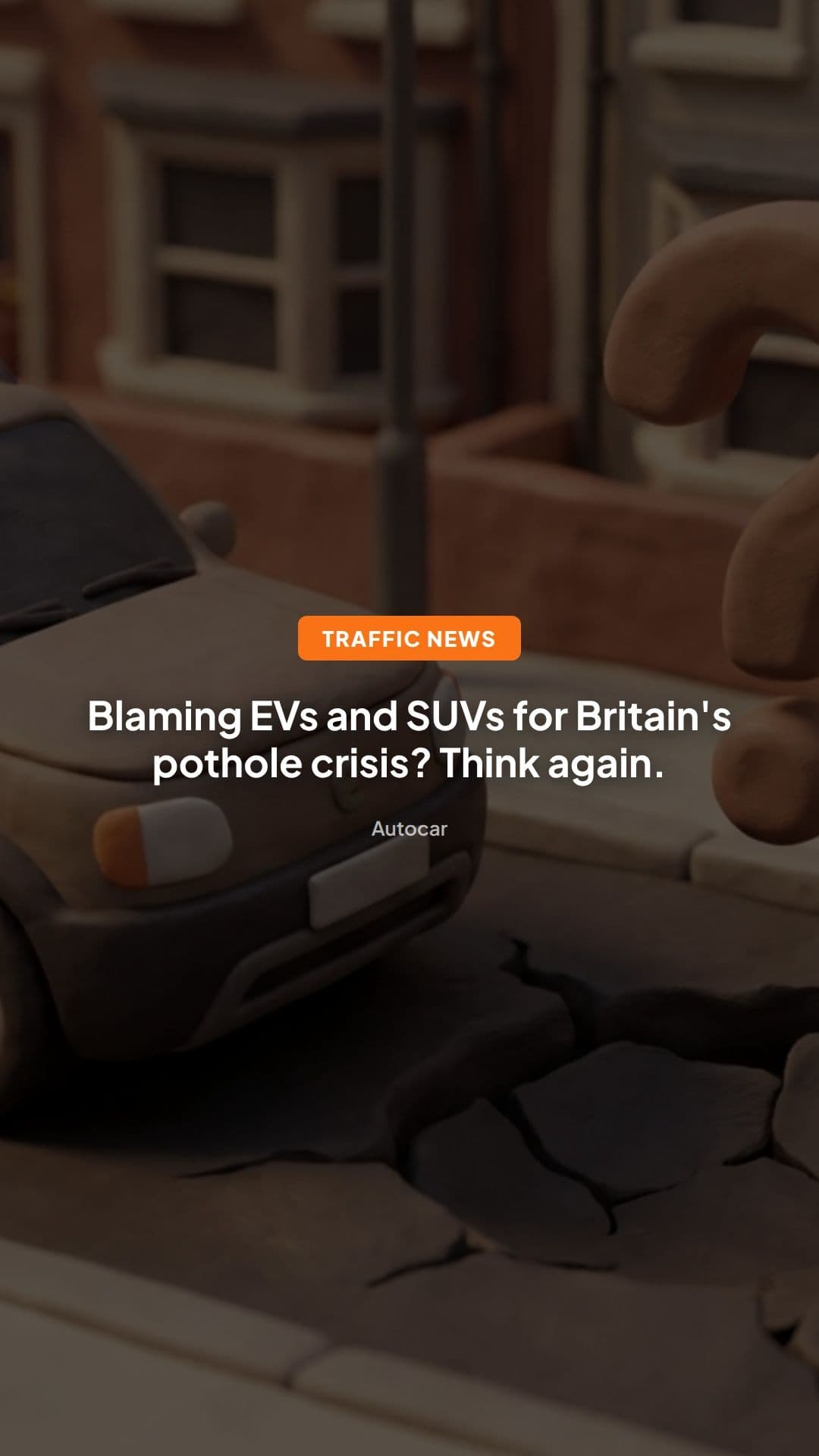
The Great Pothole Blame Game: Why EVs and SUVs Aren't the Real Villains
Hit a pothole hard enough and you'll swear blind you know exactly who's to blame. For many drivers, the culprit has become an easy target: the growing army of heavy electric vehicles and chunky SUVs supposedly pounding Britain's roads into submission. It's a neat, satisfying theory. There's just one problem, according to experts who've actually looked at the evidence: it's largely wrong.
Autocar's recent report throws cold water on the idea that heavier EVs and SUVs are the primary driver of the UK's pothole epidemic, and the reasoning behind that pushback deserves a proper look, because it touches on road funding, vehicle taxation, and what actually keeps our tarmac in one piece.
What's Actually Being Claimed
The narrative goes something like this: EVs are heavier than their petrol and diesel equivalents because of their battery packs, SUVs are bigger and heavier than ordinary hatchbacks and saloons, and as both categories have exploded in popularity, the extra weight on Britain's roads is accelerating surface breakdown and creating more potholes.
It's an appealing story because it fits a wider cultural debate about the size and weight of modern cars, one that's been rumbling on in transport circles for a while now. But according to the experts cited in Autocar's report, this isn't the primary cause of the pothole crisis at all. Instead, they point to the much less headline-friendly reality: decades of underinvestment in road maintenance, patchwork repairs that don't last, and structural issues with how councils fund and prioritise resurfacing work.
In other words, it's not really about what's driving on the roads. It's about what's (or isn't) being spent to keep them in good condition underneath.
Why This Matters Beyond the Headline
This debate isn't just an argument for car forums and dinner parties. It has real implications for how the UK approaches transport policy, vehicle taxation, and infrastructure investment.
If policymakers wrongly conclude that vehicle weight is the dominant factor in road deterioration, we could see disproportionate responses such as punitive taxation on EVs or heavier vehicles that doesn't actually fix the underlying maintenance problem. That would be doubly unhelpful: it risks discouraging EV adoption at a time when the UK is still trying to hit its decarbonisation targets, while doing little to address the genuine root causes of crumbling roads.
There's also a scientific wrinkle worth understanding. In highway engineering, there's a long-established principle sometimes referred to as the "fourth power law", which holds that road wear from a vehicle's axle load increases roughly with the fourth power of that load. This is why heavy goods vehicles, buses, and other large commercial vehicles are considered far more significant contributors to structural road damage than passenger cars, even weighty ones. A typical family SUV or electric saloon, even if it's several hundred kilograms heavier than a comparable petrol hatchback, is still nowhere near the weight category where this kind of wear becomes a serious structural factor compared with HGVs and buses.
That's essentially the crux of what the experts quoted by Autocar are getting at. The relative weight difference between, say, a Volkswagen Golf and a Tesla Model Y, while real, is dwarfed by the impact of decades of deferred maintenance, poor-quality patch repairs, extreme weather cycles (particularly freeze-thaw damage in winter), and the sheer volume of utility company roadworks that dig up and reinstate road surfaces, often to a lower standard than the original construction.
The Legal Picture: Who's Responsible for Keeping Roads Safe?
Regardless of what's causing potholes, there's a clear legal framework governing who is responsible for fixing them, and what happens if they cause damage to your car.
Under the Highways Act 1980, local authorities have a statutory duty to maintain the roads under their control. Section 41 of the Act specifically requires highway authorities to keep roads "reasonably passable for the ordinary traffic of the neighbourhood at all seasons of the year." Where a council fails in that duty and it causes damage or injury, drivers can, in principle, bring a claim.
However, councils have a defence available under Section 58 of the same Act. If they can show they took "reasonable care" to ensure the road was safe, including operating a reasonable system of inspection and repair, they may successfully defend a claim even where a pothole did cause damage. This is why documentation matters so much if you're considering a claim: councils will often argue that a defect appeared suddenly and wasn't reasonably foreseeable given their inspection schedule.
If you do want to pursue compensation for pothole damage, the general approach involves:
- Reporting the pothole to the relevant authority as soon as possible, ideally through their official reporting channel or a platform such as FixMyStreet
- Photographing the damage to your vehicle and the pothole itself, including something to indicate scale and the exact location
- Keeping repair invoices and quotes as evidence of the financial loss
- Checking whether the council has a prior record of the defect, which can be requested via a Freedom of Information request if needed
Claims for vehicle damage typically go through the small claims track if they can't be resolved informally, and it's worth noting that success isn't guaranteed given the Section 58 defence. This is general information rather than legal advice, so anyone facing a significant repair bill or considering a formal claim should look at official government guidance or speak to a solicitor experienced in highway claims before proceeding.
What Drivers Should Actually Know
Whatever the truth of the weight debate, there are some practical realities worth bearing in mind if you're driving a modern EV or SUV on Britain's increasingly battered road network.
Larger wheels and lower-profile tyres increase risk. Many SUVs and performance-oriented EVs are fitted with bigger alloy wheels and shorter sidewall tyres for styling and handling reasons. These setups offer less cushioning against sharp impacts, meaning wheel rim damage and tyre blowouts from potholes can be more likely and more expensive to repair, regardless of the vehicle's overall weight.
Battery packs sit low, but they're well protected. EV owners sometimes worry that a hard pothole strike could damage the battery pack itself. Most EVs are engineered with reinforced underbody protection specifically because manufacturers know the battery is a vulnerable and expensive component. That said, a severe impact can still cause issues, so any warning lights or unusual handling after hitting a bad pothole should be checked promptly.
Insurance excess versus council claims. For minor to moderate pothole damage, your insurance excess may exceed the actual repair cost, making a direct claim against the responsible council potentially more worthwhile than an insurance claim, particularly since claiming on insurance can affect your no-claims history.
Regular checks matter more than ever. Given the state of many local roads, it's worth periodically checking tyre condition, wheel alignment, and suspension components, especially after a particularly jarring pothole encounter, even if nothing seems obviously wrong at the time.
Looking Ahead
This dispute over EVs, SUVs, and potholes is unlikely to be the last word on the matter. As the UK's vehicle fleet continues to shift towards electrification and larger body styles remain popular, expect the weight argument to resurface periodically, particularly whenever fresh figures on road conditions or vehicle registrations are published.
What experts seem to agree on, though, is that the fundamental fix isn't about discouraging drivers from choosing heavier vehicles. It's about consistent, adequately funded long-term investment in road maintenance, rather than the reactive patch-and-pray approach that has characterised much of council highway spending for years. Until that funding question is properly addressed, don't expect the pothole conversation, or the potholes themselves, to disappear any time soon.
For drivers, the sensible approach is to stay pragmatic: report damage promptly, keep good records, understand your rights under the Highways Act, and don't assume your choice of car makes you either part of the problem or immune from its consequences.
Written by
The Parking Ticket Pal Editorial Team
Source-checked parking guidance
Ready to Challenge Your Ticket?
Let our AI analyse your PCN and generate a professional appeal letter in minutes.
Start Free Appeal