EV Pay-Per-Mile Tax: Could Mileage Blockers Undermine It?
The UK could introduce an EV pay-per-mile tax within two years, but mileage blockers may threaten fair collection. What drivers need to know before launch.

The Parking Ticket Pal Editorial Team
11 August 2026
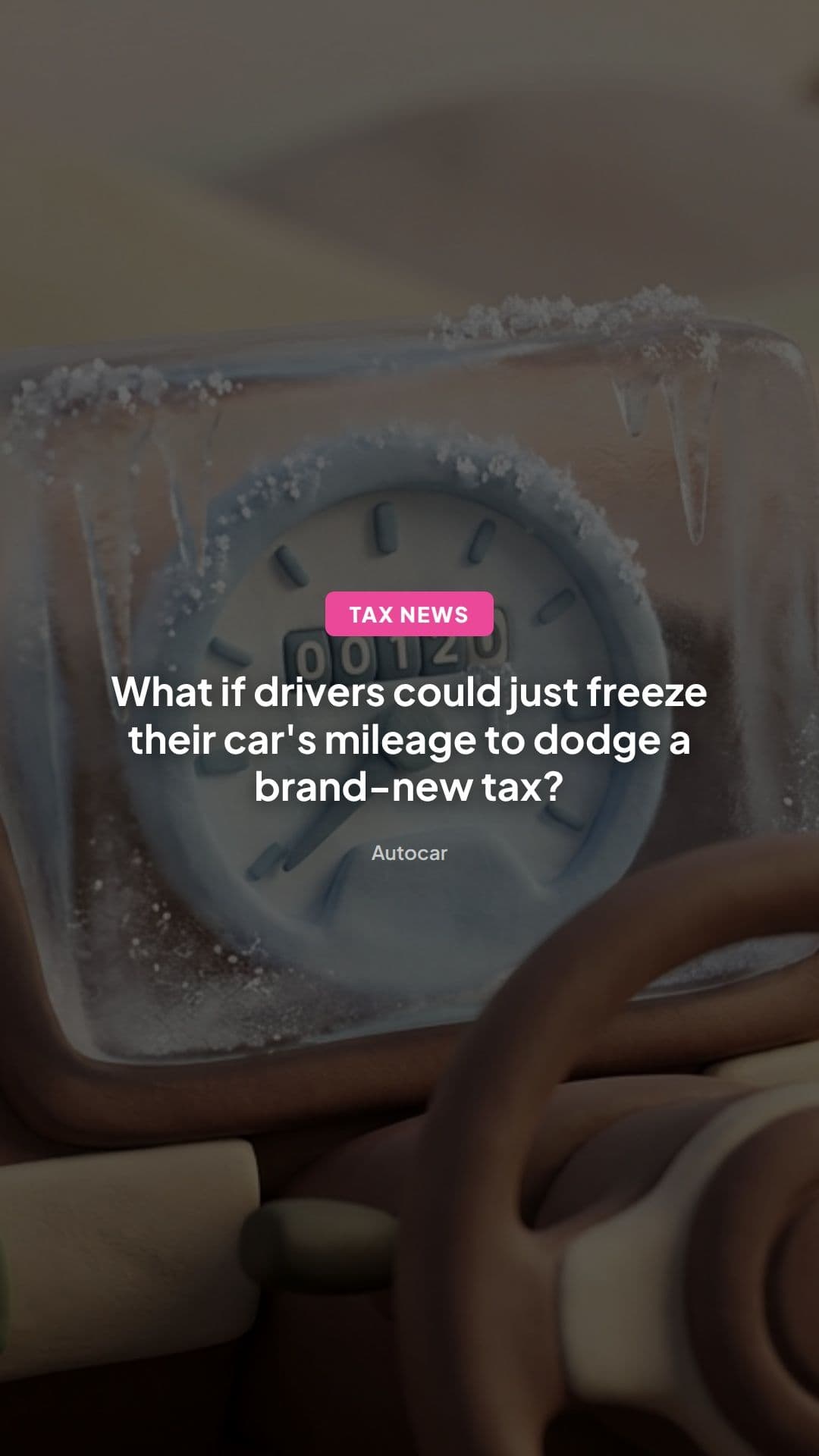
Two Years Until EV Pay-Per-Mile Tax, But "Mileage Blockers" Could Wreck the Whole Scheme
Picture this: it's 2027, you've done the right thing and bought an electric car, and now the government wants to charge you for every mile you drive it. Fair enough, perhaps, given that EV drivers currently dodge fuel duty entirely. But what happens when a small but growing number of tech-savvy motorists work out how to fool the very system designed to track those miles? According to Autocar, that's not a hypothetical worry. It's a genuine threat to a tax scheme that hasn't even launched yet.
What's Actually Being Proposed
The government has set its sights on introducing a pay-per-mile tax for electric vehicles within the next two years. The logic is straightforward enough. Petrol and diesel drivers pay fuel duty every time they fill up, generating billions in revenue for the Treasury. EV drivers, plugging in at home or at a charger, contribute nothing towards that pot despite using the same roads. As the UK's EV fleet grows and fuel duty receipts shrink, the Treasury faces a widening black hole in motoring tax revenue.
The proposed solution is to charge electric vehicle owners based on how far they actually drive, rather than through fuel purchases. In principle, this makes the system fairer and future-proofs road taxation as the country moves away from combustion engines altogether.
But Autocar's reporting highlights a serious flaw in the plan before it's even off the drawing board: mileage blockers. These are devices, some legal in certain contexts and some very much not, that interfere with a vehicle's odometer or telematics systems to disguise how far a car has actually travelled. If a pay-per-mile tax relies on accurate mileage reporting, and drivers can manipulate that data, the entire revenue model starts to look shaky.
Why This Matters Beyond the Treasury's Bank Balance
This isn't just a story about tax policy wonks worrying over spreadsheets. It touches on several issues that matter to ordinary drivers right now and will matter more as the scheme takes shape.
The fuel duty gap is real and growing. Every year more drivers switch to electric, and every year fuel duty revenue falls further behind where it needs to be to fund road maintenance, infrastructure, and everything else motoring taxation traditionally supports. This isn't the first time we've covered proposals in this space. Plans for a mileage-based system for plug-in hybrids have also been floated, alongside broader pay-per-mile proposals that would apply more widely across the vehicle fleet. The direction of travel is clear even if the exact mechanics remain in flux.
Trust in enforcement technology is fragile. If mileage blockers can genuinely defeat the tracking systems the government intends to rely on, that creates two problems. First, it undermines the revenue the scheme is meant to raise. Second, and just as important, it creates an uneven playing field where honest drivers pay their share while others quietly avoid it. That's precisely the kind of unfairness that erodes public confidence in any tax, and confidence matters enormously when a government is trying to introduce something new and, frankly, unpopular.
Timing is tight. Two years sounds like a long runway, but designing, testing, and rolling out a national mileage-tracking and billing system is a massive undertaking. HMRC and the DVLA will need robust, tamper-resistant technology, a legal framework for enforcement, and a way to handle disputes, all before the scheme even goes live. If mileage blockers are already a known vulnerability at this early stage, that's a problem the government needs to solve now, not patch retrospectively once the scheme is bleeding revenue.
The Legal Angle: What Actually Happens If You Tamper With Mileage Data
This is where things get interesting from a drivers' rights perspective, and where existing law already offers some clues about how the government might respond.
Odometer tampering, sometimes called "clocking", is already illegal under the Consumer Protection from Unfair Trading Regulations 2008 when a vehicle's mileage is falsified for the purpose of sale. Selling a car with a manipulated odometer without disclosing the change is a criminal offence, and Trading Standards can and does prosecute in serious cases. However, that legislation was designed with used-car sales fraud in mind, not ongoing tax evasion through a live telematics system.
A pay-per-mile EV tax would almost certainly require new, specific offences to be created, likely covering interference with any device or system used to calculate mileage for tax purposes. Think of it as an evolution of existing vehicle excise duty enforcement, but with teeth aimed squarely at telematics tampering. Given how seriously HMRC treats other forms of tax evasion, expect penalties to be significant, potentially including fines, backdated tax demands, and in the worst cases, prosecution.
There's also a data protection dimension worth flagging. Any system that tracks a vehicle's mileage in granular detail raises questions about who holds that data, how it's used, and whether it strays into tracking location as well as distance. Expect privacy campaigners to scrutinise the technical design closely once firmer proposals emerge. The government will need to tread carefully to avoid a repeat of the public backlash that has accompanied other surveillance-adjacent motoring schemes, such as some of the concerns raised around AI-enabled camera enforcement on Britain's roads.
What Drivers Should Know Right Now
Given the scheme is still two years out and details remain sparse, there's a limit to what you can practically prepare for today. That said, a few things are worth bearing in mind.
Don't get tempted by mileage blocker devices. Even before any EV-specific tax legislation exists, tampering with a vehicle's recorded mileage can carry serious legal consequences, particularly if the vehicle is later sold with falsified figures. Once a dedicated tax-evasion offence exists, the stakes will be considerably higher. If you're an EV owner, the safest position is simply to plan for accurate mileage reporting becoming part of vehicle ownership, the same way an MOT already records your mileage as a matter of course.
Watch how the scheme handles existing EV owners versus new buyers. Historically, UK motoring tax changes have included transitional arrangements or grace periods for those who bought vehicles under a different tax regime. It's reasonable to expect similar debate here, particularly given how sensitive the government has already been about EV incentives and grant thresholds.
Keep an eye on how this interacts with other EV costs. Pay-per-mile tax won't exist in isolation. EV drivers are already navigating changes to public charging costs, congestion charge rules, and company car tax treatment. A new mileage-based tax layered on top of these existing pressures could meaningfully shift the calculation for anyone weighing up whether to go electric.
If you drive a company car or use a salary sacrifice scheme, it's worth paying particular attention to how a mileage tax might apply to your specific arrangement, since business mileage tracking already exists in many cases and could plausibly be integrated into whatever system emerges. Speak to your fleet manager or employer's finance team as more details are published rather than assuming your current arrangement will carry over unchanged.
Looking Ahead
The fundamental problem the government is trying to solve isn't going away. Fuel duty revenue will keep declining as EV adoption grows, and someone has to pay for road upkeep. A pay-per-mile system for electric vehicles is, in many ways, the logical endpoint of that shift, and versions of the idea have already been floated for plug-in hybrids too.
But the mileage blocker issue exposed by Autocar is a reminder that policy intentions and technical reality don't always align neatly. If the government pushes ahead with a system that's vulnerable to relatively simple circumvention, it risks a scheme that punishes compliant drivers while doing little to close the revenue gap it was designed to fix. Expect considerable lobbying from motoring groups, EV manufacturers, and privacy advocates over the next two years as the details firm up.
For now, the sensible approach for drivers is to stay informed rather than anxious. Nothing changes overnight, and there will almost certainly be consultation periods before any final scheme is legislated. But given how quickly motoring tax policy has been evolving recently, from vehicle excise duty changes to congestion charge reforms, this is one to watch closely rather than dismiss as a distant concern.
Written by
The Parking Ticket Pal Editorial Team
Source-checked parking guidance
Ready to Challenge Your Ticket?
Let our AI analyse your PCN and generate a professional appeal letter in minutes.
Start Free Appeal