EV Fleet Charging Costs Now Rival 50mpg Petrol Cars
New analysis finds that reliance on UK public chargers can leave EV fleet running costs close to those of a 50mpg petrol car. See the figures.

The Parking Ticket Pal Editorial Team
12 August 2026
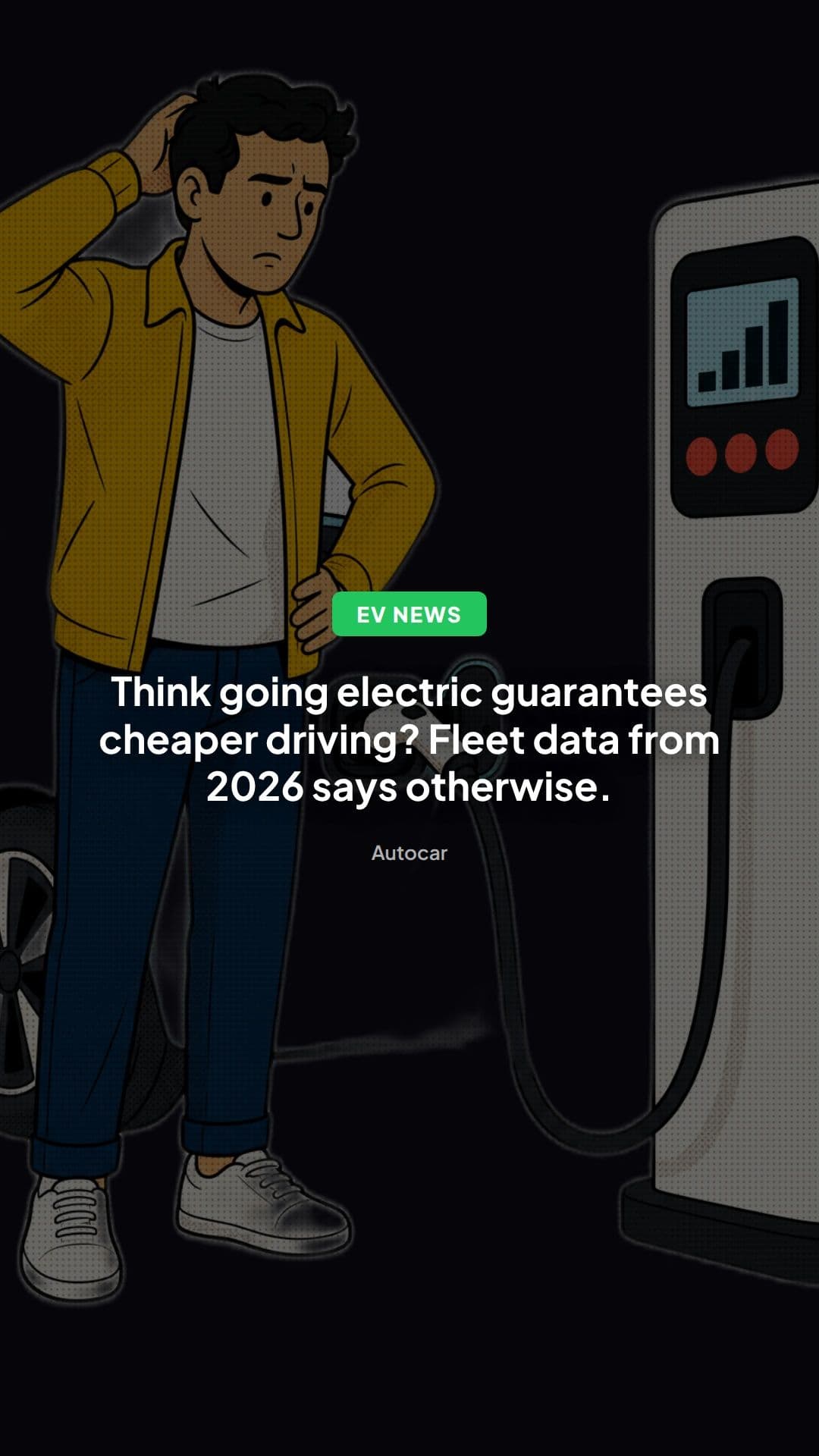
When Going Electric Doesn't Add Up: The Public Charging Problem Hitting Fleet Budgets
Picture this: a fleet manager switches their company cars to electric, expecting to slash fuel costs and hit those all-important sustainability targets. Twelve months later, the invoices land, and the savings that were promised on paper have quietly evaporated. Welcome to one of the electric vehicle transition's least-discussed problems: the public charging premium.
According to new analysis from Autocar, fleets that lean heavily on public charging infrastructure can end up with running costs comparable to a petrol car returning 50mpg. For context, that's roughly what you'd expect from a modest family hatchback, not the low running costs typically promised by EV advocates and, indeed, by government policy itself. If you've been told that switching to electric is a guaranteed way to cut motoring costs, this finding should give you pause, and it has serious implications for anyone managing a fleet or considering going electric without home charging access.
What Autocar's Analysis Actually Found
The core issue isn't the vehicles themselves. It's where and how drivers charge them. Home charging, using off-peak electricity tariffs, remains dramatically cheaper than public charging point by point. But not every driver has a driveway, a private parking space, or the luxury of overnight charging at home. Company car drivers who live in flats, terraced housing, or areas with no off-street parking are often left with no choice but to rely on the public network, whether that's motorway service station rapid chargers, on-street lamppost chargers, or supermarket car park units.
Public charging, particularly rapid and ultra-rapid charging on motorways, carries a significant price premium compared with domestic electricity. Autocar's analysis shows that when this becomes the dominant charging method for a fleet vehicle, the pence-per-mile cost climbs to a level that effectively matches what a driver would pay filling up a 50mpg petrol car at the pumps. In other words, one of the central financial arguments for switching to electric, cheaper running costs, can simply disappear if a driver doesn't have reliable access to cheap home charging.
This isn't a fringe concern either. Company car fleets represent a huge slice of the UK's new car market, and many fleet decisions are being driven by tax incentives (more on that below) rather than a realistic assessment of how and where the vehicle will actually be charged day to day.
Why This Matters Beyond the Spreadsheet
This finding matters for several reasons, and they go well beyond simple arithmetic.
First, it exposes a gap between policy assumptions and driver reality. Government messaging around the EV transition, and much of the commercial pitch from fleet leasing companies, has leaned heavily on the promise of lower running costs. If a meaningful proportion of company car drivers are quietly paying petrol-equivalent costs because they can't charge at home, that's a structural problem, not an individual bad-luck story.
Second, it highlights the ongoing inequality in charging access. Drivers with driveways and home wallboxes benefit from cheap overnight electricity, sometimes on specialist EV tariffs that bring the cost per mile down to a fraction of petrol. Drivers without off-street parking are stuck paying public network prices that, particularly on rapid chargers, have not fallen as fast as many hoped. We've covered this affordability gap before when looking at plans for on-street charging infrastructure and kerbside gullies, but Autocar's fleet-specific analysis shows just how directly this feeds through to real running costs for company car drivers.
Third, there's a tax and policy angle. Company car tax (Benefit-in-Kind) has been structured to heavily favour electric vehicles, with low percentage bands compared to petrol and diesel equivalents. That's been one of the main drivers of fleet EV uptake in the UK. But if the running cost advantage that's supposed to accompany that tax incentive doesn't materialise for drivers stuck on public charging, fleets may be making decisions based on an incomplete picture, one that only becomes apparent once the vehicles are on the road and the bills start coming in.
Finally, this speaks to a broader affordability debate that's been building around electric motoring generally. There has been growing scrutiny of public charging costs, and there is genuine concern that unless the public network becomes more competitively priced, or VAT treatment is reformed, the promised savings of electric motoring will remain unevenly distributed.
The Legal and Regulatory Angle
There's no specific law that regulates how much a public charging operator can charge for electricity, unlike petrol and diesel pricing, which is subject to general consumer protection rules but not price caps. Charging networks operate commercially and set their own tariffs, which explains the wide variation you'll see between providers and even between different speeds of charger on the same forecourt.
One area worth understanding is the VAT treatment of charging. Domestic electricity, including for home EV charging, is taxed at the reduced 5% VAT rate. Public charging, however, has historically been charged at the standard 20% rate, creating a structural cost gap between home and public charging that has nothing to do with wholesale electricity prices. This VAT discrepancy has been the subject of ongoing debate and legal challenge, and it remains one of the clearest, most fixable causes of the two-tier charging cost problem that Autocar's analysis highlights.
For fleet operators and company car drivers, it's also worth understanding how business mileage reimbursement works for electric vehicles. HMRC publishes Advisory Electricity Rates (AER) for fully electric company cars, which are meant to reflect a reasonable estimate of the cost of charging. However, these rates are typically calculated with reference to average electricity costs and don't always keep pace with the premium charged by rapid public networks, meaning employees who charge publicly may end up out of pocket compared with the AER reimbursement they receive, or conversely, employers using AER as a blanket figure may not be capturing true costs across their fleet.
None of this constitutes legal advice, and fleet managers or employees with specific tax or reimbursement queries should seek guidance from HMRC directly or a qualified accountant, particularly given how frequently advisory rates and tax treatment can change.
What Drivers and Fleet Managers Should Know
If you're a company car driver, or you manage a fleet, there are some practical steps worth taking before assuming an EV will automatically save money.
Map out realistic charging patterns before switching. Don't take the manufacturer's quoted running cost at face value. Work out where the vehicle will actually be charged day to day, home, workplace, or public network, and price accordingly.
Home charging tariffs make a huge difference. If home charging is available, specialist EV energy tariffs with cheap overnight rates can bring costs down dramatically compared with standard domestic rates, let alone public charging.
Compare charging networks before relying on them. Prices vary significantly between providers and charger speeds. Some rapid charging networks have cut prices recently, so it's worth checking current rates rather than assuming they're all similarly expensive.
Understand your reimbursement structure. If you're driving a company EV and charging publicly, check whether your employer's mileage reimbursement policy reflects the real cost of public charging, rather than a blanket rate designed around cheaper home charging assumptions.
Factor in workplace charging where available. Employer-provided charging, especially if subsidised, can meaningfully change the cost equation for drivers without home charging access.
Don't assume EV equals cheaper, always run the numbers. As this analysis shows, the running cost advantage of electric motoring is not universal. It depends heavily on individual circumstances, particularly charging access.
Looking Ahead
This is unlikely to be the last we hear of the public charging cost problem. As the UK continues its transition towards electric vehicles, and as scrutiny grows over both the VAT treatment of public charging and the pricing structures of charging networks, pressure will likely build for reform that narrows the gap between home and public charging costs.
For now, though, Autocar's analysis is a useful reality check. The electric vehicle transition promises real benefits, but those benefits are not evenly distributed, and running cost savings depend heavily on access to affordable home charging. Fleet managers and individual drivers alike would do well to look past headline claims and interrogate the real-world charging economics before committing.
Written by
The Parking Ticket Pal Editorial Team
Source-checked parking guidance
Ready to Challenge Your Ticket?
Let our AI analyse your PCN and generate a professional appeal letter in minutes.
Start Free Appeal