England’s Council Parking Surplus Hits Record £1.2bn
English councils generated a record £1.2bn parking surplus. Explore what rising parking income means for motorists, local services and enforcement nationwide.

The Parking Ticket Pal Editorial Team
22 August 2026
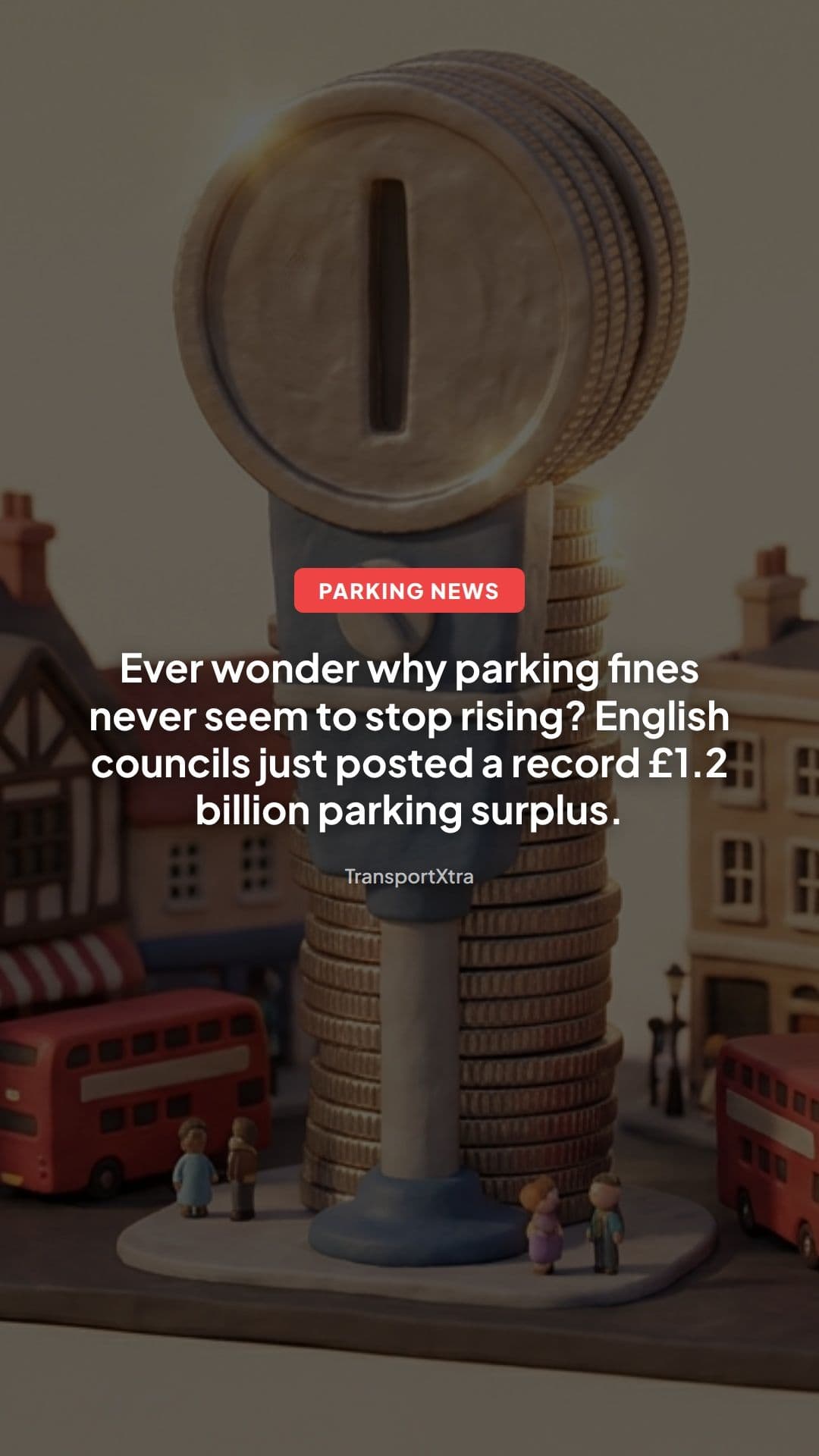
Record £1.2bn Parking Surplus: What It Really Means for English Drivers
Every time you feed a meter, tap your phone through a parking app, or receive a penalty charge notice through the letterbox, you're contributing to a pot of money that has just hit an all-time high. According to new figures reported by TransportXtra, English councils raked in a record £2.338 billion in parking income last year, generating a combined surplus of £1.2 billion once running costs were stripped out. That's not a typo. Over a billion pounds, in a single year, purely from the business of managing kerbside space.
For most drivers, parking charges feel like a local irritation, a few quid here, a fine there. Zoom out, though, and you're looking at one of the most quietly lucrative revenue streams in local government. It's worth understanding exactly how that money is generated, where it's legally allowed to go, and what it means for anyone who parks a car in England.
What Happened
The figures, drawn from official local authority parking account returns, show that English councils collected £2.338 billion in parking-related income during the year covered by the report. After deducting the cost of running parking services, enforcing restrictions, maintaining car parks, and processing penalty charge notices, councils were left with a surplus of £1.2 billion.
This is described as a record, meaning it's the highest figure since this kind of reporting began. It continues a long-running upward trend that has seen parking evolve from a modest cost-recovery exercise into a substantial and increasingly relied-upon source of local authority income. The TransportXtra report frames this as evidence of parking's growing contribution to council finances at a time when local government budgets are under sustained pressure elsewhere.
It's important to be precise about what the £2.338 billion figure includes. Council parking income typically comes from several distinct sources: on-street pay and display or app-based charges, off-street car park fees, resident and business parking permits, and penalty charge notices issued for contraventions ranging from overstaying to parking on yellow lines. The surplus is the difference between all of that income and what it actually costs councils to run the service, including staffing, enforcement technology such as ANPR cameras, signage, and administration.
Why It Matters
There's a reason this figure keeps climbing, and it isn't simply that more people are driving or that fines have become more common. Council budgets have been squeezed for well over a decade, and parking has become one of the few income streams local authorities can grow without needing central government approval for a new tax. Unlike council tax, which is subject to referendum caps if increases go beyond a certain threshold, parking charges and fine levels are set locally and can be adjusted relatively freely within the bounds of statutory guidance.
That creates an obvious tension. Parking enforcement exists, in theory, to manage traffic flow, protect access for emergency vehicles, keep bus routes clear, and stop residential streets turning into all-day free car parks for commuters. But when the same system also becomes a dependable and growing revenue line, it's fair for drivers to ask whether decisions about charges, restrictions, and enforcement priorities are being made for traffic management reasons or financial ones.
This isn't a new debate. Individual examples of car parks generating more from penalty charge notices than from parking fees paid honestly have raised eyebrows before, and questions about whether certain councils lean too heavily on enforcement income rather than genuine road safety concerns have followed. The scale of this national figure, a record £1.2 billion surplus, adds fresh weight to that scrutiny.
There's also a broader financial backdrop worth noting. Councils across England have faced well-documented budget pressures, from adult social care costs to reduced central government grants. Parking surplus, however it's generated, has become an increasingly attractive way to plug gaps, which raises the stakes for how transparently that money is reported and spent.
The Legal Angle
Here's something many drivers don't realise: councils in England are not legally free to spend parking surplus however they like. Section 55 of the Road Traffic Act 1991, carried forward through the Traffic Management Act 2004, places a statutory duty on local authorities to use any surplus from on-street parking specifically for transport-related purposes. That can include things like highway maintenance, public transport subsidies, road safety schemes, or environmental improvements connected to transport, but it cannot simply disappear into general council coffers to plug an unrelated budget hole.
Off-street car park surpluses (the money made from council-run car parks rather than on-street bays and permits) are subject to slightly different rules and generally have more flexibility, but on-street parking surplus remains ring-fenced by law. The Department for Transport publishes statutory guidance on this, and councils are expected to report annually on how surplus has been used.
In practice, enforcement of this ring-fencing relies heavily on transparency and local scrutiny rather than active central government policing. Campaigners and local opposition councillors are often the ones pushing for detail on where the money actually goes, and the level of detail in council annual reports varies significantly. If you want to dig into how your own council spends its parking surplus, most publish an annual parking account, and some are more forthcoming than others.
There's also a distinction worth understanding between council-issued penalty charge notices, which fall under civil enforcement powers, and private parking charges issued on retail or other private land, which operate under an entirely separate legal framework rooted in contract law rather than the Traffic Management Act. The two are often confused, but the rules on challenging them, and the protections available to drivers, differ substantially. Anyone unsure which type of ticket they've received should check carefully before assuming the same rights apply.
What Drivers Should Know
None of this means individual drivers are powerless or that every charge is unfair. But a record surplus of this size is a useful prompt to be more deliberate about how you park and how you respond if things go wrong.
A few practical points are worth keeping in mind:
- Know the difference between a council PCN and a private parking charge. They follow different appeal routes, different time limits, and different consequences for non-payment. Confusing the two can lead to missed deadlines or wasted effort challenging the wrong way.
- Always check signage and road markings carefully, particularly in controlled parking zones or areas with resident permit schemes, where restrictions can be inconsistent street to street. If you're new to an area, it's worth understanding common traps in residents' parking permit rules before assuming you're covered.
- Don't assume a fine is automatically valid. Councils do make mistakes, whether that's faulty signage, incorrect timing, or errors in how a contravention was recorded. If something looks wrong, it's worth querying it formally rather than paying immediately out of convenience.
- Understand what your money is meant to be spent on. If you're curious or sceptical about how your local authority uses its parking income, council annual parking accounts are usually public documents. Some councils publish them proactively; others require a bit of digging or a Freedom of Information request.
- Watch for how parking charge levels are set locally, since these are decided by individual authorities rather than centrally, and can change with relatively little warning, particularly as councils look to increase income during tight budget periods.
If you do receive a PCN you believe is wrong, most councils have a formal representations process, and unresolved disputes can ultimately go to an independent tribunal. Taking that route seriously, with evidence and clear reasoning, tends to produce far better outcomes than ignoring a ticket and hoping it goes away.
Looking Ahead
A record £1.2 billion surplus is unlikely to be a peak rather than a plateau. With council finances under continued strain and few other revenue levers available without central government sign-off, parking income looks set to keep climbing, whether through higher charges, expanded enforcement, or new permit schemes.
That trajectory makes scrutiny more important, not less. Expect continued pressure from motoring organisations and transparency campaigners for councils to publish clearer breakdowns of how surplus is generated and spent, and for closer alignment between enforcement priorities and genuine traffic management need rather than simply revenue maximisation.
For drivers, the practical takeaway is straightforward even if the politics around it isn't: understand the rules where you park, keep an eye on local charge changes, and don't be afraid to challenge a penalty that doesn't stack up. A billion-pound surplus is built one parking bay at a time, and knowing your rights is the simplest way to make sure you're not contributing more than you legally have to.
Written by
The Parking Ticket Pal Editorial Team
Source-checked parking guidance
Ready to Challenge Your Ticket?
Let our AI analyse your PCN and generate a professional appeal letter in minutes.
Start Free Appeal