Electric Range Rover: Is the £154,070 SUV Worth It?
Range Rover's first electric SUV starts at £154,070 and will be built in Solihull. We examine its delayed launch, charging prospects and buyers' costs.

The Parking Ticket Pal Editorial Team
7 September 2026
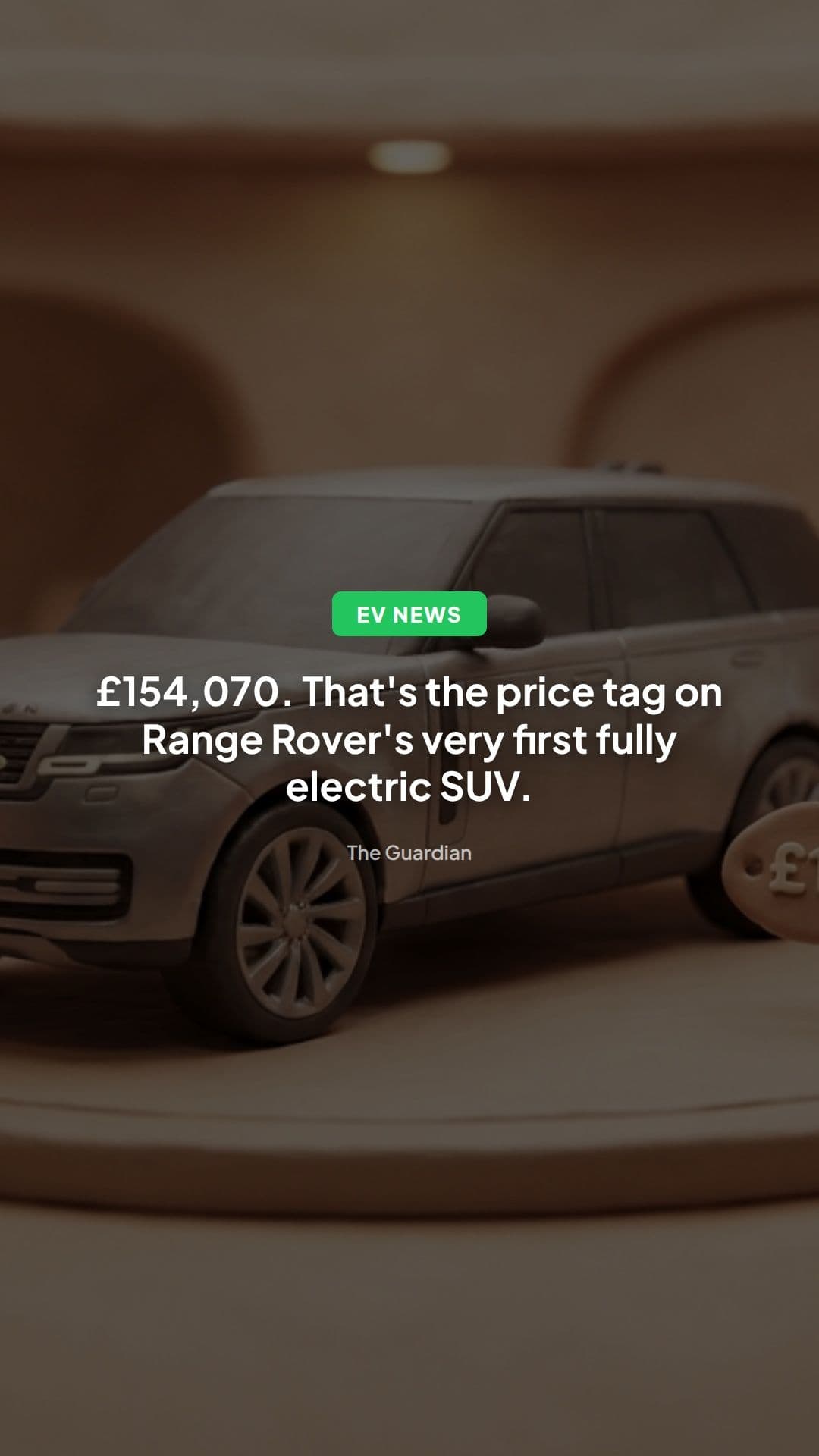
Range Rover Goes Electric at Last: What the £154,070 SUV Means for British Drivers
For years, the Range Rover badge has been synonymous with diesel-guzzling grandeur, the sort of vehicle you'd spot outside a country pile or double-parked outside a Chelsea coffee shop. That image is about to change. Jaguar Land Rover has finally unveiled the first fully electric Range Rover, a moment the company has been promising, delaying, and promising again for what feels like an eternity. With a starting price of £154,070, this is not a car for the masses, but its arrival says a great deal about where the UK's premium car market, and its charging infrastructure, are heading.
What Happened
According to the Guardian, JLR has unveiled Range Rover's first fully electric model after a year-long delay, with production based at the company's Solihull plant in the West Midlands. The launch price of £154,070 places it firmly in the luxury EV bracket, competing with the likes of the Bentley Bentayga EV and top-tier Mercedes and BMW electric SUVs rather than anything mainstream.
The delay itself is worth dwelling on. JLR originally signalled an electric Range Rover would arrive years earlier, but production setbacks pushed the timeline back by roughly twelve months. That is not unusual in an industry where battery supply chains, software validation, and safety testing have repeatedly caught out even the biggest manufacturers. What is notable is that JLR chose to wait rather than rush a compromised product to market, a decision that reflects both the brand's premium positioning and the reputational risk of launching a flawed flagship EV.
Solihull's role matters too. The plant has built Range Rovers for decades and has been undergoing significant retooling to accommodate electric production lines alongside its existing petrol and hybrid output. This is part of a broader pattern across the UK car industry, where legacy manufacturing sites are being adapted rather than replaced, preserving jobs while shifting output towards electrification.
Why It Matters
On the surface, a £154,070 SUV might seem irrelevant to the average British driver. Most of us are not cross-shopping Range Rovers. But this launch matters for several reasons that ripple well beyond the showroom.
First, it is a symbolic moment for one of Britain's most recognisable car brands. Range Rover has built its identity on going anywhere, doing anything, and burning plenty of fuel while doing it. An electric version challenges that heritage directly, and how buyers respond will tell us a lot about whether luxury SUV customers are genuinely ready to go electric or whether range anxiety and charging convenience remain dealbreakers even for people who can afford any car they like.
Second, it feeds into the wider debate about the pace of the UK's transition to electric vehicles. Premium brands launching flagship EVs, even expensive ones, tend to accelerate technology and infrastructure that eventually filters down to more affordable models. Battery chemistry, charging speeds, and software developed for a six-figure Range Rover often reappear a few years later in cheaper Jaguar or Land Rover Discovery models. In that sense, this launch is a bellwether for the technology roadmap of the wider JLR group.
Third, the timing coincides with a period of real uncertainty in the UK's EV market. Government policy on the 2030/2035 petrol and diesel sales targets has wobbled, the ZEV mandate has faced repeated calls for softening, and manufacturers have been vocal about wanting more flexibility. A confident, high-profile launch from a British-built luxury EV cuts against the narrative of an industry losing faith in electrification, even if it says little about affordability for ordinary drivers.
The Legal Angle
For most readers, the legal issues here are not about buying a £154,070 SUV, but about the practicalities of owning and running any electric vehicle in the UK, luxury or otherwise. A few points are worth knowing.
Company car tax and Benefit-in-Kind. Electric vehicles have enjoyed historically low Benefit-in-Kind (BiK) rates compared with petrol or diesel equivalents, making them attractive as company cars. However, BiK rates for EVs are scheduled to rise gradually in the coming tax years, and high-value vehicles like a flagship electric Range Rover will attract a correspondingly larger tax liability for company car drivers. Anyone considering one through a business lease should check current HMRC guidance before assuming the tax advantages of older EV schemes still apply in full.
Vehicle Excise Duty (VED). Since April 2025, electric vehicles are no longer exempt from standard VED, and expensive cars, including this Range Rover, are also liable for the "expensive car supplement" that applies to vehicles with a list price above £40,000. That means owners of this electric Range Rover will pay the additional rate alongside standard VED for several years, a detail that often surprises buyers who assumed EVs remained tax-free.
Charging and parking rules. As with any EV, owners need to be aware of the rules around charging bay misuse. Councils and private operators have increasingly enforced penalties against drivers who occupy EV charging bays without actually charging, or who overstay once charging is complete. This is covered under specific PCN contravention codes for electric vehicle bays, and it is a growing area of enforcement as EV numbers rise on Britain's streets. Anyone new to EV ownership, whatever the badge on the bonnet, should familiarise themselves with local charging bay signage and time restrictions before assuming a bay is fair game simply because their car happens to be electric.
Residents' parking and permits. Some London boroughs and other councils have adjusted resident permit schemes to account for EVs, sometimes offering discounts or dedicated charging infrastructure tied to permit zones. These schemes vary significantly by local authority, so checking your specific council's rules is essential rather than assuming a blanket national policy applies.
None of this is legal advice specific to any individual's circumstances. If you are unsure how tax, charging, or parking rules apply to your situation, HMRC and your local council's official guidance, or a qualified tax adviser, are the right places to check before making decisions.
What Drivers Should Know
If you are nowhere near being able to afford a £154,070 SUV, and let's be honest, that is most of us, the practical relevance of this story lies in the broader trends it points to.
- Expect trickle-down technology. Battery range improvements, faster charging capability, and software refinements developed for flagship models tend to appear in more affordable EVs within a few years. If you are holding off buying an EV in the hope that the technology improves, launches like this one are a signal that progress is continuing.
- Check the full tax picture before buying any EV. Whether you are looking at a budget electric hatchback or a luxury SUV, factor in VED, the expensive car supplement where applicable, and BiK if it's a company car. The tax landscape for EVs has shifted considerably from the exemptions of just a few years ago.
- Know your charging bay obligations. Owning an EV does not give blanket rights to park in every charging bay indefinitely. Time limits and "must be actively charging" conditions are increasingly enforced, and ignorance of local signage is rarely accepted as a defence against a penalty charge notice.
- Consider total cost of ownership, not just the sticker price. Insurance, servicing, and depreciation on premium EVs can be significant, and luxury electric SUVs in particular have shown steeper depreciation curves than some petrol equivalents in the used market so far.
- Watch for infrastructure gaps. A vehicle capable of long range is only as useful as the charging network supporting it. Rural and motorway charging provision, while improving, still lags behind the pace of new EV launches, something worth researching before committing to any electric vehicle, whatever the price tag.
Looking Ahead
The launch of Range Rover's first electric model is as much about brand positioning as it is about the car itself. JLR needed to prove it could deliver a genuinely premium, capable EV bearing the Range Rover name, and doing so at Solihull reinforces the company's commitment to UK manufacturing even as it navigates a challenging period for the broader industry.
For ordinary drivers, the more interesting story will unfold over the next few years, as the technology, tax treatment, and charging infrastructure that first appear in cars like this one gradually become standard across the market. Whether that happens quickly enough to meet the UK's shifting EV ambitions remains an open question, but a confident flagship launch from one of Britain's most storied car brands is at least a sign that electrification is not slowing down at the top of the market, even if affordability for everyone else still has some catching up to do.
Written by
The Parking Ticket Pal Editorial Team
Source-checked parking guidance
Ready to Challenge Your Ticket?
Let our AI analyse your PCN and generate a professional appeal letter in minutes.
Start Free Appeal