Electric Bentley Torcal: Why Drums Will Replace V8 Sound
Bentley’s electric Torcal SUV will use artificial audio and drums instead of a V8 soundtrack. What it means for UK EV drivers and luxury motoring.

Emma Thompson
20 July 2026
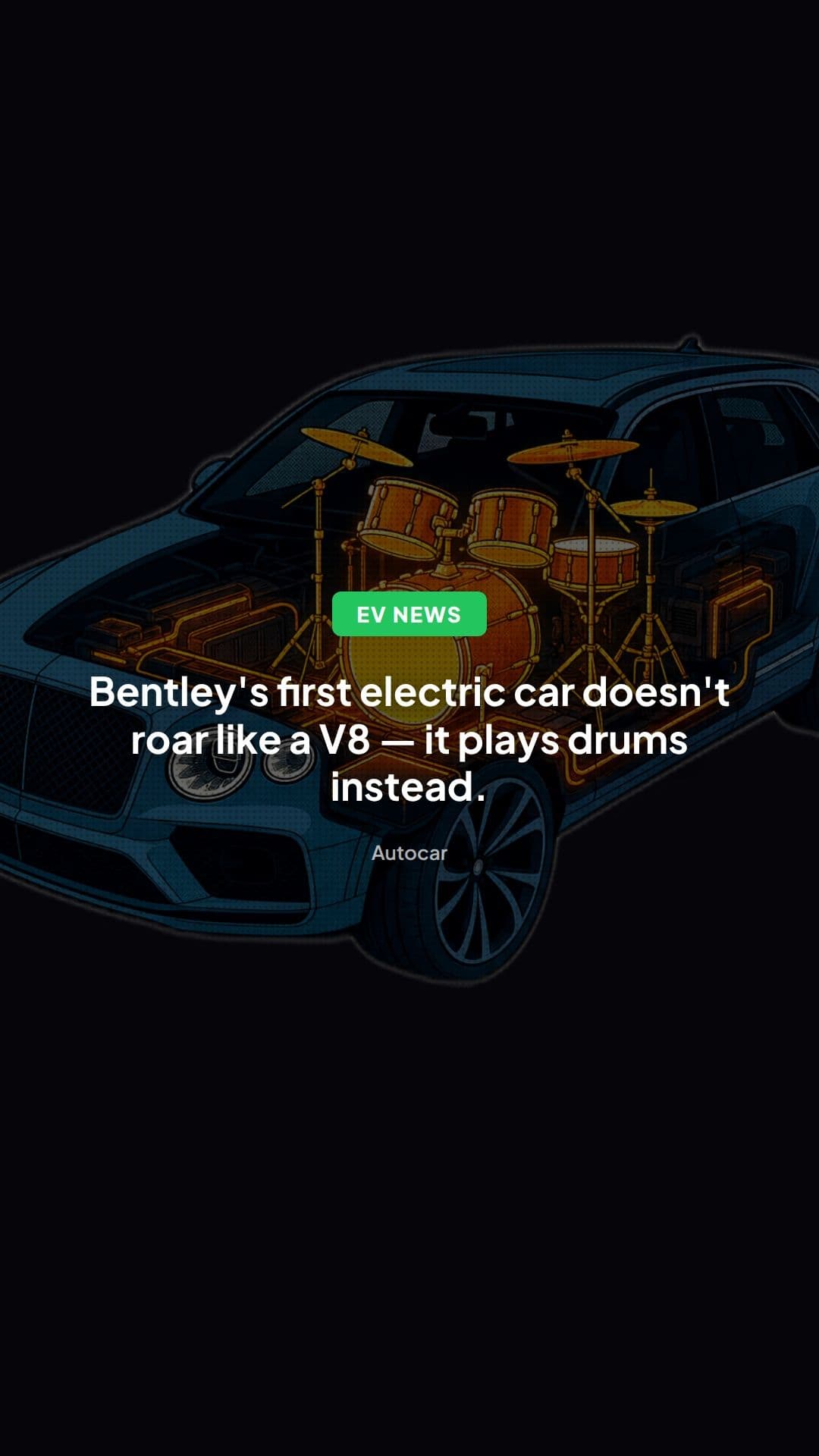
Bentley's Silent Revolution: Why the Torcal's Fake V8 Roar Is About Much More Than Nostalgia
There's something almost poetic about a company built on the thunderous burble of hand-assembled W12 and V8 engines now employing sound designers to fake that same experience through speakers. But that's precisely where Bentley finds itself with the Torcal, its forthcoming electric SUV, according to reporting from Autocar. The car won't roar because of pistons and combustion. It'll roar, or perhaps thump, because engineers have decided drivers still want to feel something when they put their foot down.
This isn't just a quirky footnote in Bentley's electrification story. It's a window into one of the thorniest problems facing luxury car makers as they abandon combustion engines: how do you sell a six-figure driving experience when the defining sensory feature, the engine note, simply doesn't exist anymore?
What's Actually Happening With the Torcal
According to Autocar's report, Bentley's electric Torcal SUV will use artificial audio, including drum-based sounds, to recreate some of the sensation traditionally associated with the marque's V8 engines. Rather than trying to synthesise an exact facsimile of a combustion engine (something several manufacturers have attempted with mixed results), Bentley appears to be taking a more abstract, percussive approach to signal power and occasion.
The Torcal forms part of Bentley's wider shift towards full electrification, a transition that mirrors what's happening across the entire luxury and performance car sector. Bentley's parent company, the Volkswagen Group, has committed enormous resources to electrifying its portfolio, and Bentley itself has previously stated ambitions to become an all-electric brand by the end of this decade, albeit with timelines that have shifted as demand for EVs has proven less predictable than hoped.
What makes the Torcal notable isn't simply that it will have fake engine noise, plenty of EVs already pipe artificial sound through their speakers, but that Bentley is explicitly choosing drums and rhythmic elements rather than attempting a synthesised engine roar. This suggests a brand grappling honestly with the reality that no amount of clever audio engineering can truly replicate the visceral sensation of a naturally aspirated or turbocharged V8 under load. Instead, Bentley seems to be creating a new sonic identity altogether.
Why This Matters Beyond Bentley's Showroom
The stakes here go well beyond one carmaker's marketing decisions. Bentley occupies a peculiar position in the automotive world. Its customers aren't simply buying transport, they're buying craftsmanship, heritage and an emotional connection to over a century of engineering. The sound of a Bentley engine has long been part of that package, deliberately tuned and, in some cases, subtly amplified through the cabin to reinforce the sense of occasion.
Electrification strips that away entirely. Electric motors are near-silent, and while that's a genuine boon for noise pollution and urban liveability, it's a significant challenge for brands whose identity has been partly built on sound. This is why so many premium and performance manufacturers, from Porsche to Alfa Romeo to Dodge, have experimented with synthetic soundscapes for their electric models. The Torcal's drum-based approach suggests Bentley wants to avoid the slightly uncanny territory of a fake engine noise that never quite convinces, opting instead for something more honestly synthetic and arguably more emotionally resonant in its own right.
There's also a regulatory backdrop worth understanding. Under UK and EU rules, electric and hybrid vehicles are required to emit a minimum level of noise at low speeds through an Acoustic Vehicle Alerting System, primarily for pedestrian safety, particularly for those with visual impairments. This is a legal requirement, not a marketing choice, and it applies to virtually all new electric vehicles sold in the UK. However, the AVAS requirement governs safety-related noise at low speed, not the broader in-cabin experience a manufacturer chooses to create for the driver. Bentley's drum-inspired soundscape appears to sit in that latter, unregulated category, designed purely for driver and passenger experience rather than pedestrian safety compliance.
The Legal and Regulatory Angle
For UK drivers and prospective Bentley owners, it's worth understanding where the law does and doesn't touch on this kind of artificial audio.
The AVAS requirement, rooted in UN Regulation No. 138 and incorporated into UK vehicle type approval rules following Brexit, mandates that electric and hybrid vehicles produce sound below a certain speed threshold (typically around 12mph in most implementations) so that pedestrians and cyclists can hear them coming. This is a genuine legal obligation for manufacturers, enforced through the vehicle type approval process before a car can be sold in the UK. Any manufacturer, including Bentley, must ensure the Torcal meets this baseline requirement regardless of what additional in-cabin drum sounds or synthetic engine notes it layers on top for driver enjoyment.
Beyond that mandatory safety noise, there's no specific UK legislation governing what a manufacturer can or cannot pipe through a car's speakers for the benefit of the driver. This is manufacturer discretion, similar to how car makers have long tuned exhaust notes, added active sound enhancement through the stereo system, or engineered specific acoustic properties into a vehicle's cabin. It's a matter of consumer experience and brand identity rather than something regulated by the DVSA or the Driver and Vehicle Standards Agency in the way emissions or safety equipment might be.
That said, drivers should be aware that noise complaints and general nuisance laws could theoretically apply if any artificial exterior sound system were used in a way that caused a public nuisance, for example if a driver were to deliberately amplify sound at inappropriate volumes in residential areas. This is a stretch scenario for something like the Torcal's cabin-focused audio, but it's a reminder that sound, even fake sound, doesn't exist entirely outside the reach of nuisance and antisocial behaviour provisions in extreme cases.
What This Means for Prospective Buyers and EV Drivers
If you're considering an electric luxury SUV such as the Torcal, or indeed any premium EV, there are a few practical things worth keeping in mind.
Test the experience, don't just trust the spec sheet. Synthetic sound design varies enormously between manufacturers, and what sounds thrilling in a press release or promotional video can feel gimmicky or grating in daily use. If sound and driving character matter to you as much as they traditionally have with combustion Bentleys, insist on an extended test drive before committing.
Understand that this is about experience, not performance. The drums, or any synthetic soundscape, will not affect the car's actual power delivery, range or handling. It's purely an auditory layer designed to enhance perceived occasion. Don't let clever marketing around sound distract from the fundamentals you'd normally scrutinise on any EV purchase, such as real-world range, charging infrastructure compatibility and warranty terms on the battery.
Check how the sound system integrates with infotainment and settings. Many EVs with synthetic sound, including performance models from other manufacturers, allow drivers to adjust or disable these audio layers. It's worth asking Bentley dealers whether the Torcal's drum-based system can be toggled on or off, and whether it interacts with driving modes.
Remember AVAS is separate and non-negotiable. Whatever your preferences around in-cabin sound, external pedestrian warning noise at low speed is a legal safety feature, not a customisable extra, and will function regardless of any interior audio choices.
Looking Ahead
The Torcal's percussion-based approach may well set a precedent, or at least spark a wider conversation, about how legacy performance brands handle the emotional transition to electric power. Bentley isn't alone in wrestling with this. Nearly every manufacturer with a heritage built on engine character, from Aston Martin to Maserati, faces the same fundamental question: what do you offer customers when the thing they loved most, the noise, simply isn't there anymore?
Drums might seem like an unusual answer, but it's an intriguing one. Rather than pretending an electric motor can sound like a V8, Bentley appears to be building something new: a sonic signature that says "occasion" and "power" without dishonestly mimicking combustion. Whether buyers embrace this, or find it a poor substitute for the real thing, will likely shape how other luxury manufacturers approach the same challenge as their own combustion models are phased out over the coming years.
For now, UK drivers eyeing the electric SUV market have plenty to watch for, not just from Bentley, but across the wider push towards electrification reshaping what luxury motoring sounds, and feels, like.
Written by
Emma Thompson
Traffic Law Specialist
Ready to Challenge Your Ticket?
Let our AI analyse your PCN and generate a professional appeal letter in minutes.
Start Free Appeal