East London fire halts Overground Weaver line: travel advice
An east London fire has suspended Overground Weaver line services during track repairs. Check TfL updates, replacement transport and routes to avoid delays.

Fatima Benali
13 July 2026
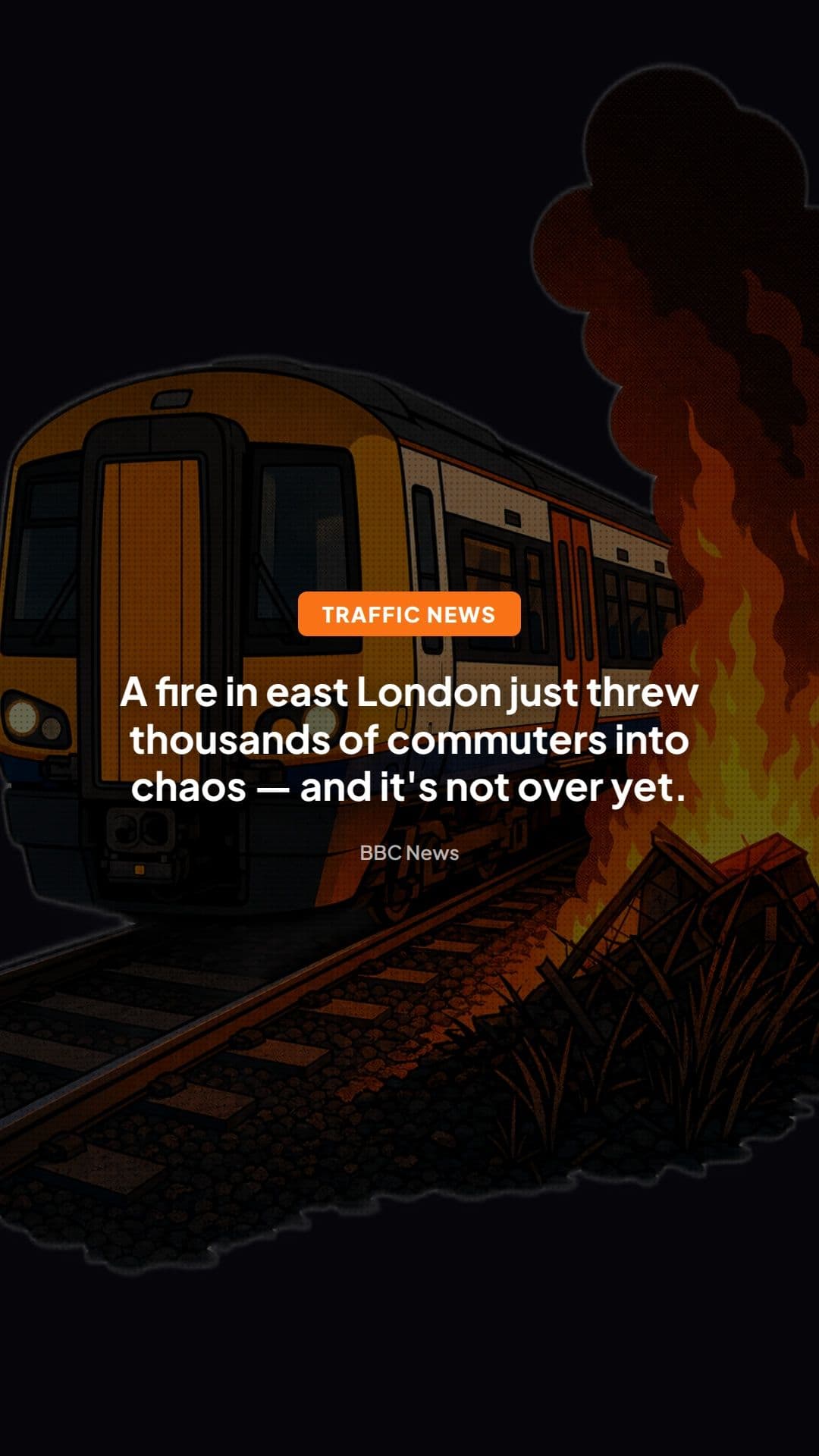
East London Fire Disrupts Overground: What Drivers Need to Know When Public Transport Fails
When a fire breaks out near a railway line, the ripple effects spread far beyond the immediate scene. Commuters are stranded, buses are overwhelmed, and roads quickly fill with frustrated drivers making snap decisions about how to get from A to B. That is exactly what happened when a blaze in east London suspended services on part of Transport for London's Overground Weaver line, leaving thousands of passengers scrambling for alternatives and causing knock-on disruption across the wider network.
This kind of incident is a reminder of how fragile urban transport systems can be, and how quickly the pressure transfers from trains to roads. For drivers in east London and beyond, understanding what happens next, legally, practically, and logistically, can make the difference between a stressful detour and an expensive mistake.
What Happened: Fire, Track Damage, and Service Suspension
According to BBC News, a fire in east London caused significant disruption to the Weaver line on the London Overground network. Services on the affected section were suspended while engineers carried out track repairs, with TfL advising passengers to use replacement transport where available and to expect altered services across the route.
The Weaver line runs through some of the most densely populated and heavily commuted parts of east London, connecting communities that rely heavily on the Overground for daily travel. When a key section goes down, even temporarily, the knock-on effect is substantial. Replacement bus services, where they are provided, rarely have the capacity to absorb the full volume of displaced passengers. Taxis fill up quickly. And many commuters, faced with no obvious alternative, simply get in their cars.
That shift from rail to road is where things can get complicated.
Why It Matters: The Road Pressure Nobody Plans For
Transport disruptions of this kind create a sudden, unplanned surge in road traffic. Drivers who would not normally be on certain roads at certain times find themselves navigating unfamiliar routes, often under time pressure, and sometimes in areas with complex parking and traffic restrictions they are not used to.
East London has a dense patchwork of controlled parking zones, bus lanes, low traffic neighbourhoods, pedestrian zones, and restricted streets. Many of these restrictions are enforced by camera, automatically and without discretion. A driver who takes an unfamiliar route to avoid a closed station area may inadvertently enter a bus lane, pass through a pedestrian zone at the wrong time, or stop briefly in a restricted bay, and find a penalty charge notice arriving in the post days later.
This is not a hypothetical. Similar patterns emerge every time there is a significant Tube strike, rail closure, or major road incident in London. Traffic volumes spike, enforcement cameras keep rolling, and PCNs accumulate for drivers who were simply trying to get to work.
The Legal Angle: What Protections Exist, and What Does Not
It is worth being clear about something that surprises many drivers: there is no automatic exemption from parking or traffic penalties simply because public transport has failed. The law does not recognise "I had to drive because the train wasn't running" as a defence against a PCN.
Under the Traffic Management Act 2004, local authorities and TfL have broad powers to enforce moving and parking contraventions captured on camera. The legislation is designed to be applied consistently, and the circumstances that led a driver onto a particular road are generally not considered relevant to whether a contravention occurred.
That said, there are some limited grounds for appeal that can be relevant in disruption scenarios. If signage was inadequate or obscured, if a restriction was not clearly communicated, or if a driver can demonstrate a genuine emergency, these can form the basis of a representation against a PCN. The key word is "genuine," and the standard of evidence required is meaningful.
For moving traffic contraventions issued by TfL, such as bus lane or box junction penalties, the appeals process runs through TfL's own representations stage and then, if unsuccessful, to the independent Traffic Penalty Tribunal. For parking contraventions issued by the London Borough in question, the same two-stage process applies, with the adjudicator being independent of the issuing authority.
It is also worth noting that replacement bus services provided during rail disruptions operate on normal road routes, which means bus lanes may be busier than usual. Drivers who follow a bus into a bus lane, assuming it must be accessible, can still receive a penalty. Bus lanes are enforced by camera, and the presence of a replacement bus does not alter the restriction for private vehicles.
What Drivers Should Know: Practical Advice for Navigating Disruption
If you find yourself driving in east London during or after a transport disruption, a few practical steps can significantly reduce your risk of picking up an unwanted fine.
Plan your route before you leave. TfL's website and app provide real-time updates on road restrictions, including bus lane hours and low traffic neighbourhood boundaries. Spending two minutes checking your route before you set off is far more useful than appealing a PCN afterwards.
Be cautious around replacement bus routes. Replacement buses tend to follow the same roads as normal bus services, which means those roads are likely to have bus lanes. Avoid following buses into lanes that are restricted to buses, taxis, and cyclists unless you are certain the restriction does not apply to your vehicle at that time.
Do not stop in restricted areas, even briefly. The temptation to pull over and check your phone for directions is understandable when you are in unfamiliar territory, but a brief stop in a red route, bus stop, or loading restriction can result in a penalty. If you need to stop, find a side street with no restrictions and check the signs carefully before parking.
Keep evidence if something goes wrong. If you do receive a PCN following a disruption, gather any evidence that supports your situation. Screenshots of TfL disruption alerts, timestamps showing when you were in the area, and photographs of any signage that was unclear or obscured can all support a representation.
Know your appeal rights. If you receive a PCN and believe it was issued unfairly, you have the right to make an informal representation to the issuing authority first, usually within 28 days of the notice. If that is rejected, you can make a formal representation, and if that too fails, you can appeal to an independent adjudicator. You do not need a lawyer to do this, but you do need clear, relevant evidence.
Looking Ahead: Resilience, Infrastructure, and the Driver's Dilemma
The east London fire is a reminder that urban transport networks, however sophisticated, remain vulnerable to unexpected events. Track damage from fire can take days to repair fully, and the disruption caused to commuters during that period is real and significant.
For drivers, the broader lesson is about preparedness. London's road network was not designed to absorb large numbers of displaced rail commuters at short notice, and the enforcement infrastructure does not pause when the trains stop running. Cameras continue to record, restrictions continue to apply, and penalties continue to be issued.
TfL and local councils do have the discretion to cancel PCNs in exceptional circumstances, and it is always worth making a representation if you believe your situation warrants one. However, discretion is not the same as a right, and drivers should not assume that disruption automatically provides a defence.
The most effective protection is awareness. Knowing the rules of the road you are driving on, checking for restrictions before you park, and staying informed about live disruptions through official TfL channels will serve you far better than any appeal process after the fact.
When the trains stop running, the roads fill up. That is an unavoidable reality. But with a little preparation, drivers can navigate the disruption without adding a penalty notice to an already difficult commute.
For general information on how to challenge a parking or traffic penalty, visit the official TfL appeals pages or the Traffic Penalty Tribunal website. If you have received a PCN and are unsure how to respond, consider seeking independent advice tailored to your specific circumstances.
Written by
Fatima Benali
Dispute Resolution Specialist
Ready to Challenge Your Ticket?
Let our AI analyse your PCN and generate a professional appeal letter in minutes.
Start Free Appeal