
Driver Assistance Systems: Which Features Improve Safety?
Do driver assistance systems make UK roads safer? We assess autonomous emergency braking, fatigue alerts and distraction risks for motorists at the wheel.

The Parking Ticket Pal Editorial Team
26 September 2026
Which driver assistance systems actually improve safety?
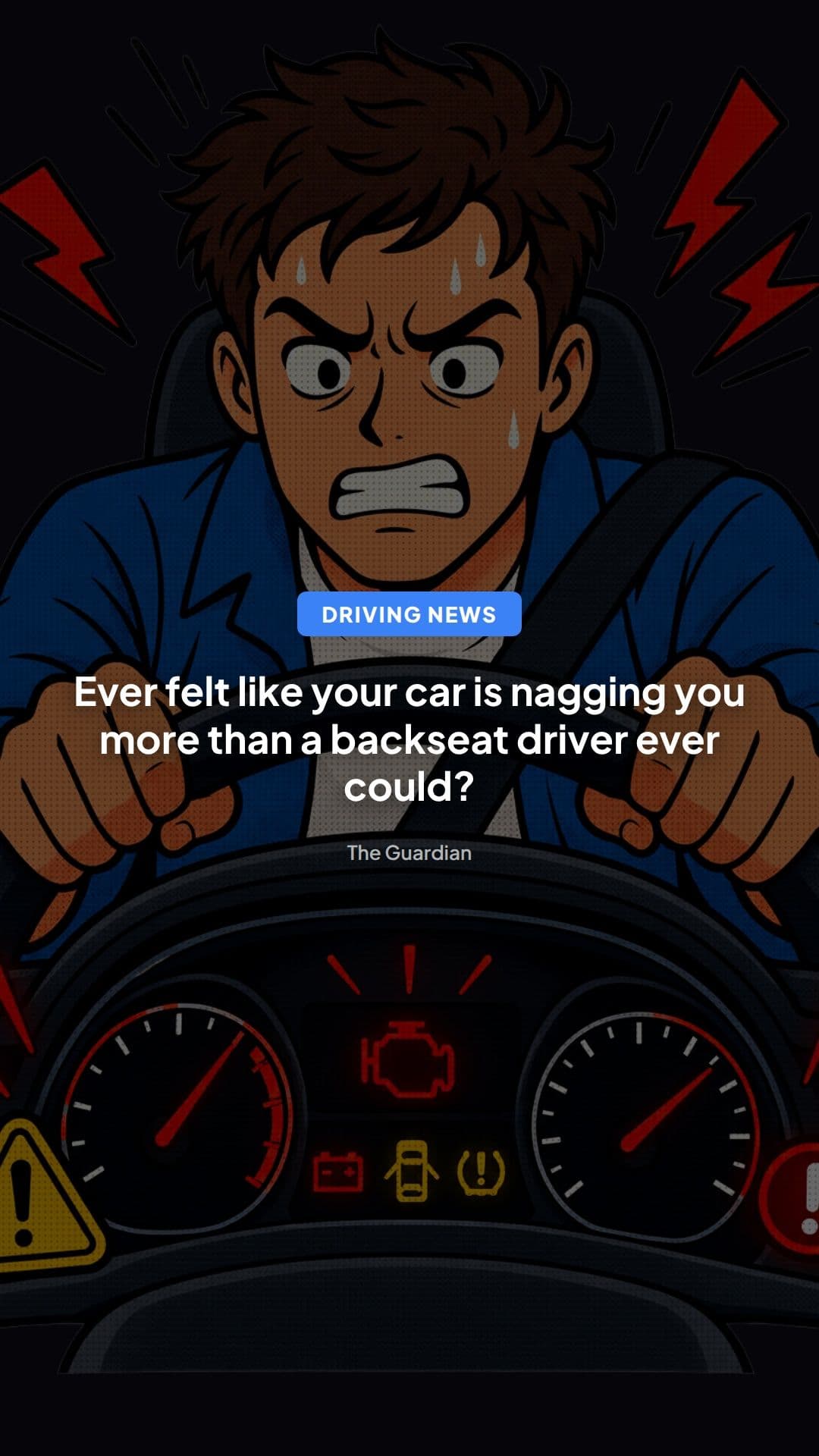
Picture this: you're cruising down the motorway, hands loosely on the wheel, when your car suddenly slams the brakes on for a hazard you hadn't even registered yet. Relief floods in. Then, ten minutes later, the same car starts bonging at you because it thinks you're drifting out of your lane when you're actually just avoiding a pothole. Welcome to the confusing, occasionally life-saving, occasionally infuriating world of modern driver assistance technology.
A recent Guardian investigation dug into exactly this tension, asking whether the growing suite of "smart" features fitted to new cars, from autonomous emergency braking to fatigue monitoring, genuinely makes British roads safer, or whether some of it is simply adding noise, false alarms and distraction to the driving experience. It's a question worth taking seriously, because these systems are no longer optional extras reserved for premium marques. They're now standard fit on the overwhelming majority of new cars sold in the UK, and drivers are increasingly required to understand, trust and sometimes override them.
What the Guardian's investigation found
The article examines a range of driver assistance systems now common in new vehicles: autonomous emergency braking (AEB), which detects an imminent collision and applies the brakes automatically if the driver hasn't reacted in time; fatigue and attention monitoring, which watches for signs a driver is tired or distracted, often via steering inputs or an interior camera; lane-keeping assistance, which nudges or steers the car back within white lines; and adaptive cruise control, which maintains a set distance from the vehicle in front.
The central question the piece poses is not whether this technology exists, but whether it actually works as intended in the real world, and whether some systems create new problems even as they solve old ones. It's a fair challenge. Manufacturers market these features heavily as safety wins, but the driving experience for many owners tells a messier story: phantom braking events, lane-keeping systems that fight the driver on normal, safe manoeuvres, and fatigue alerts that trigger on a completely alert driver simply because of how they're gripping the wheel.
Why this matters more than it might seem
This isn't just a story about annoying dashboard chimes. It sits at the intersection of road safety policy, consumer rights and criminal liability, three areas that rarely get discussed together but absolutely should be.
Britain's new car fleet has changed enormously in a short space of time. Since 2022, new vehicle types sold in the UK and EU have generally needed to include AEB as standard, following the retained General Safety Regulation framework. Euro NCAP, the independent crash-testing body, has also progressively weighted its star ratings towards how well a car's assistance systems perform, not just how it behaves in a physical crash. That means manufacturers are chasing five-star ratings partly by piling on driver assistance tech, which creates a commercial incentive to fit these systems even where the underlying software isn't yet mature enough to handle Britain's often chaotic urban roads: narrow streets, sudden cyclists, contradictory road markings and endless roadworks.
There's a genuine safety upside here. AEB in particular has a strong evidence base internationally for reducing rear-end collisions at low speed, which is one of the most common types of crash on urban roads. But the Guardian's broader point, that not all systems are created equal, deserves attention. A fatigue monitor that cries wolf risks being switched off or ignored altogether, which defeats its purpose entirely. A lane-keeping system that oversteers on a bend can actively work against the driver rather than for them. If drivers start distrusting the technology, they may stop trusting genuinely useful warnings too, a phenomenon sometimes called "alarm fatigue" in other safety-critical industries.
The legal angle: who's responsible when assistance goes wrong?
Here's where things get genuinely important for UK drivers, and where a lot of confusion persists.
Despite the sophistication of modern driver assistance systems, none of the technology currently sold on UK roads counts as "automated driving" in the legal sense. Under the Automated Vehicles Act 2024, a vehicle only qualifies as self-driving once it has been specifically authorised and listed by the Secretary of State as such, at which point liability for the vehicle's actions during automated operation shifts away from the human occupant. That threshold has not yet been met by any car on sale to the public in Britain. Adaptive cruise control, lane-keeping assist and even so-called "hands-off" motorway systems remain, in law, driver assistance rather than automation.
What this means practically is that if a driver relies on lane-keeping assist and it fails to prevent a collision, or fatigue monitoring doesn't catch a genuinely drowsy driver, the human behind the wheel remains legally responsible. The Highway Code is explicit that drivers must remain in control of their vehicle at all times and be prepared to take over immediately. Rule 150 requires drivers to exercise "full control" of their vehicle, and the offence of careless or dangerous driving under the Road Traffic Act 1988 doesn't disappear simply because a system was switched on. Courts have shown no appetite for treating "the car should have stopped itself" as a defence.
There's also a mobile phone and distraction dimension worth flagging. Fiddling with touchscreen menus to silence an overzealous lane-keeping alert, or trying to recalibrate a fatigue monitor mid-journey, could itself constitute a form of distracted driving under the same laws that govern handheld phone use. If you're spending more time managing your car's warnings than watching the road, you may be creating exactly the risk the system was designed to prevent.
What drivers should know
A few practical points are worth bearing in mind if your car, or your next car, is bristling with driver assistance features.
- Read the manual, seriously. Every manufacturer implements these systems slightly differently, and how sensitive lane-keeping assist is, or how fatigue monitoring is calibrated, varies significantly between brands and even model years.
- Know how to disable individual systems safely. Most cars allow you to turn off lane-keeping or adjust sensitivity without disabling AEB, which is generally worth keeping active given its stronger safety case.
- Get your windscreen camera recalibrated after any replacement. Many AEB and lane-keeping systems rely on a forward-facing camera mounted near the rear-view mirror. A windscreen replacement that doesn't include recalibration can leave these systems working with faulty data, sometimes without any warning to the driver.
- Check your insurance policy's small print. Some insurers now ask about ADAS features at renewal, and a poorly maintained or disabled safety system could, in theory, affect a claim if it's found to have contributed to an incident.
- Don't treat any of these systems as a substitute for attention. Legally and practically, you are still the driver. A car that brakes for you once doesn't mean it will every time, particularly in unusual weather, poor visibility or unclear road markings.
For those wanting to understand how these systems are actually tested, it's worth looking at how Euro NCAP has overhauled its ADAS assessment criteria, which increasingly shapes what manufacturers prioritise when designing these features.
Looking ahead
The direction of travel is clear even if the technology isn't yet perfect. Regulators, insurers and manufacturers are all pushing towards more assistance, not less, and the government's broader ambitions around genuinely automated vehicles mean today's assistance systems are essentially a stepping stone. But stepping stones can be slippery. If fatigue monitors and lane-keeping systems generate more irritation than trust, drivers switching them off entirely could end up worse off than if the features had never been fitted.
The more realistic near-term shift is likely to be regulatory pressure on manufacturers to reduce false positives and improve calibration, rather than any relaxation of the legal principle that human drivers remain responsible. Until genuinely automated vehicles are formally authorised for UK roads, the golden rule hasn't changed: assistance is exactly that, assistance, not a substitute for a driver who's paying attention.
Written by
The Parking Ticket Pal Editorial Team
Source-checked parking guidance
Ready to Challenge Your Ticket?
Let our AI analyse your PCN and generate a professional appeal letter in minutes.
Start Free Appeal