Double Parking Fines Return to Bournemouth: What to Know
A second trial of double parking fines has begun in Bournemouth, Christchurch and Poole. Check August towaway charges, affected areas and PCN appeal options.

Mohammed Al-Hassan
5 August 2026
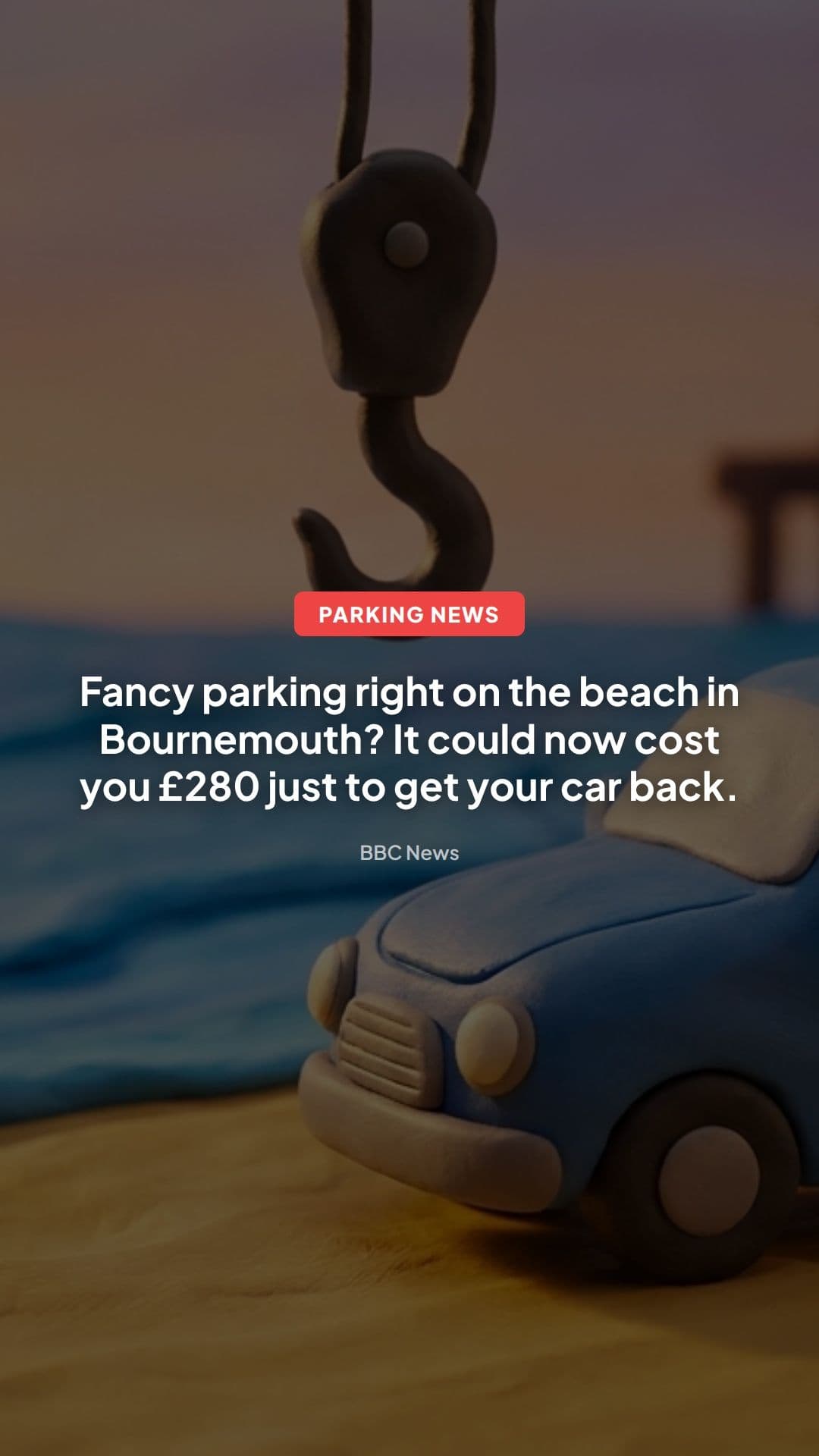
Second Double Seaside Parking Fines Trial Starts: What Drivers Heading to Bournemouth, Christchurch and Poole Need to Know
Anyone who has tried to find a parking space near a British beach on a scorching August afternoon knows the drill: crawling traffic, cars mounting verges, and drivers circling the same three streets hoping someone else gives up first. In Bournemouth, Christchurch and Poole (BCP), that seasonal chaos has become such a persistent headache that the local council is trying something rather more drastic than a stern letter. For the second year running, it's trialling significantly higher parking penalties, backed by beefed-up towaway charges, for the whole of August.
What's actually happening
According to BBC News, BCP Council has launched its second trial of increased parking penalties across the conurbation, with higher towaway charges specifically applying during August, the peak month for seaside visitors. The fact that this is a second trial tells us two things: the council ran a similar scheme previously (almost certainly during last summer's peak season), and it considered the results worth repeating, presumably because it either changed driver behaviour, generated useful enforcement data, or both.
The core idea is straightforward. Standard Penalty Charge Notices (PCNs) don't always deter drivers who are determined to park somewhere convenient, illegal or not, especially when the alternative is a long walk from an official car park in the height of summer. So councils in seaside hotspots have increasingly turned to a second lever: making it not just expensive to get a ticket, but genuinely painful to have your car physically removed. A towaway charge on top of a PCN, plus the hassle of retrieving your vehicle from a pound miles from where you left it, is a far stronger disincentive than a fine alone.
BCP's decision to run this as a defined trial, rather than a blanket permanent policy, suggests the council wants to measure its impact carefully before deciding whether to make it a fixture of every summer season.
Why this matters beyond BCP
This isn't happening in a vacuum. Coastal councils across England have been wrestling with the same problem for years: roads never designed for modern traffic volumes, suddenly flooded with visitors the moment the sun comes out. Verges get churned up, pavements get blocked, and in the worst cases, emergency vehicles struggle to get through narrow lanes clogged with badly parked cars.
BCP in particular has form here. The area has previously drawn national headlines over beach parking fines and mass PCN issuance during bank holiday weekends, when tens of thousands of extra visitors descend on Sandbanks, Durley Chine and the wider Bournemouth seafront in a single day. When a resident's driveway is blocked, when a fire engine can't pass, or when a coastal path becomes impassable for pushchairs and wheelchairs, the usual grumbling about "just a parking fine" starts to look a lot more serious.
There's also a financial dimension worth being honest about. Parking enforcement income for councils is ring-fenced under the Traffic Management Act 2004, meaning surplus revenue from on-street parking enforcement must, by law, be reinvested in transport-related projects rather than swallowed into general council budgets. That doesn't mean money isn't a motivating factor, but it does mean the "cash cow" narrative that often gets attached to stories like this is more complicated than it first appears. Higher towaway charges are, at least in theory, meant to reflect the genuine cost of removal, storage and disposal, not simply to punish drivers for profit.
The legal angle: what gives councils the power to do this?
Vehicle removal isn't something councils can simply invent. In England and Wales, the power to remove vehicles that are illegally, obstructively or dangerously parked comes from the Road Traffic Regulation Act 1984, alongside the Removal, Storage and Disposal of Vehicles Regulations 1986 (as amended). These set out when a local authority can tow a vehicle, how it must store it, and what charges it can legitimately recover from the owner, typically covering the removal itself, storage fees for each day the vehicle sits in the pound, and administrative costs.
Crucially, being towed is a different legal process from simply receiving a PCN. A standard Penalty Charge Notice under the civil parking enforcement regime gives the recipient the right to make informal representations to the council, followed by formal representations, and ultimately an appeal to the independent Traffic Penalty Tribunal (or London Tribunal Service equivalent) if the council rejects the challenge. Removal cases can be more urgent and stressful precisely because the vehicle is no longer where you left it, and daily storage charges keep accumulating while you sort out the paperwork.
It's also worth noting that local authorities have discretion over how they set civil parking charges and penalties within their area, provided they follow proper consultation and publication procedures. A "trial" of higher towaway charges suggests BCP has gone through the necessary statutory process to introduce this temporary regime, likely with a defined review period built in.
If you believe a vehicle has been removed unlawfully, or that the underlying contravention itself was wrongly recorded, you retain the same fundamental rights as with any other PCN: the right to challenge the notice, and ultimately the right to an independent tribunal hearing if the council doesn't back down. Our guide to navigating the Traffic Penalty Tribunal process covers the general appeal route in more depth, and it's worth reading before assuming a fine or removal charge is simply unchallengeable.
What drivers should know before heading to the coast
If you're planning a summer trip to Bournemouth, Christchurch or Poole this August, a bit of preparation goes a long way:
- Check signage carefully before you leave your car. Restrictions near beaches often change seasonally, and a spot that was fine in April may be enforced differently in peak summer. Don't assume last year's rules still apply.
- Avoid verges, grass areas and dropped kerbs entirely. These are consistently the areas most likely to attract both a PCN and, under a towaway trial, the far costlier removal process.
- Budget extra time to find legitimate parking. Official car parks and Park & Ride schemes exist precisely because on-street capacity near the seafront simply cannot cope with peak demand. Arriving early, or using public transport for the final leg of your journey, avoids the problem altogether.
- Know that towing costs stack up fast. Beyond the PCN itself, you're looking at removal fees and daily storage charges that can escalate the longer your car sits in a pound. If you discover your car has gone, act immediately rather than waiting to see if the situation resolves itself.
- Keep your paperwork. If you believe you were wrongly fined or towed, whether due to unclear signage, a valid Blue Badge, or a genuine council error, gather photographic evidence of the location, signage and your vehicle's position as soon as possible.
- Understand your appeal rights don't disappear because your car was removed. You can still challenge the underlying contravention even after paying release fees to get your vehicle back, though timescales for doing so are tight, so don't delay.
Looking ahead
If this second trial follows the pattern of similar seasonal enforcement pushes elsewhere, expect BCP Council to publish some kind of review or outcome data once the summer season winds down, informing whether higher towaway charges become a permanent August fixture rather than an experiment. Other coastal authorities facing identical pressures, from Cornwall to North Wales, will likely be watching closely to see whether harsher deterrents genuinely change driver behaviour or simply generate more disputes and appeals.
For now, the practical message for anyone visiting the Dorset coast this month is simple: park properly, park where you're told to, and don't assume a busy beach day is worth the risk of returning to find your car, and a hefty bill, waiting for you somewhere else entirely.
Written by
Mohammed Al-Hassan
Appeals Tribunal Specialist
Ready to Challenge Your Ticket?
Let our AI analyse your PCN and generate a professional appeal letter in minutes.
Start Free Appeal