Council parking charges rising this summer: what to expect
Councils across the UK are raising parking tariffs this summer, often scrapping 1-hour rates. See what’s changing, where, and how to reduce costs.

Grace O'Sullivan
8 July 2026
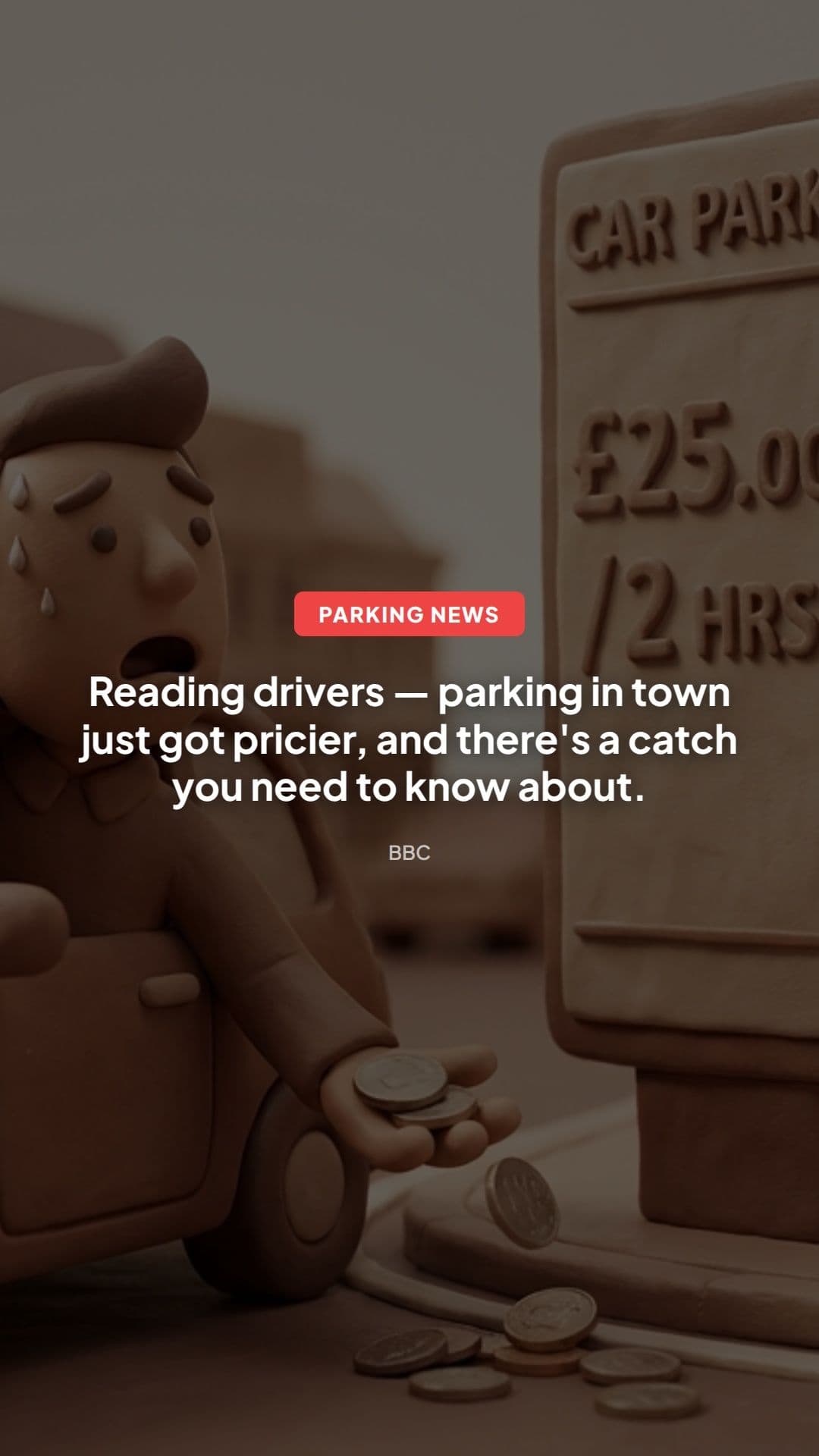
Parking Charges Are Rising Across the UK — Here's What Every Driver Needs to Know
A summer of steeper bills is coming for millions of motorists. But understanding the rules could save you money — and help you push back when councils overstep.
The Hook: Your Favourite Car Park Just Got More Expensive
Picture this: you pull into your local town-centre car park, the one you've used for years, muscle memory guiding you to the pay machine. You tap in your usual hour, reach for your wallet — and do a double take. The price has jumped. Again. And the one-hour option? Gone entirely.
This isn't a one-off glitch or a local quirk. It's happening in car parks and on high streets from Cornwall to Cumbria, and it's happening right now. According to a BBC investigation, councils across the UK are implementing a wave of parking charge increases this summer, with many simultaneously scrapping shorter tariff options that drivers have relied upon for years. The message from town halls is clear: parking is no longer just an amenity — it's a revenue stream, and they intend to make the most of it.
What's Actually Happening
The BBC's reporting reveals a coordinated — if not formally organised — shift in how local authorities are approaching parking income. Across multiple regions, councils are:
- Raising tariffs in multi-storey and town-centre car parks, in some cases by significant percentages
- Removing one-hour tariff options, effectively forcing drivers to pay for longer blocks of time than they may actually need
- Repositioning parking income as a tool to fund broader transport services and plug gaps in stretched council budgets
This isn't a London-centric story, either. While the capital has long been associated with eye-watering parking costs, these increases are being felt in medium-sized towns and regional centres where drivers have historically had more affordable options. The removal of one-hour tariffs is particularly telling — it's a structural change, not merely a price tweak, and it suggests councils are deliberately pushing drivers toward higher-spend options.
Why This Matters: The Bigger Picture
To understand why this is happening now, you need to appreciate the financial position most UK councils find themselves in. Local authorities in England alone are facing a collective funding gap estimated at several billion pounds, with social care, waste management, and road maintenance all competing for shrinking budgets. Parking — one of the few areas where councils have genuine commercial discretion — has become an increasingly attractive lever to pull.
But there's an important distinction to draw here. Under the Road Traffic Regulation Act 1984, councils operating civil parking enforcement are legally required to ring-fence surplus parking income. Profits from on-street parking must, by law, be used for specific purposes: highway improvement, public transport support, environmental improvement, and facilities for cyclists and pedestrians. Off-street car parks (council-owned multi-storeys, for instance) don't carry quite the same statutory restriction, which gives councils considerably more flexibility about where that income goes.
This legal distinction matters because it shapes how councils justify these increases. When a council raises on-street charges, it must at least theoretically demonstrate the money is being reinvested in transport infrastructure. When it raises multi-storey tariffs, the justification can be broader — and the accountability thinner.
There's also the question of the 2023 Levelling Up and Regeneration Act, which gave local planning authorities new tools to manage high street health. Some councils are using parking pricing as part of a deliberate strategy to shift footfall patterns, encourage active travel, or reduce car dependency — goals that may be laudable in isolation but feel rather less noble when you're a shift worker who can't cycle to the town centre.
The Legal Angle: What Rights Do Drivers Actually Have?
Here's where it gets interesting — and where many drivers don't realise they have more recourse than they think.
Councils must follow proper consultation procedures before making significant changes to parking tariffs, particularly for on-street parking. Changes to Traffic Regulation Orders (TROs), which govern where and when you can park and at what cost, must be advertised publicly. Councils are required to invite representations, consider objections, and in some cases hold formal hearings. If a council has raised charges or removed tariff options without following the correct TRO amendment process, those charges may be legally challengeable.
The signage must be accurate and unambiguous. Under the Traffic Signs Regulations and General Directions 2016, parking signs must clearly communicate the terms under which you're parking. If a council has changed its tariff structure but the signage in a car park still displays old pricing or fails to clearly indicate that the one-hour option has been removed, any PCN issued on the basis of that ambiguity could be successfully challenged. Courts and adjudicators have consistently held that the burden of clarity lies with the authority, not the motorist.
Off-street car parks have separate rules. Council-owned car parks that aren't governed by TROs may instead be regulated under byelaws or the council's own terms and conditions. Enforcement in these spaces is typically conducted under the Road Traffic Act 1991 and subsequent regulations, but the specific legal basis for charges must be clearly displayed. If it isn't, you have grounds for challenge.
What Drivers Should Know: Practical Advice for Navigating the Changes
This is a shifting landscape, but there are concrete steps you can take to protect yourself:
1. Check tariff boards before you commit Don't rely on what you paid last time. Councils are not required to notify individual motorists of price changes — only to advertise them publicly. Always check the current pay machine or tariff board before purchasing a ticket, particularly in car parks you haven't visited recently.
2. Take photographs If you're ever uncertain about pricing, signage, or the terms displayed, photograph the signs before and after paying. This creates a timestamped record that can be invaluable if you receive a PCN and need to demonstrate what information was available to you at the time.
3. Look for the TRO reference On-street parking signs in England and Wales typically reference the Traffic Regulation Order that authorises the restriction or charge. If you're unsure whether a charge is legally valid, you can request a copy of the relevant TRO from the council — this is a public document and they must provide it.
4. Know your right to appeal If you receive a PCN you believe is unfair — particularly if it relates to confusing or out-of-date signage following a tariff change — you have the right to make an informal representation to the issuing council, followed by a formal representation if that's rejected, and ultimately an independent appeal to the relevant adjudication service (the Traffic Penalty Tribunal in England outside London, or London Tribunals for the capital). These services are free to use and genuinely independent.
5. Consider the timing of your visit With one-hour tariffs disappearing, planning your visit more carefully becomes more important. If you only need 45 minutes, consider whether a different car park — or a different time of day — might offer better value. Some councils still offer short-stay options in specific locations, even where they've removed them from their main sites.
6. Check for cashless payment issues Many councils have moved entirely to cashless payment systems. If an app or machine fails and you can't pay, document everything — the error message, the time, your attempts to resolve it. This documentation is critical if you later receive a PCN.
Looking Ahead: What This Means for UK Drivers
The trend is unlikely to reverse. Councils are under sustained financial pressure, and parking income is one of the few levers they control directly. As the cost of living continues to bite and local authority budgets remain constrained, the temptation to treat car parks as cash cows will only grow stronger.
There are, however, countervailing forces. The Competition and Markets Authority (CMA) has shown increasing interest in parking practices, having already fined major operators for anti-competitive behaviour. If councils are seen to be using their monopoly position on town-centre parking to extract unreasonable revenue without proportionate benefit to motorists or transport infrastructure, regulatory scrutiny could follow.
There's also a democratic dimension. Councillors are elected representatives, and parking charges are — despite their technical complexity — a genuinely political issue. In areas where increases are steep and poorly communicated, expect local campaigns and formal objections to TRO amendments to become more common. Drivers who understand the consultation process can participate meaningfully in it.
The removal of one-hour tariffs deserves particular scrutiny. It's not just an inconvenience — it's a structural change that disproportionately affects people making short, essential trips: collecting a prescription, attending a GP appointment, dropping off a parcel. If councils are removing these options without clear evidence that it serves a legitimate transport objective, that's a conversation worth having loudly and publicly.
The bottom line? Parking charges are going up, and in many places the flexibility you once had is shrinking. But you're not powerless. Know the rules, document everything, and don't hesitate to challenge a PCN when the grounds are there. The law — imperfect as it is — still provides meaningful protections for drivers willing to use it.
Source: BBC News, "Most of council-run parking charges set to rise"
Written by
Grace O'Sullivan
Municipal Enforcement Expert
Ready to Challenge Your Ticket?
Let our AI analyse your PCN and generate a professional appeal letter in minutes.
Start Free Appeal