Council parking charges review: free parking reprieve
Council pauses plans to scrap free parking in some towns and promises a review of parking charges. What it means for motorists, permits and enforcement.

Sophie Dubois
6 March 2026
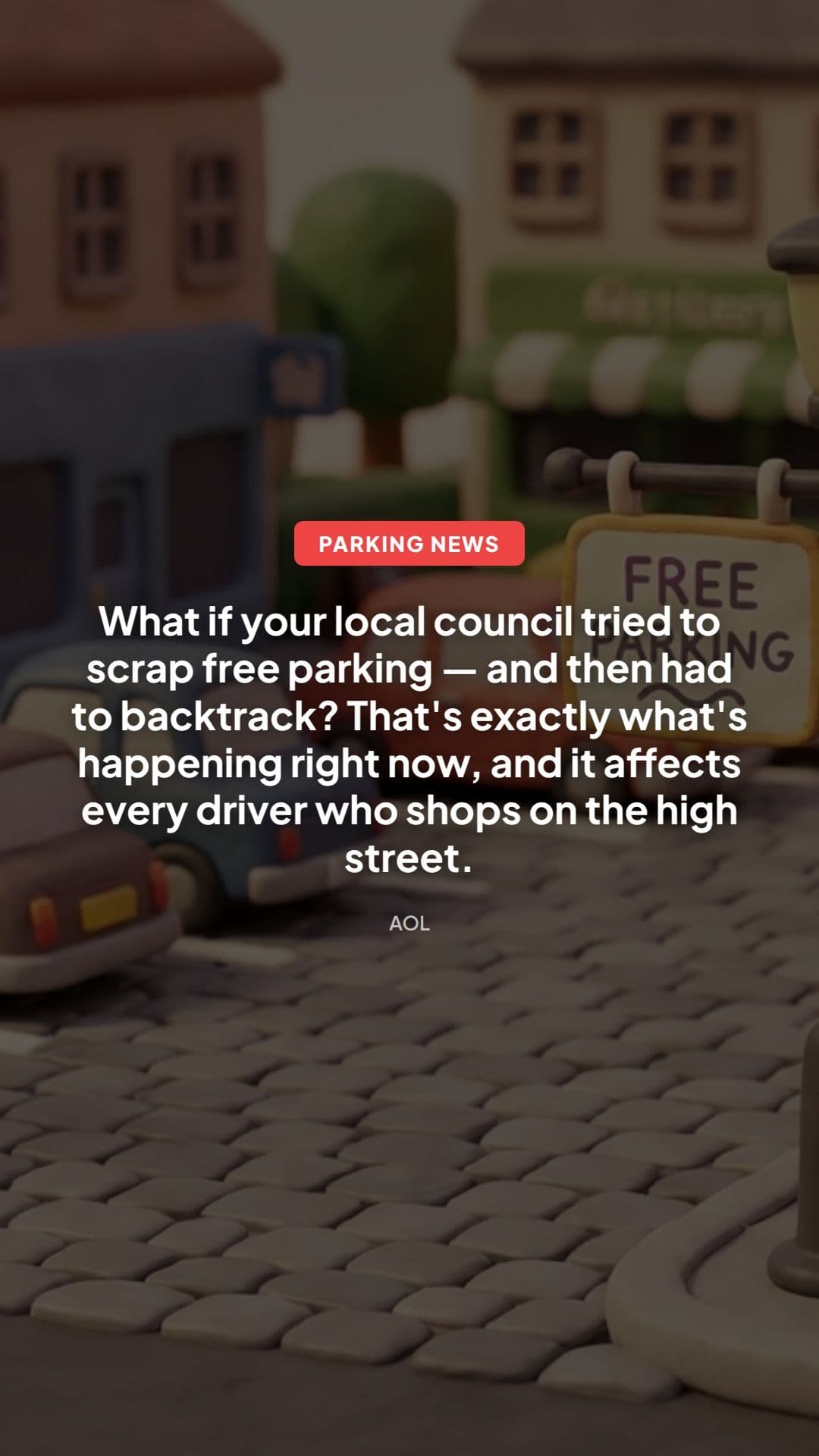
Council Parking U-Turn: What It Really Means for Drivers Across the UK
Imagine pulling up to your local high street, wallet already braced for the inevitable parking charge, only to find that the council has quietly shelved its plans to introduce — or increase — fees. It sounds almost too good to be true. But that is precisely what has happened in at least one local authority, where mounting public pressure and political scrutiny have forced a rethink on parking charge proposals. It is a rare win for drivers, but it raises a much bigger question: how did we get here, and what does it mean for the millions of motorists navigating an increasingly complex and expensive parking landscape across the UK?
What Happened
According to a report from AOL, a local council has paused or reversed proposals that would have removed free parking in certain towns, with officials indicating that the wider package of parking charge plans may be subject to further review. The decision follows significant pushback from both the public and elected members, suggesting that the political appetite for squeezing drivers at the kerb is not quite as strong as some councils might have assumed.
While the specific council is not named in the headline report, the story is far from isolated. Across England, Wales, and Scotland, dozens of local authorities have been quietly trialling proposals to introduce charges where none previously existed, extend charging hours into evenings and weekends, or remove short-stay free parking allowances that shoppers and residents have relied upon for years. In many cases, these proposals have been dressed up as sustainability measures or traffic management tools — but the revenue implications are rarely far from the surface.
The fact that this council has blinked under pressure is significant. It demonstrates that public engagement works, and that parking policy — often treated as a dry administrative matter — is actually a live political issue with real consequences for local economies and community life.
Why It Matters
Free or affordable parking is not just a convenience. For many town centres outside London and other major cities, it is a lifeline. Research from the British Retail Consortium has consistently shown that ease of parking is one of the primary factors influencing where people choose to shop. When councils remove free parking or introduce charges on previously unrestricted streets, the ripple effects can be severe — reduced footfall, struggling independent retailers, and a gradual hollowing out of the high street that no amount of regeneration funding can easily reverse.
There is also a fairness dimension that often gets overlooked in these debates. Not everyone can cycle to the shops or hop on a bus. For older residents, people with mobility difficulties, carers, and those living in rural areas with limited public transport, the car is not a lifestyle choice — it is a necessity. Pricing them out of town centres through punitive or poorly considered parking charges is, at its core, a social equity issue.
The timing of this particular council's retreat is also telling. Local elections are never far away, and parking charges have a remarkable ability to galvanise voters. Councillors who might otherwise be comfortable rubber-stamping officer recommendations on parking policy are acutely aware that a controversial charge introduced just before polling day can cost them their seats. Political scrutiny, in this context, is doing exactly what it is supposed to do.
The Legal Angle
Parking policy in the UK operates within a surprisingly detailed legal framework, and drivers who understand it are better placed to challenge decisions they consider unfair.
The Road Traffic Regulation Act 1984 remains the foundational piece of legislation governing how local authorities can regulate parking on public roads. Under this Act, councils must designate parking places through a formal Traffic Regulation Order (TRO) before they can lawfully charge for parking or restrict it. This is not a rubber-stamp exercise — TROs must be advertised, and members of the public have a statutory right to object during a consultation period. If a council fails to follow the correct procedure, any charges levied under the resulting order may be legally challengeable.
This matters enormously in the current context. When a council proposes new parking charges, it must go through the TRO process. That process is a genuine opportunity for residents, businesses, and local groups to make their voices heard — not merely as a formality, but as a mechanism with real legal weight. If objections are numerous or substantive, the council must consider them, and in some cases, a sufficiently robust objection can delay or derail a proposal entirely.
The Traffic Management Act 2004 further governs how civil parking enforcement operates in England, transferring enforcement powers from the police to local authorities and establishing the framework under which Penalty Charge Notices (PCNs) are issued. Crucially, it also places a duty on local authorities to manage traffic and parking in a way that is expedient — a word that courts have interpreted to include considerations of economic impact and community need, not just traffic flow.
In Wales, broadly similar provisions apply under devolved arrangements, with Welsh Government guidance adding additional layers of consideration around the Welsh language and rural accessibility that councils must factor into any parking proposals.
One further legal point worth noting: Section 122 of the Road Traffic Regulation Act 1984 requires local authorities to exercise their parking functions with due regard to the economic and social needs of the area. This is not a vague aspiration — it is a statutory duty. Councils that introduce charges without adequately assessing their impact on local businesses and residents may be vulnerable to legal challenge on precisely these grounds.
What Drivers Should Know
If your local council is currently consulting on new or increased parking charges, here is what you can do:
- Respond to consultations formally. When a TRO is being made or amended, the council must advertise it — typically in a local newspaper and on-street signage. You have a right to object in writing, and those objections must be considered. Do not assume your views are unwelcome or irrelevant.
- Organise collectively. Individual objections carry weight, but coordinated responses from local businesses, residents' associations, or town centre partnerships carry considerably more. Councils are far more likely to pause and reconsider when they receive dozens of substantive, well-argued objections rather than a handful of one-line complaints.
- Request the evidence base. Under the Freedom of Information Act 2000, you can ask the council to disclose any impact assessments, traffic surveys, or financial modelling that underpins its proposals. If the evidence is thin — or if the primary driver is revenue rather than traffic management — that is a powerful argument against the charges.
- Engage your local councillors. Elected members sit on scrutiny committees and can call in decisions for review. A councillor who hears from enough constituents about a parking proposal will take notice, particularly if an election is approaching.
- Check the signs before you park. If new charges have been introduced and you are unsure whether they apply, look carefully at the upright signs and any bay markings. If the signage is unclear, contradictory, or does not accurately reflect the TRO, you may have grounds to challenge any PCN issued.
Looking Ahead
The council's decision to review its parking charge plans is a welcome development, but it would be naive to treat it as a permanent retreat. The financial pressures facing local authorities in the UK are acute and show no sign of easing. With central government grant funding squeezed and council tax rises politically sensitive, parking revenue remains one of the few income streams that councils can meaningfully influence. The temptation to return to these proposals — perhaps in a slightly repackaged form — will not disappear.
What this episode does illustrate, however, is that the relationship between councils and drivers is not fixed. It is contested, dynamic, and genuinely responsive to public pressure when that pressure is applied intelligently and persistently. The drivers and communities who pushed back against these proposals have demonstrated something important: that parking policy is not just a technocratic exercise conducted in committee rooms, but a matter of genuine public interest that deserves — and can withstand — robust democratic scrutiny.
For drivers across the UK, the lesson is clear. Stay informed, engage with consultations, and do not assume that a council's initial proposal is its final word. In parking, as in so much else, the squeaky wheel really does get the grease.
Story originally reported by AOL. Analysis and additional context provided by Parking Ticket Pal.
Written by
Sophie Dubois
Traffic Law Specialist
Ready to Challenge Your Ticket?
Let our AI analyse your PCN and generate a professional appeal letter in minutes.
Start Free Appeal