CMA fines Euro Car Parks £473k in consumer probe
The CMA hits Euro Car Parks with a £473,000 fixed penalty for failing to comply with a statutory information notice under the DMCC Act.

Yuki Tanaka
2 May 2026
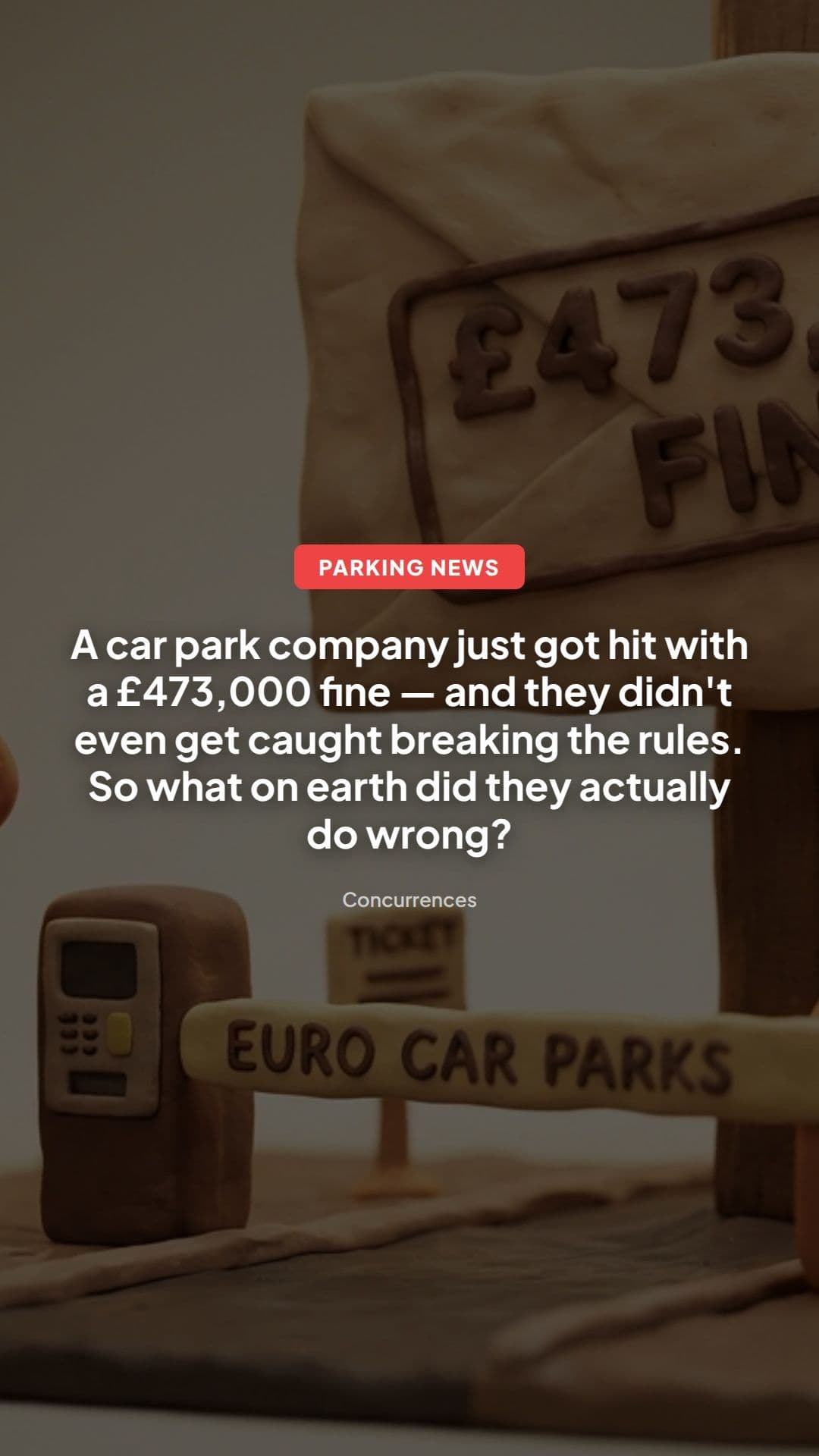
Euro Car Parks Fined £473,000: What It Really Means for UK Drivers
A Wake-Up Call That Goes Far Beyond One Parking Firm
Here's a number worth sitting with for a moment: £473,000. That's the fixed penalty the Competition and Markets Authority (CMA) has just slapped on Euro Car Parks — not for price gouging, not for aggressive debt collection, and not for issuing unlawful fines. The company was penalised simply for ignoring a statutory information request.
In other words, a major UK parking operator was fined nearly half a million pounds for refusing to hand over information that regulators were legally entitled to see. If that doesn't make you wonder what they didn't want the CMA to find, you're not paying close enough attention.
This case is significant not just because of the eye-catching figure, but because of what it signals about the future of parking regulation in Britain. The landscape is shifting — and drivers who understand that shift are better placed to protect themselves.
What Actually Happened
Euro Car Parks is one of the UK's largest private parking operators, managing thousands of sites across the country — from retail parks and hospitals to airports and city-centre car parks. Millions of drivers interact with their systems every year, often without realising who is actually running the car park they've just pulled into.
According to reporting by Concurrences, the CMA issued Euro Car Parks with a statutory information notice — a formal legal demand requiring the company to provide specific data and documentation as part of a regulatory inquiry. Euro Car Parks failed to comply. The CMA, exercising its powers under the Digital Markets, Competition and Consumers Act 2025 (DMCCA), responded by imposing a fixed penalty of £473,000.
This is not a fine for bad behaviour towards drivers — at least, not directly. It is a fine for obstructing a regulator. But the reason regulators were asking questions in the first place is rooted in longstanding concerns about how private parking operators treat the public.
Why This Case Matters More Than It Might Seem
To understand why this is significant, you need a little background on how UK parking regulation has evolved — and how it has repeatedly failed drivers.
Private parking enforcement in the UK has operated in a regulatory grey area for years. Unlike council-issued Penalty Charge Notices (PCNs), which are backed by statute and subject to formal appeal routes, private parking charges are technically invoices — contractual demands rather than fines. Operators have long exploited this ambiguity, issuing charges that look official, using aggressive debt collection language, and banking on the fact that most drivers simply pay up rather than challenge them.
The CMA has been increasingly concerned about this sector. Its interest in parking operators is part of a broader consumer protection agenda — one that received a significant legislative upgrade with the Digital Markets, Competition and Consumers Act 2025. This landmark piece of legislation gave the CMA sharper teeth, including the power to issue fixed penalties to companies that fail to cooperate with statutory information requests. The £473,000 fine handed to Euro Car Parks is one of the earliest and most prominent uses of that power.
The fact that Euro Car Parks — a well-resourced, well-established operator — chose not to comply with an information notice is, in itself, revealing. Companies cooperate with regulators when they have nothing to hide and when the cost of non-compliance outweighs the cost of disclosure. When a company takes the opposite approach, it invites the obvious question: what was in that information that they didn't want scrutinised?
The Legal Framework: What Has Changed
The Digital Markets, Competition and Consumers Act 2025 represents the most significant overhaul of UK competition and consumer law in a generation. Among its many provisions, it:
- Strengthens the CMA's investigative powers, including the ability to compel businesses to hand over documents, data, and communications
- Introduces fixed financial penalties for non-compliance with statutory information notices — penalties that can be levied without the lengthy court process previously required
- Expands consumer protection enforcement, allowing the CMA to act directly against companies engaged in unfair commercial practices, without needing to go through the courts first
Before this Act, the CMA's enforcement toolkit was considerably blunter. Compelling a company to hand over information often required protracted legal proceedings. Now, the regulator can move faster — and fine companies directly for obstruction.
It's also worth noting the Private Parking Code of Practice, which has had a complicated history. Originally introduced to cap private parking fines and impose minimum standards on operators, it was challenged in the courts by parking operators — including, ironically, some of the industry's largest players — and was delayed for years. Its eventual implementation has been partial and contested. The CMA's willingness to use its new statutory powers in this context suggests the regulator is no longer content to wait for the industry to self-regulate.
What Drivers Should Know
If you've ever received a charge notice from Euro Car Parks — or any private operator — here's what this case means for you in practical terms:
1. Regulators are watching more closely than before The CMA's action signals that private parking operators are under genuine scrutiny. This doesn't mean every unfair charge will automatically disappear, but it does mean operators face real consequences for failing to engage with oversight.
2. Your data is part of the picture The CMA's information requests to parking operators typically include data on how charges are issued, how appeals are handled, and how debt collection is pursued. If you've ever felt that an operator's appeals process was deliberately obstructive or that their signage was designed to confuse rather than inform, you're not alone — and regulators are now formally asking questions about exactly these practices.
3. Always appeal charges you believe are unfair Private parking charges are not fines. They are contractual claims, and you have the right to challenge them. If the operator is a member of the British Parking Association (BPA), appeals go through POPLA (Parking on Private Land Appeals). If they're a member of the International Parking Community (IPC), the independent appeals service is the IAS. Euro Car Parks is a BPA member, so POPLA is the relevant route.
4. Document everything Take photographs of signage, your parking ticket, the payment machine, and your vehicle's position when you park. If a dispute arises, this evidence is invaluable. Operators who rely on ambiguous signage or malfunctioning payment systems are particularly vulnerable to well-evidenced appeals.
5. Know the grace period rules Under the current Private Parking Code of Practice, drivers must be given a minimum ten-minute grace period after their paid or permitted time expires before a charge can be issued. If you've received a charge that appears to ignore this requirement, that is a legitimate ground for appeal.
6. Don't ignore debt collection letters If a private parking charge escalates to a debt collection agency, do not ignore it — but equally, do not assume the debt is automatically valid. Check whether the original charge was lawfully issued, whether proper notice was given, and whether the operator followed the correct process for transferring liability.
Looking Ahead: A Turning Point for Parking Regulation?
The £473,000 fine imposed on Euro Car Parks is unlikely to be the last of its kind. The CMA has made clear that it views the private parking sector as an area requiring sustained oversight, and the DMCCA has given it the tools to act decisively when companies fail to cooperate.
There are broader implications here too. The government's long-delayed Private Parking Code of Practice — which has been through multiple consultations, legal challenges, and revisions — is intended to establish binding minimum standards across the industry. If the CMA continues to apply pressure on operators to disclose how they operate, the data gathered through these investigations could inform further regulatory reform.
For drivers, the key takeaway is this: the balance of power in private parking disputes is slowly — very slowly — shifting. Regulators are more engaged than they have been in years. Operators who have relied on confusion, complexity, and the assumption that most drivers won't bother to fight back are facing a more hostile environment.
That doesn't mean the problems are solved. Millions of questionable charges are still issued every year, many to drivers who have done nothing wrong. But a £473,000 penalty for simply refusing to answer questions is a significant statement of intent. It tells the parking industry — loudly and clearly — that the era of operating without meaningful accountability may finally be drawing to a close.
For now, the best thing any driver can do is stay informed, document their parking carefully, and never assume that a private charge notice is the final word.
Written by
Yuki Tanaka
Urban Planning Researcher
Ready to Challenge Your Ticket?
Let our AI analyse your PCN and generate a professional appeal letter in minutes.
Start Free Appeal