
Clean Air Zone Pollution Rises Despite Driver Charges
Air pollution has risen inside a UK Clean Air Zone despite charges for older vehicles. We examine what it means for drivers, daily costs and local policy.

The Parking Ticket Pal Editorial Team
20 September 2026
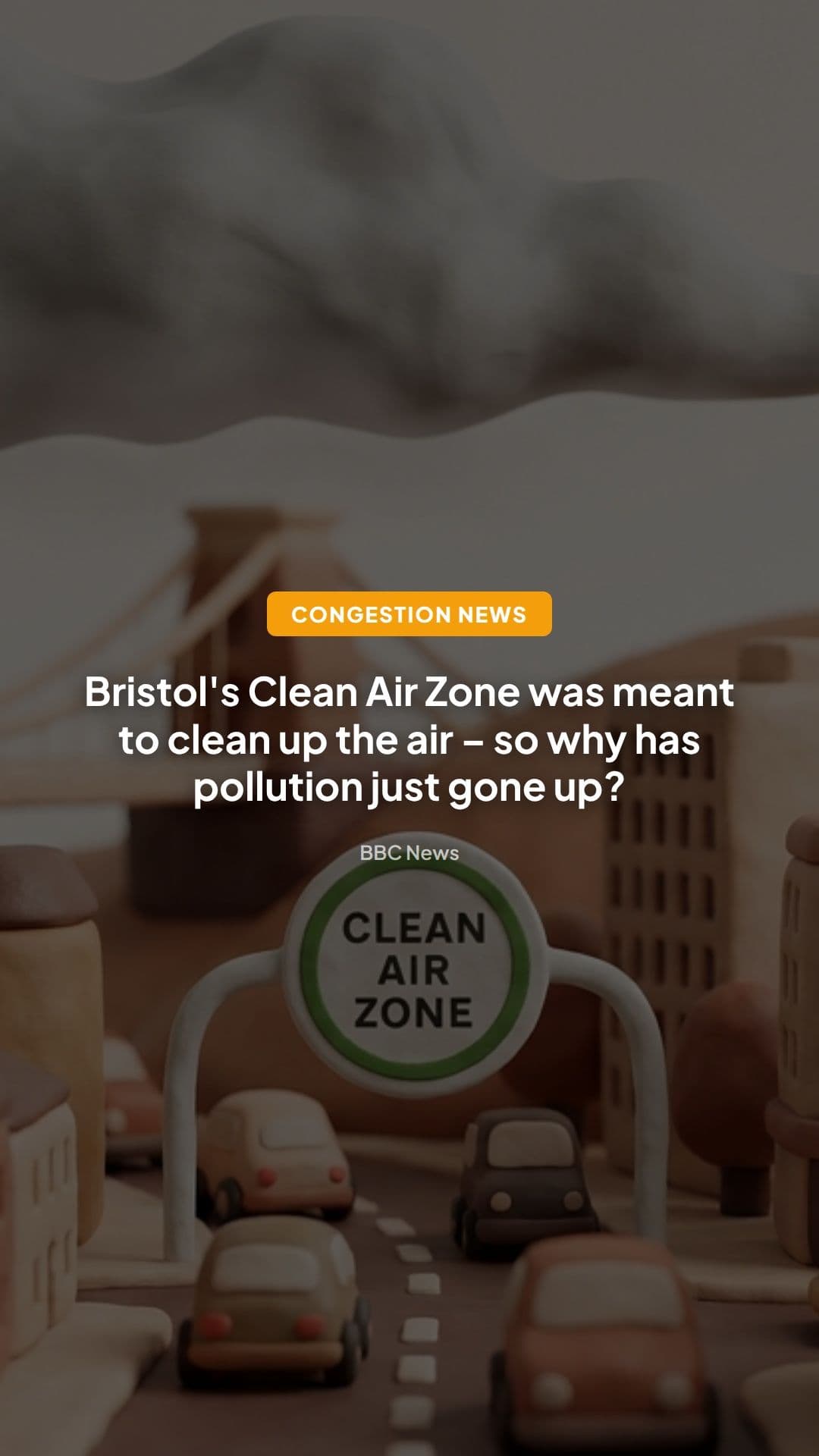
Clean Air Zones Were Supposed to Cut Pollution. So Why Is It Going Up?
Picture this: a council spends years planning a Clean Air Zone, installs a network of cameras, drafts complex vehicle emission rules, faces down furious business owners and confused residents, finally switches it on, and then, when the first proper air quality data comes back, pollution levels inside the zone have actually risen. That is precisely the awkward situation now facing at least one UK city, according to a recent BBC News report that found air pollution has increased inside its Clean Air Zone despite drivers of older, more polluting vehicles being charged to enter.
For anyone who has grumbled about paying a daily fee just to nip into town in an ageing diesel, this story raises an obvious and uncomfortable question: what exactly are these charges achieving?
What Happened
According to the BBC's reporting, monitoring data from inside the city's Clean Air Zone shows pollution has risen since the scheme's introduction, even though the council continues to charge drivers of non-compliant, typically older, vehicles a daily fee to drive through the area. The zone works on the now-familiar model used across England: vehicles that fail to meet certain emissions standards, usually Euro 4 for petrol cars and Euro 6 for diesels, are charged for entering a defined city centre area, with the aim of pushing drivers towards cleaner vehicles or alternative transport.
The specifics of enforcement will be familiar to anyone who has read about similar schemes elsewhere. Automatic Number Plate Recognition (ANPR) cameras positioned at the zone's boundary read registration plates and cross-reference them against the DVLA database to check compliance. If a vehicle isn't exempt and doesn't meet the standard, the driver is expected to pay online, usually by midnight the following day, or risk a penalty charge notice landing on their doormat weeks later.
What makes this story notable isn't the mechanics of the scheme, which are standard, but the outcome. The entire premise of a Clean Air Zone is that charging polluting vehicles will change driver behaviour enough to bring pollution down. When the data shows the opposite trend, it inevitably invites scrutiny of whether the policy is actually working, or whether something else entirely is going on.
Why It Matters
Clean Air Zones exist because of a genuinely serious public health problem. Air pollution, particularly nitrogen dioxide (NO2) and fine particulate matter (PM2.5), has been linked by public health bodies to thousands of premature deaths across the UK each year, along with worsened asthma, cardiovascular disease and reduced lung development in children. Councils were not dreaming these schemes up for fun or revenue. Many were legally compelled to act after breaching statutory air quality limits, following government directions issued under the Environment Act and associated Local Air Quality Management framework.
That legal backdrop matters a great deal here. Under UK law, local authorities that fail to meet nitrogen dioxide limits within the timeframe set by central government can be directed to implement a Clean Air Zone or another equally effective measure. This isn't optional box-ticking. It stems from the UK's long and often embarrassing legal history on air quality, including the ClientEarth legal challenges that forced successive governments to produce tougher air quality plans after courts found earlier efforts inadequate.
So when a city's own pollution data moves in the wrong direction after a CAZ goes live, it isn't just a local news story. It raises questions for the Department for Environment, Food and Rural Affairs (Defra), which signs off these schemes, and for the council itself, which will likely need to explain the discrepancy to both local residents and central government.
There are several plausible, non-scandalous explanations worth bearing in mind before assuming the scheme has simply failed. Pollution levels are influenced by weather patterns, background traffic growth, roadworks, industrial emissions and even how monitoring stations are positioned. A single year or reporting period showing a rise doesn't necessarily mean the underlying trend is negative long term. It's also possible that traffic has simply been displaced rather than reduced, with drivers rerouting around the zone boundary rather than switching to cleaner vehicles, which can sometimes concentrate pollution on roads just outside the charged area.
The Legal Angle
For drivers, it's worth understanding the legal framework that sits behind these charges, because it affects what rights you have if you're contesting one.
Clean Air Zone charges are typically introduced under powers similar to those used for road user charging schemes, allowing local authorities to charge vehicles that don't meet emissions standards for entering a designated area. Each scheme operates under its own local traffic order or charging scheme order specific to that city, meaning the exact rules, exemptions and appeal processes can vary from one CAZ to another. This is different from a standard parking Penalty Charge Notice (PCN), which usually falls under the Traffic Management Act 2004. Failing to pay a CAZ charge on time typically results in a separate penalty charge notice specific to that clean air scheme, with its own representation and appeal process, generally through the local authority in the first instance and, if unsuccessful, an independent adjudicator such as the Traffic Penalty Tribunal or London Tribunals, depending on the region.
Exemptions and discounts also exist, and they matter enormously if you drive an older vehicle regularly into an affected city. Common exemptions include vehicles used by Blue Badge holders in certain circumstances, some historic vehicles, and temporary grace periods for residents or specific trade vehicles while they transition to compliant vehicles. These exemptions are not automatic in most cases and usually need to be registered with the local authority in advance, so it's worth checking your specific city's scheme rather than assuming a general rule applies.
If you believe you've been wrongly charged, perhaps because your vehicle is compliant but was incorrectly flagged, or because a payment was made but not properly registered, you generally have the right to make a formal representation before any penalty is enforced. Keeping evidence of payment, including timestamps and transaction references, is essential, much as it is when contesting any parking or traffic penalty.
What Drivers Should Know
If you regularly drive into or through a city with a Clean Air Zone, a few practical points are worth keeping in mind regardless of how this particular story develops:
- Check your vehicle's compliance before you travel. Most councils and the government's own vehicle checker tool allow you to confirm whether your specific registration meets the required emissions standard for a given zone, avoiding nasty surprises.
- Pay promptly if you're not exempt. Charges are usually due by midnight the day after travel. Missing this window typically triggers a penalty charge notice that costs considerably more than the original daily fee.
- Don't assume one city's rules apply to another. Charging bands, exempt vehicle categories and daily rates differ between schemes, so a vehicle exempt in one city might not be exempt in the next.
- Keep records. If you pay a CAZ charge, retain confirmation. Disputes over non-payment are far easier to resolve with a paper trail.
- Understand the appeals route. If you receive a penalty you believe is wrong, most schemes allow an initial informal or formal representation to the council before escalation to an independent tribunal, so don't ignore correspondence in the hope it disappears.
Looking Ahead
This story is likely to reignite a debate that has simmered since the first Clean Air Zones launched: are these schemes genuinely reducing pollution, or are they primarily generating revenue while displacing the problem rather than solving it? Councils will face pressure to publish clearer, longer-term monitoring data rather than relying on short snapshots, and central government may face renewed calls to review whether current CAZ models are fit for purpose.
For drivers, the practical reality doesn't change much in the short term. The charges remain legally enforceable regardless of whether pollution figures are moving up or down, and penalty notices for non-payment will keep landing on doormats. But this kind of scrutiny matters. Clean Air Zones were sold to the public as a proportionate, evidence-based response to a genuine health crisis. If the evidence starts pointing the wrong way, drivers are entitled to ask harder questions about whether they're paying for genuine environmental improvement or simply funding an expensive administrative exercise.
Written by
The Parking Ticket Pal Editorial Team
Source-checked parking guidance
Ready to Challenge Your Ticket?
Let our AI analyse your PCN and generate a professional appeal letter in minutes.
Start Free Appeal