Clean Air Zone Fines: Why 9.6m Drivers Face Penalties
More than 9.6 million Clean Air Zone penalty notices have hit drivers in London, Bradford and Portsmouth. Learn the rules, payment deadlines and appeal options.

The Parking Ticket Pal Editorial Team
24 October 2026
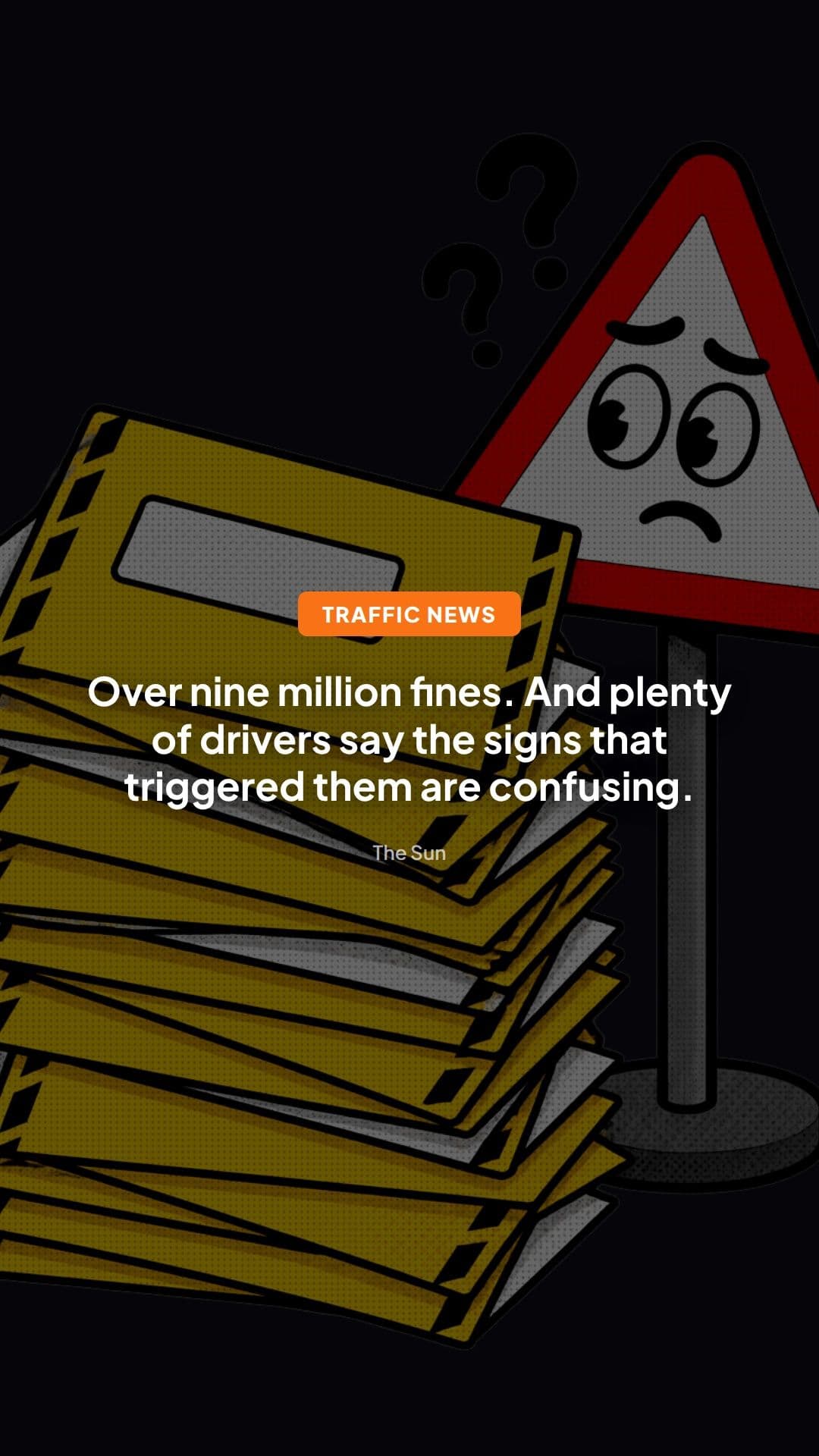
9.6 million Clean Air Zone fines: are confusing road signs to blame?
You can obey every speed limit, indicate properly and park perfectly, and still end up with a penalty notice for something you never knew you'd done. That's the frustration behind a recent report in The Sun, which says more than 9.6 million penalty notices have been issued across Bradford, Portsmouth and London for Clean Air Zone-related breaches. The paper links the figure to "confusing" road signs. The breaches include driving a non-compliant vehicle into a zone and missing a payment deadline.
The headline number grabs attention, but the more useful question is why so many people are being caught, and what the law says about it. Here is what sits behind the figures, where signage fits into the legal picture, and what drivers can do.
What was reported
According to The Sun, the penalty notices cover three places with very different schemes:
- London, where the Ultra Low Emission Zone (ULEZ) now covers all London boroughs and applies to many private cars.
- Bradford, which runs a Clean Air Zone aimed mainly at higher-polluting commercial and public transport vehicles.
- Portsmouth, which also runs a Clean Air Zone targeting particular vehicle classes.
The two breaches highlighted are simple. Either a vehicle entered a zone when it didn't meet the emissions standard and the charge wasn't paid, or the driver intended to pay but missed the deadline. The second is arguably more worrying, because it suggests many penalties aren't about drivers trying to dodge the rules at all. Some are about people not understanding the system.
This is not the first time these figures have made headlines, and we have covered the broader numbers before. Here the angle is narrower: how clear the system is, and what that means for a driver holding a notice.
Why signs and systems cause so much confusion
Clean Air Zones are unusual compared with traditional parking restrictions. A yellow line or a bay marking tells you what to do at the kerb. A charging zone asks you to know several things before you set off:
- Whether the zone exists on your route.
- Whether your particular vehicle is subject to the charge.
- Whether you have to pay, how much, and by when.
- How to pay through the official channel.
Each of those steps is a place to go wrong. A few worth understanding:
Vehicle class matters. In Bradford and Portsmouth, the charging classes are aimed at vehicle types such as buses, coaches, taxis, private hire vehicles and goods vehicles, and generally not at ordinary private cars. London is different, because the ULEZ applies to cars, vans and motorcycles that don't meet the standard. A driver familiar with one scheme can easily assume the rules are the same in another. Always check the specific scheme's published rules, as they can change.
Signs are brief by necessity. A sign beside a busy road has seconds to get its message across. It can tell you a zone is ahead, but it can't explain emissions standards or payment windows. Most of the real information is online, which assumes you've looked it up in advance.
Payment deadlines are short. Many schemes allow payment on the day of travel or within a short window afterwards, not weeks later. Miss it by a day and a notice can follow. Because the deadlines are counted in days, not months, a delay of a day or two in paying can make a large difference.
Vehicle status isn't always obvious. Whether a car is compliant depends on its emissions standard, which isn't something most drivers know off by heart. Two cars that look identical can fall on opposite sides of the line, depending on age and fuel.
The legal angle
Penalty notices for Clean Air Zones and the ULEZ are civil penalties, not criminal offences, and they are issued under road user charging legislation. Charging schemes are created by local authorities (or TfL in London) under powers in the Greater London Authority Act 1999 and the Transport Act 2000. Enforcement and appeals follow regulations made under those Acts, including the Road User Charging Schemes (Penalty Charges, Adjudication and Enforcement) (London) Regulations 2001. Schemes outside London operate under separate but similar regulations. The detail varies, so always read the notice you receive.
Some key points for drivers:
Liability usually rests with the registered keeper. As with many camera-enforced schemes, the notice is typically sent to whoever is recorded as the keeper of the vehicle with the DVLA, based on ANPR camera captures of the number plate.
There are statutory grounds to challenge. The regulations set out specific grounds on which you can make representations. Broadly speaking, these include:
- the charge was paid in time
- the vehicle was not in the zone at the time, or the contravention didn't occur
- you were not the keeper at the time (for example, the vehicle had been sold)
- the vehicle had been taken without your consent (such as being stolen)
- the vehicle was hired under a qualifying agreement
- the penalty exceeded the amount applicable
- the authority made a procedural error
The exact wording varies by scheme, so check the notice and the authority's website.
Where signage fits in. There isn't a freestanding right to cancel a notice because a sign was "confusing". But adequate signage is part of what makes a charging scheme enforceable. Authorities are expected to follow the signing requirements set out in their scheme orders and in the Traffic Signs Regulations and General Directions 2016 (TSRGD). If a sign was missing, obscured, wrongly placed or didn't match the legal requirements, that can support an argument that no valid contravention occurred, or that there was a procedural impropriety. Parking adjudicators have long considered signage in the parking context, and the same logic can be run in other enforcement contexts. A vague complaint won't do it, though. A specific, evidenced one might.
Appeals go to independent adjudicators. If your representations to the authority are rejected, you can usually appeal to an independent tribunal. In London, that is London Tribunals. Outside London, appeals about charging schemes generally go to the Traffic Penalty Tribunal. Time limits are strict, and unpaid penalties can increase if ignored, so don't sit on a notice.
None of this is legal advice, and outcomes depend on the facts of each case. If you receive a notice and the stakes are high, it's worth checking the official guidance from the relevant authority or seeking professional advice.
What drivers should know and do
Whether you drive in these three places or elsewhere, a few habits can protect you.
Before you travel
- Check your vehicle, not just the zone. Use the official checkers: the GOV.UK Clean Air Zone vehicle checker for schemes outside London, and TfL's checker for the ULEZ. You'll need your registration number.
- Don't assume schemes work alike. Rules, charges, vehicle classes and payment windows differ between zones.
- Pay through official channels only. Search for the official GOV.UK or TfL payment pages. Scam sites imitate payment portals, and an unofficial payment may not count at all.
- Set a reminder for the payment deadline if you haven't paid in advance. Many penalties come from a driver who meant to pay.
If you think you were unfairly caught
- Gather evidence at once. Photographs of the signs on your approach (or the lack of them), dashcam footage, journey records and payment confirmations can all matter. Signs can be changed or repaired later, so a dated photo is valuable.
- Respond within the stated time. The notice will set out how long you have to pay at the reduced rate (where offered) and how long you have to make representations. Both deadlines are real.
- Be specific. "The signs were confusing" is weak. "There was no sign on the approach from this road, as shown in these photographs" is stronger. Tie your argument to a recognised ground.
- Keep copies of everything, including emails, screenshots and reference numbers.
Special situations
- Hire cars and leased vehicles. Notices for rental vehicles usually go to the hire company first, which can pass the charge and an admin fee to you. Check the rental agreement and ask the company how it handles zone charges.
- Sold or transferred vehicles. Make sure the DVLA has an up-to-date record of who the keeper is, as notices follow the registered keeper.
- Cloned plates. If you receive a notice for a trip you didn't make, the plate may have been copied. Report it and gather proof of where your vehicle actually was.
- Exemptions and discounts. Some vehicles may be exempt, and some zones offer exemptions or grace periods. These usually need registering in advance, so they won't help retrospectively unless you were already registered.
Looking ahead
The 9.6 million figure shows how large the scale of enforcement has become, and it will keep the pressure on authorities to explain how their systems work. Several things are worth watching.
Pressure for clearer information. Drivers' groups and campaigners often argue that signage and public information haven't kept pace with the spread of zones. If notices keep rising, expect more calls for standardised signage, clearer messaging about vehicle classes, and simpler payment routes.
More consistency, or not. Because each scheme is set by its own authority, rules differ. A more uniform national approach is something drivers often ask for, but there's no guarantee it will arrive.
Revenue scrutiny. Large volumes of penalty notices inevitably prompt questions about whether the schemes exist to change behaviour or raise money. Authorities generally say the aim is cleaner air, and the debate over whether the balance is right will continue.
Ongoing relevance for drivers. Charging zones are not going away. Even where private cars aren't charged today, scheme rules can be revised, so don't rely on what applied last year.
The bottom line
A penalty notice is not proof that you were careless, and it is not proof that the authority was wrong either. The fairest summary of the story is that these schemes ask a lot of drivers in advance, and a large number are falling short. If you drive anywhere near a charging zone, check your vehicle, pay through official channels, watch the deadlines and keep evidence. If you do receive a notice you think is wrong, the process exists for a reason, so use it within the time limits. For anything with real money at stake, go back to the official guidance from the issuing authority or the relevant tribunal.
For related reading, Parking Ticket Pal has existing guides covering Bristol's Clean Air Zone, how to use unclear signs as a defence against fines, and how the TfL and London Tribunals process works. They are worth a look if you are weighing up a challenge.
This article is general information about UK motoring rules and is not legal advice. Rules and charges vary between schemes and change over time, so always check the notice you receive and the official guidance.
Written by
The Parking Ticket Pal Editorial Team
Source-checked parking guidance
Ready to Challenge Your Ticket?
Let our AI analyse your PCN and generate a professional appeal letter in minutes.
Start Free Appeal