Chinese EV Sales Surge in Europe: Are Tariffs Working?
Chinese electric vehicle imports have hit a record European market share. We assess UK and EU tariffs, pricing, dumping claims and what this means for drivers.

Yuki Tanaka
9 August 2026
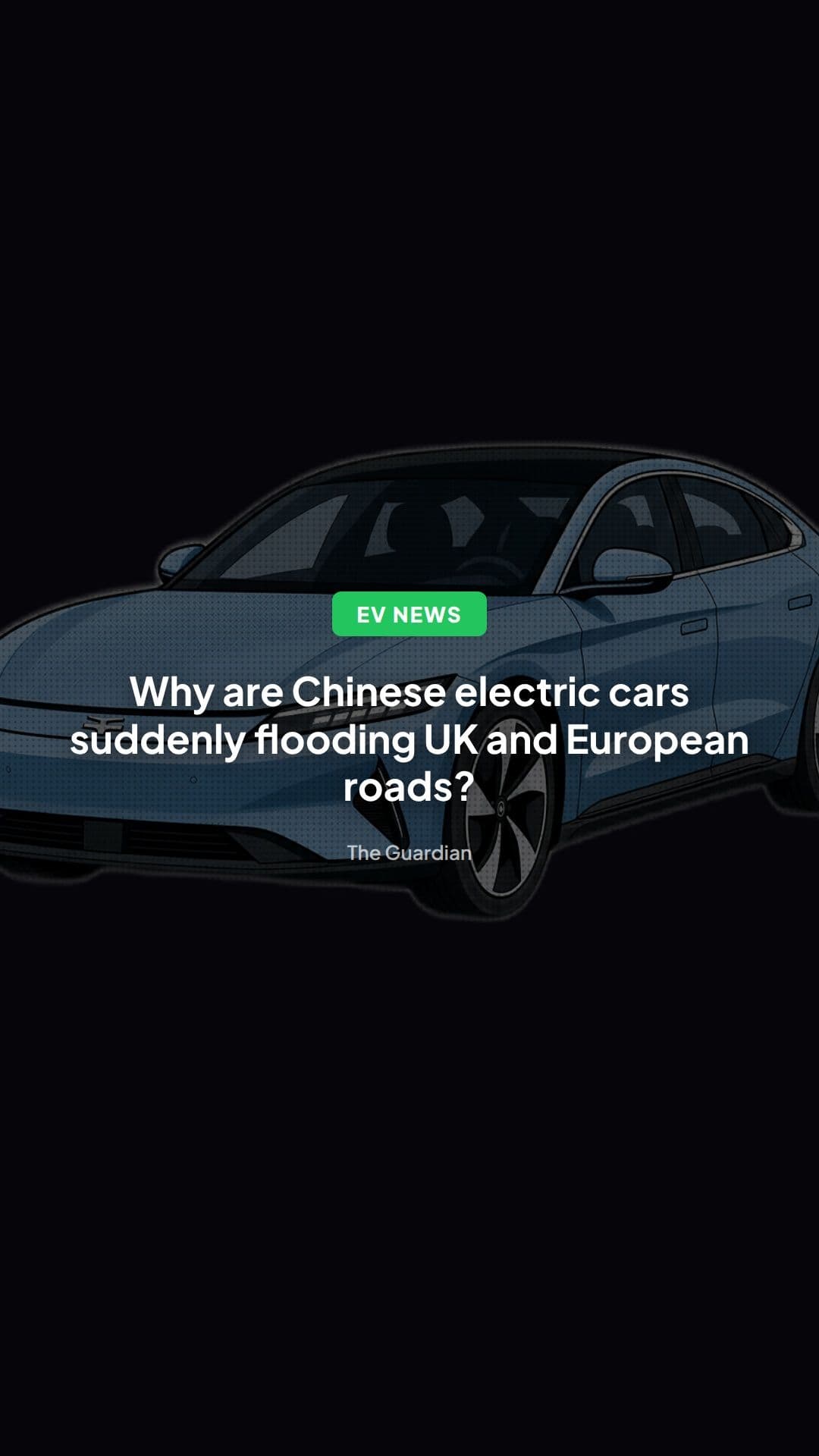
Chinese EV Sales Hit Record High in Europe: What It Means for UK Drivers and Prices
The Great British Bargain Hunt Just Got Bigger
If you've been eyeing up an electric car this year and noticed the badges on the cheaper end of the showroom floor look a little less familiar, you're not imagining it. Chinese electric vehicles have just carved out a record share of the European market, and the ripples from that shift are now lapping at the UK's shores in ways that go well beyond which car you might park on your driveway.
According to reporting from The Guardian, Chinese electric-car imports have reached an all-time high across Europe, propelled by aggressive pricing and consumer appetite that shows no sign of slowing. But with that surge comes a familiar political headache: renewed scrutiny over tariffs, trade fairness, and whether some of these vehicles are being "dumped" onto European markets at prices that undercut domestic and established manufacturers.
For UK drivers, this isn't just background noise about international trade policy. It's a story with direct consequences for what you'll pay for your next car, how quickly the switch to electric happens, and whether the government's already wobbly EV targets survive contact with a market being reshaped from Shanghai and Shenzhen.
What's Actually Happening
The headline figures are stark. Chinese-made electric vehicles are now claiming a bigger slice of the European market than ever before, a milestone driven by two forces working in tandem: price and demand. Brands such as BYD, MG (owned by China's SAIC), and a growing list of newer entrants have been able to offer electric cars at price points that, in many cases, undercut equivalent European and Japanese models by a significant margin.
This isn't a fluke of currency exchange rates or a temporary discount war. It reflects a genuine structural advantage. Chinese manufacturers benefit from vast domestic battery production, government-backed industrial policy, and manufacturing scale that Western carmakers have struggled to match. The result is electric cars that can be sold profitably at prices that squeeze margins for everyone else in the market.
The surge has reignited a debate that has simmered in Brussels and Westminster for the past two years: are these prices the fair outcome of genuine competitive advantage, or are they artificially suppressed through state subsidy, effectively amounting to the dumping of vehicles onto European markets to grab share? The EU has already imposed additional tariffs on Chinese-made EVs following an anti-subsidy investigation, and the UK has faced its own pressure to decide where it stands, caught between wanting cheaper EVs to hit climate targets and wanting to protect a domestic car industry already under strain.
Why This Matters Beyond the Showroom
To understand why this story matters, it helps to zoom out. The UK, like the EU, has committed to phasing out sales of new petrol and diesel cars, with electric vehicles expected to fill the gap. But the path to that transition has been anything but smooth. Charging infrastructure rollout has been patchy, manufacturers have lobbied for softer sales targets, and affordability has remained the single biggest barrier stopping ordinary drivers from making the switch.
Cheaper Chinese EVs offer a tempting shortcut. If Chinese manufacturers can put genuinely affordable electric cars on UK roads faster than domestic and European rivals can manage, that could accelerate the transition to electric motoring in a way that government incentives alone have struggled to achieve.
But there's a catch, and it's not a small one. A flood of cheap imports could also destabilise the UK's own automotive manufacturing base, which employs tens of thousands of people and has already been grappling with the costs of retooling for electric production. If domestic manufacturers can't compete on price, the political pressure to erect trade barriers, whether tariffs, quotas, or stricter local content rules, will only intensify.
This tension between affordability for drivers and protection for industry is not new, but the scale of the current surge has pushed it back to the top of the agenda. It sits alongside other pressures already reshaping the UK's electric vehicle landscape, from the ongoing debate over the Zero Emission Vehicle mandate to concerns about tariff cliff edges affecting cars built under post-Brexit trade rules.
The Legal and Regulatory Angle
For drivers, the legal implications of this story are less about individual rights and more about the regulatory chess game being played above their heads, but it's worth understanding the mechanics because they will ultimately shape what's in the showroom.
Tariffs and trade remedies. Under World Trade Organization rules, countries can impose additional tariffs on imports if they can demonstrate that goods are being sold below their normal value in a way that harms domestic industry, a practice known as dumping. The EU's own investigation into Chinese EV subsidies led to tariffs being layered on top of the standard import duty for vehicles from certain manufacturers. The UK, since leaving the EU, sets its own trade policy and has not moved as aggressively, partly because British ministers have been wary of pushing up prices at a moment when EV adoption needs every possible boost.
Rules of origin. A separate but related legal issue concerns the UK-EU Trade and Cooperation Agreement's rules of origin requirements, which determine whether cars and batteries manufactured or assembled in certain locations qualify for tariff-free trade. These rules have already caused headaches for manufacturers building EVs with batteries sourced from outside Europe, and the rise of Chinese-made vehicles adds another layer of complexity to an already tangled picture.
Consumer protection. It's worth noting that none of this changes the basic consumer rights that apply when buying any car in the UK, whether it's built in Coventry or Chongqing. The Consumer Rights Act 2015 still applies in full. Vehicles must be of satisfactory quality, fit for purpose, and as described, regardless of country of origin. Warranty terms, however, can vary significantly between manufacturers, and some newer Chinese brands are still establishing dealer networks and after-sales support in the UK, which is worth factoring into any purchase decision.
What UK Drivers Should Actually Know
If you're considering an EV in the near future, here's what this story practically means for you:
- Prices may keep falling, at least for now. Increased competition from Chinese brands has already pushed down prices across the board, forcing established manufacturers to respond with their own cuts and incentives. If you've been waiting for EVs to become genuinely affordable, this competitive pressure is working in your favour, for the moment.
- Tariff decisions could change the calculation quickly. If the UK government follows the EU's lead and imposes additional tariffs on Chinese-made EVs, prices on those specific models could rise sharply and with little warning. Anyone seriously considering a Chinese-brand EV might want to keep a close eye on trade policy announcements before committing.
- Check warranty and servicing support carefully. Newer entrants to the UK market may not yet have the dealer network depth of long-established brands. Before buying, it's worth checking how many service centres exist near you, what the warranty actually covers, and how spare parts and repairs are handled, particularly for battery and electrical faults.
- Don't assume cheaper means worse. Several Chinese-brand EVs have performed strongly in independent safety and reliability assessments. Price alone shouldn't be treated as a proxy for quality, but it's still sensible to do your homework on specific models rather than assuming all budget EVs are equal.
- Watch the wider policy picture. Government incentives, grant schemes, and the future of the Zero Emission Vehicle mandate all interact with this story. Any driver planning a purchase in the next 12 to 18 months should stay alert to changes in grant eligibility, as these can materially affect the final price you pay.
Looking Ahead
The record share captured by Chinese EVs in Europe is unlikely to be a peak. If anything, industry analysts expect the trend to continue as more Chinese manufacturers establish UK and European operations, some even considering local assembly to sidestep tariff exposure entirely, a tactic already being explored by manufacturers keen to protect their competitive pricing.
For the UK government, the dilemma will only sharpen. Ministers want cheaper EVs to hit climate targets and boost adoption rates, but they also face pressure from a domestic manufacturing sector nervous about being undercut by state-backed competition. Expect this debate to feature heavily in trade policy discussions over the coming year, likely intertwined with ongoing negotiations over post-Brexit automotive trade rules.
For drivers, the sensible approach is to stay informed rather than rush. Prices are moving, policy is shifting, and the range of genuinely affordable electric options is expanding faster than at any point since the EV market began. That's good news if you're patient and do your research, but it also means today's bargain could look very different once the politics catches up with the market.
Written by
Yuki Tanaka
Urban Planning Researcher
Ready to Challenge Your Ticket?
Let our AI analyse your PCN and generate a professional appeal letter in minutes.
Start Free Appeal