Car Park Surge Pricing: What It Means for UK Drivers
Dynamic car park pricing is under the spotlight. Discover how peak-time and event tariffs could affect UK motorists, parking costs, fairness and transparency.

Raj Patel
6 August 2026
Surge Pricing Comes to the Car Park: What Drivers Need to Know
Picture this. You're heading to a Christmas market, a football match, or a packed Saturday shopping trip. You pull up to the same car park you've used a dozen times before, expecting to pay the usual £4 for two hours. Instead, the machine or app tells you it's £11. Nothing has changed except the calendar and the crowd outside.
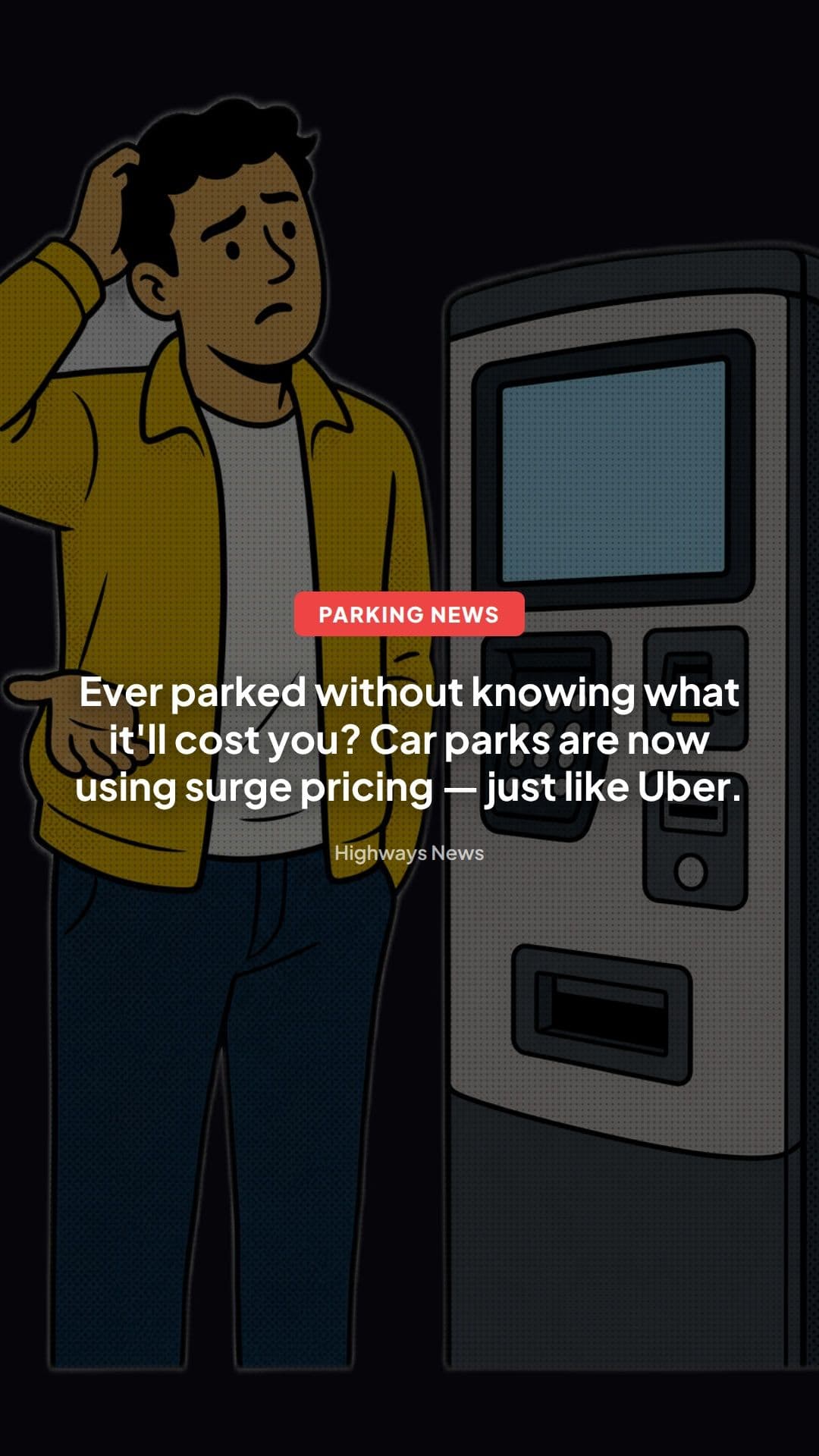
Welcome to the world of dynamic, or "surge", car park pricing, a practice that has quietly been spreading across the UK and has now caught the attention of the national press. According to a recent report from Highways News, variable tariffs that shift according to demand, rising during peak periods and events before falling away in quieter spells, are attracting growing scrutiny because of the effect they could have on ordinary motorists.
It sounds like something lifted from a taxi app or an airline booking system. But applying it to something as mundane as parking your car raises a genuinely interesting set of questions, some practical, some legal, and some about basic fairness.
What's Actually Happening
Surge pricing in car parks works on the same principle as Uber's fare multipliers or hotel booking rates that spike around bank holidays. Instead of a flat hourly or daily rate, the price you pay depends on how busy the car park is expected to be, or how busy it actually is, at the moment you arrive or book.
The Highways News report focuses on this trend as it becomes more visible to the public, particularly around high-demand moments such as major events, weekends, and seasonal peaks. Car parks that might normally charge a few pounds for an hour's stay can, under a dynamic model, charge considerably more when demand is highest, then quietly drop the price back down when the car park is empty.
This isn't necessarily a new idea in principle. Many airport car parks have used variable, demand-linked pricing for years, with costs climbing sharply around school holidays and long weekends. What's changed is that the practice appears to be spreading into more everyday, local settings, town centre car parks, retail sites, and venues near stadiums or event spaces, where drivers are less accustomed to seeing prices shift depending on the time they book.
Why It Matters
There's a reasonably sound economic argument for dynamic pricing. In theory, it smooths out demand, encouraging some drivers to travel at quieter times or use alternative transport during peak periods, while ensuring space is available for those who need it most and are willing to pay for it. Operators would argue it's simply responding to supply and demand, no different to a busy restaurant charging more for a table on New Year's Eve.
But car parking isn't quite like booking a hotel room or a flight. For many drivers, particularly those visiting hospitals, attending job interviews, or making essential trips, there often isn't a realistic alternative. You can't easily "shop around" for a cheaper space when you're already circling a town centre looking for somewhere to leave your car, and many people don't discover the price has shifted until they've already committed to the trip.
This is where the scrutiny comes in. Surge pricing sits uneasily against a backdrop of already mounting frustration over parking costs in the UK. Councils and private operators alike have faced criticism over rising charges, confusing tariff structures, and enforcement practices that many drivers feel are stacked against them. Adding a layer of unpredictability, where the price you see one day might not be the price you see the next, risks deepening that mistrust.
There's also a fairness dimension. Drivers who need to attend a specific event, hospital appointment, or family commitment at a fixed time have no flexibility to dodge the premium. Those with least choice about when they travel are often the ones most exposed to paying the highest rates.
The Legal Angle
UK parking law does not currently prohibit variable or demand-based pricing outright. Both councils and private car park operators generally have wide latitude to set their own tariffs, provided the pricing structure is clearly displayed and drivers are given the opportunity to see the cost before they park.
This is the crucial legal thread running through the entire surge pricing debate: transparency of signage and terms.
For private car parks, the British Parking Association (BPA) and International Parking Community (IPC) codes of practice, which most reputable operators are members of, require that charges be clearly signposted before a driver enters into a contract by parking. If a dynamic pricing model means the tariff changes depending on the time of booking or arrival, that pricing structure still needs to be genuinely accessible and unambiguous at the point the driver decides to park. A driver who is charged a rate they were never given a fair chance to see, or one that only became apparent after the fact, has a stronger footing to challenge that charge.
Under the general principles of contract law, a parking charge is essentially an offer that a driver accepts by entering the car park and leaving their vehicle. If the terms of that offer, including the price, are not clearly and prominently displayed, there's a reasonable argument that no valid contract was formed on those terms. This is the same underlying logic that has helped many drivers succeed in challenging parking charges where signage was unclear or misleading, a topic that comes up frequently in disputes over ambiguous or confusing car park signs.
There's also the broader regulatory backdrop to consider. The government has already moved to bring in a cap on certain private parking charges and standardise grace periods, reflecting a wider push towards fairer, more consistent treatment of drivers using private car parks. Surge pricing doesn't fit neatly into that framework yet, and it's reasonable to expect that if the practice becomes more widespread, it will draw attention from regulators keen to ensure dynamic tariffs don't become a backdoor way of circumventing charge caps or misleading drivers about the true cost of parking.
For council-run car parks, similar principles around clear signage and proper notification of charges apply, alongside the usual duties around statutory processes for tariff changes and public consultation, depending on the local authority's own rules.
What Drivers Should Know
If you're likely to encounter variable pricing, whether at an event car park, a retail site, or increasingly common app-based parking services, there are some sensible habits worth adopting.
Check before you go, not after you arrive. Many dynamic pricing car parks display or update rates through an app or website. If you know you're heading somewhere with variable tariffs, particularly around a major event, check the expected price in advance rather than being caught out on arrival.
Screenshot or photograph the tariff you're shown. If a price displayed to you differs from what you're eventually charged, evidence of what you saw at the time is invaluable if you need to dispute the charge later.
Read the small print on apps and booking platforms. Some services allow you to pre-book a space at a locked-in rate, which can shield you from a later price spike. Others may quote an estimated price that changes at the point of payment, so it's worth checking whether the figure you're shown is guaranteed or provisional.
Keep an eye on signage at the entrance. For traditional pay-and-display or barrier car parks, the terms and pricing structure should be clearly visible before you commit to parking. If the signage is inadequate, confusing, or contradicts what you're later charged, that's potentially grounds for a formal challenge.
Don't assume you have no recourse. If you believe you've been charged unfairly, whether because of unclear signage, a bait-and-switch pricing display, or a charge that wasn't properly communicated, it's worth raising a formal complaint with the operator, and escalating to POPLA or the Independent Appeals Service if you're a member of the BPA or IPC scheme respectively, depending on which trade body the operator belongs to.
Looking Ahead
Surge pricing in car parks is still a relatively young and evolving practice in the UK, and how it develops from here will likely hinge on a few key factors: whether operators can demonstrate genuine transparency, whether regulators decide it needs specific rules of its own, and whether public pressure forces a rethink of how aggressively prices can move.
Given the current climate around parking charges, marked by rising costs, tighter enforcement, and mounting frustration from drivers, it would be no surprise to see dynamic pricing become a focal point for future regulatory attention. The government's recent efforts to rein in unfair private parking practices suggest an appetite for intervention where charging structures are seen to disadvantage drivers unfairly.
For now, the sensible approach for motorists is simple vigilance. Know before you go, keep evidence of what you were shown, and don't be afraid to challenge a charge that wasn't properly and clearly communicated at the time you parked. Surge pricing might make sense on a spreadsheet, but it only works fairly for drivers if it comes with the transparency the law already expects.
Written by
Raj Patel
Transport Policy Analyst
Ready to Challenge Your Ticket?
Let our AI analyse your PCN and generate a professional appeal letter in minutes.
Start Free Appeal