
Can You Use a Phone at a Drive-Thru? UK Law Explained
Can you use your phone to pay at a drive-thru with the engine running? Learn the UK mobile phone driving rules, £200 fine and six-point risk explained.

The Parking Ticket Pal Editorial Team
5 November 2026
Paying at the Drive-Thru with Your Phone: What the Law Actually Allows
You've queued for ten minutes, the burger order is sorted, and the speaker voice asks you to pull forward to the window. Your phone is on the passenger seat with a payment app open. The engine is ticking over and you are not moving. Surely you can tap and pay?
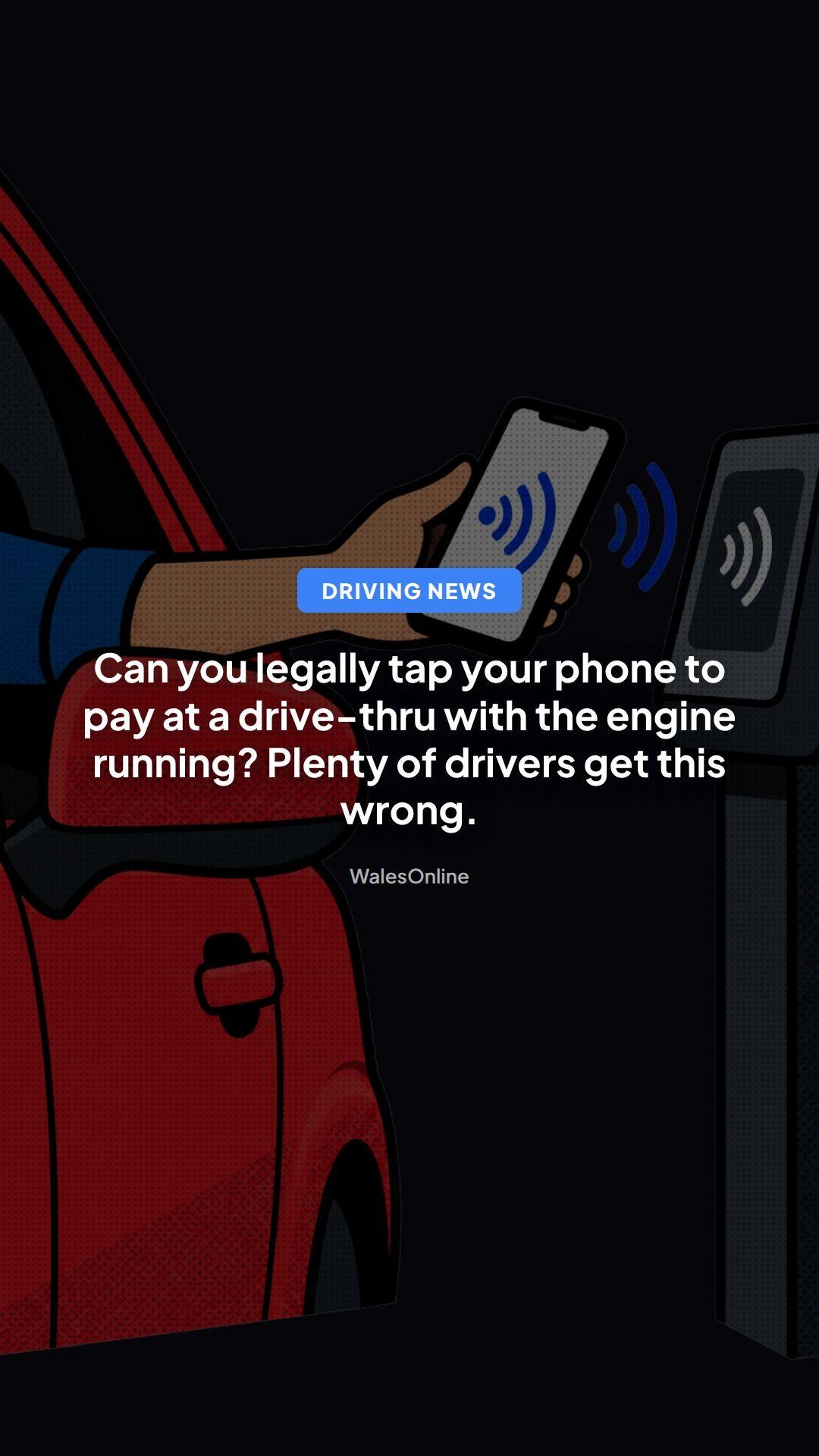
It is a small moment, but it sits on a genuine legal fault line. A recent WalesOnline piece, headlined "Experts settle debate on using phone to pay at drive-thrus while engine running rule", tackled the confusion. Its core message is that using a handheld mobile phone remains prohibited while driving, including when idling or queuing in traffic, with a penalty of a £200 fine and six licence points.
This post goes beyond that summary. It looks at where the rule comes from, why drive-thrus cause so much confusion, and what drivers can do to stay on the right side of the law.
What the story says
The WalesOnline article addresses a common belief: that if you are stationary with the engine running, you are somehow "not driving" and can pick up your phone. The experts quoted in the piece settled that debate firmly. The law does not treat a queue, a red light or an idling engine as a free pass. If you are in control of a vehicle on the road with the engine on, you are still treated as driving for the purposes of the handheld phone offence.
The stated penalty is a £200 fixed penalty and six penalty points. That is a serious sanction, and it is why the drive-thru question matters more than it first appears.
Why drive-thrus cause so much confusion
Drive-thrus are an odd hybrid. You are in a vehicle, in a lane, often on private land, and you are stopped for a good part of the time. You are also expected to hand over payment, increasingly by phone, since many people keep their cards in a digital wallet.
Several things make the picture muddy:
- "Stationary" feels like "parked". Drivers instinctively think that stopping means the rules stop too. In law, they don't.
- Contactless is everywhere. Phone wallets have made tapping a handset against a reader as routine as tapping a card.
- Mixed messages online. Social media posts regularly claim you can use your phone "as long as you're not moving". That is a simplification at best and wrong at worst.
- A real exemption exists. This is the part that trips people up, so it is worth unpacking carefully.
The legal angle
The core offence
The handheld phone offence sits in regulation 110 of the Road Vehicles (Construction and Use) Regulations 1986. Since the law was tightened in March 2022, it is an offence to hold and use a phone or similar device while driving for any interactive function. That includes calling, texting, browsing, taking photos or videos, scrolling through playlists and playing games. Before the change, the law was often interpreted as covering only calls and texts, which left gaps that drivers sometimes exploited in court.
Two points are worth stressing:
- The law covers holding a device. You do not need to be typing or talking.
- Being stopped in traffic, at lights, or in a queue does not take you out of scope. Government guidance has long been that the safe harbour is being safely parked with the engine off.
The contactless payment exemption
Here is the nuance the headline alludes to. The 2022 amendments included a narrow exemption for contactless payments. As I understand the government's guidance, a driver may use a handheld device to make a contactless payment when the vehicle is stationary and the goods or services are being provided from the vehicle, with a drive-thru being the standard example.
So the position is not that phones are banned outright at the window. It is that the exemption is tightly drawn:
- It covers the payment, not general phone use.
- The vehicle must be stationary, not rolling forward in the queue.
- The goods or services must be provided to you in the vehicle, such as food at the hatch.
That sits alongside the WalesOnline summary rather than contradicting it. The general prohibition remains, and the payment exception is the exception that proves the rule. If you are unsure about the exact wording, the gov.uk guidance on using a mobile phone when driving and the Highway Code are the authoritative sources.
What falls outside the exemption
This is where drivers can get caught out. Activities that look like part of the drive-thru experience but are not contactless payment may well fall back under the general ban. Examples include:
- Placing or changing an order in an app while you wait in the queue
- Scrolling through a loyalty app to find an offer
- Opening a voucher or QR code from a screen
- Checking your bank balance before tapping
- Taking a photo of your receipt or order
Whether any particular act would be treated as a payment is ultimately a matter for a police officer to decide and, if challenged, for the courts. A prudent reading is that the exemption is for the tap itself and nothing else.
Does it apply on private land?
Drive-thru lanes are often on private sites. The Construction and Use Regulations apply to "roads", and under the Road Traffic Act 1988 that term extends beyond public highways to places the public has access to. A busy retail park lane could well be treated as a road. It would be risky to assume that being on private land puts you outside the law.
Penalties in detail
The fixed penalty is £200 and six points. A few related consequences are worth knowing:
- New drivers. Under the Road Traffic (New Drivers) Act 1995, a driver who reaches six points within two years of passing their first test has their licence revoked. One phone offence can do exactly that.
- Totting up. Twelve or more points within three years can lead to disqualification, usually for at least six months, unless a court accepts exceptional hardship, which is a high bar.
- Court route. If the fixed penalty is not offered or accepted, the case can go to court, where the maximum fine is higher. Courts can also impose a ban in some cases.
- Insurance. The endorsement (code CU80) can push up premiums and has to be declared when you renew.
- Other offences. Even where you avoid the phone offence, an officer may consider careless driving or failing to exercise proper control if a device is distracting you.
Nothing here is legal advice. If you have received a notice or face court proceedings, speak to a qualified solicitor or an organisation such as Citizens Advice.
What drivers should know
Before you reach the window
- Have your payment ready beforehand. Take your physical contactless card out while you are still safely stopped or before you set off.
- Set up your order before you start the car. If you use an app, complete it while parked with the engine off, or use a passenger.
- Ask a passenger to help. The law applies to the driver, so a passenger can handle a phone, order or payment.
- Keep cash handy. Many outlets still take it, and it avoids the question altogether.
At the window
- Stop fully before you tap. The exemption relies on the vehicle being stationary, not creeping forward.
- Tap, then put the phone down. Do not linger over the screen.
- Use a physical card if you can. It is the simplest option and carries no legal ambiguity.
What stop-start technology does not change
Many modern cars switch the engine off automatically when you stop. It is tempting to think this makes you "parked". It does not, as far as the guidance is concerned. You are still in control of a vehicle on the road, and the engine can restart in an instant. The sensible assumption is that the rules still apply.
Handling a stop by police
If you are stopped, stay calm and be factual about what happened. Do not assume that an officer's view of an exemption will match yours. Contesting a fixed penalty means accepting the risk of a court hearing and the higher penalties that can come with it, so it is worth taking proper advice before deciding.
Think about the wider picture
Idling is a separate matter from phone use. Some councils can fine drivers for leaving an engine running unnecessarily, and rules vary by area. Our recent coverage of the rising engine idling fine in Wales explains how that works. And if you want a full refresher on the general rules, our guides to the UK hands-free rules for 2026 and the £200 Highway Code mobile phone fine cover the wider offence.
Looking ahead
Phone use at the wheel is one of the most closely watched areas of road safety. Enforcement is gradually becoming less reliant on an officer happening to spot you. AI-enabled cameras that can detect handheld phone use are being trialled and rolled out by various forces, and that trend is likely to continue. If so, the grey areas that drivers rely on, such as "I was only at the window", will be tested more often, and by evidence that is hard to argue with.
Payment technology is also moving quickly. Wearables, in-car payment systems and integrated app ordering may eventually make the phone question less relevant for many drivers, but they raise their own legal questions. Rules written for handheld phones do not map perfectly onto a smartwatch or a built-in screen, and further clarification from the government or the courts would be welcome.
For now, the practical takeaway is simple. Treat the contactless exemption as narrow, treat everything else as banned unless you are safely parked with the engine off, and keep a physical card in the door pocket. A £200 fine and six points is a steep price for a quicker coffee.
This article is general information about UK motoring law and is not legal advice. For guidance on your own situation, consult gov.uk, the Highway Code or a qualified legal adviser.
Written by
The Parking Ticket Pal Editorial Team
Source-checked parking guidance
Ready to Challenge Your Ticket?
Let our AI analyse your PCN and generate a professional appeal letter in minutes.
Start Free Appeal