
Can bailiffs clamp a car on finance? PCP and HP explained
Bailiffs can only take control of goods that belong to you. If your car is on PCP or hire purchase, here is what to show them and how to get a clamp removed.

The Parking Ticket Pal Editorial Team
17 November 20266 min read
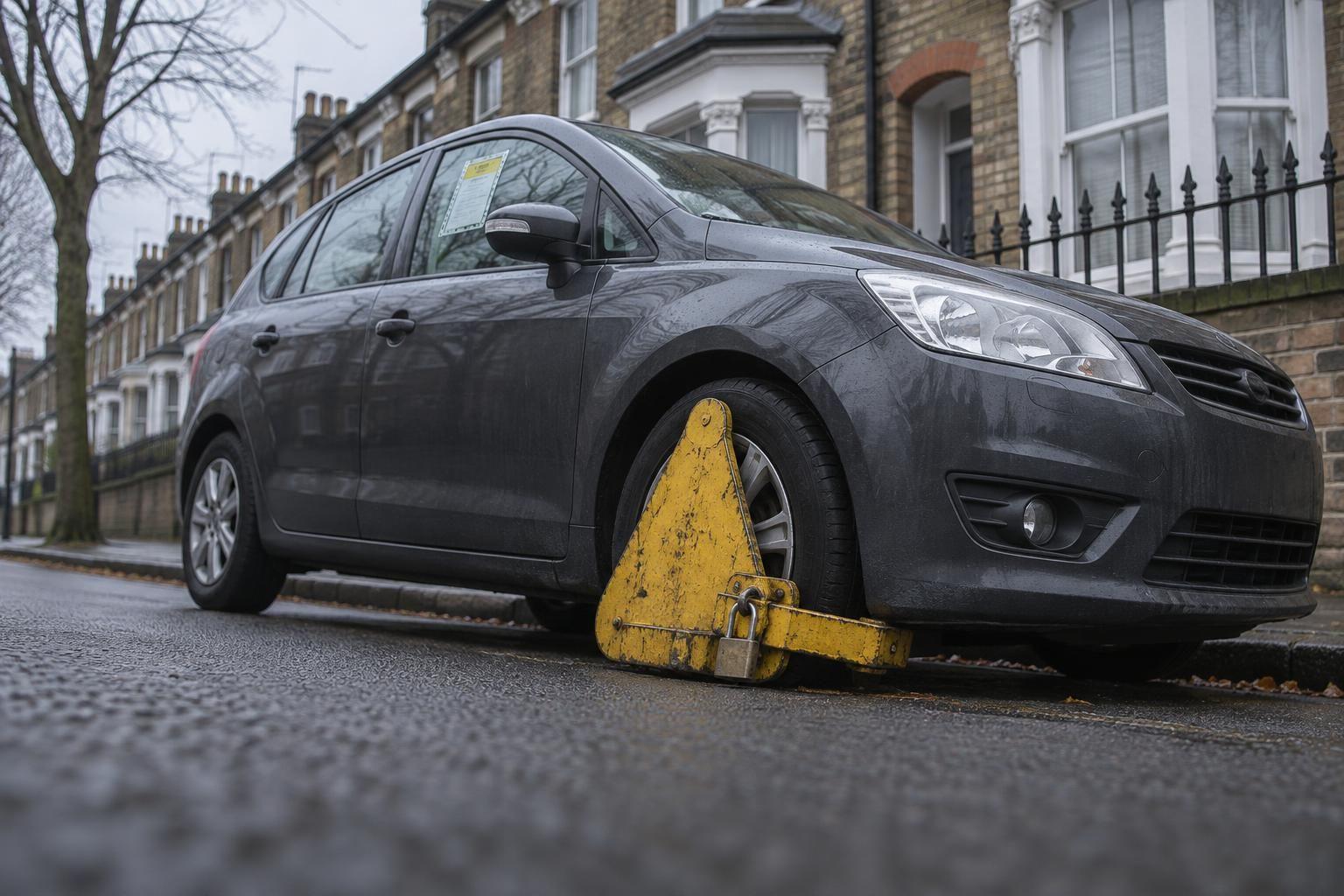
You wake up, look out of the window and there is a clamp on your car. A notice on the windscreen says you owe several hundred pounds for an unpaid parking ticket, and the number on it wants payment in full before the clamp comes off.
If that car is on PCP or hire purchase, there is something you should know before you pay: you may not be the owner of the car, and bailiffs are only allowed to take control of goods that belong to the person who owes the debt.
This guide explains the rule, where it gets disputed, and what to do on the day.
The short answer
No, they should not. The law says an enforcement agent (the legal name for a bailiff) "may take control of goods only if they are goods of the debtor". A car on hire purchase, PCP or conditional sale belongs to the finance company until you make the final payment, so it is not yours to lose.
Citizens Advice says that if your vehicle is on finance, bailiffs "usually can't take it". StepChange says the same: "Usually bailiffs have no right to take vehicles still owned by the company you have a finance agreement with." In 2024 the Court of Appeal awarded damages to a driver whose hire purchase car was clamped.
In practice a clamp can still go on, because nobody has checked who owns the car before fitting it. What matters is what happens next: once you show the car belongs to a finance company, the clamp should come off.
Why bailiffs clamp finance cars anyway
Three reasons come up again and again.
- They have not checked. Clamps often go on early in the morning, before anyone has looked at who owns the car.
- They argue you have a "beneficial interest". The argument is that because you have made payments, part of the car's value is yours. Citizens Advice and StepChange both warn that some bailiffs will say this. In one 2022 Ombudsman case, bailiffs who had clamped a hire purchase car at 6am over a £513 parking debt used exactly this argument. A letter from your lender is the answer to it (see below).
- A clamp gets people to pay. Most people pay within hours because they need the car.
What the courts have said
In Burton v Ministry of Justice (Court of Appeal, June 2024), an enforcement agent clamped a car that was on hire purchase. The driver showed a letter from the finance company confirming he had no beneficial interest in the vehicle. He later sued and was awarded £25 a day for loss of use plus £180 for transport costs, £905 in total, and the Court of Appeal held that the creditor who instructed the enforcement agent was liable.
The detail that mattered was the letter. A finance agreement on its own leaves room for the "beneficial interest" argument. A letter from the lender saying you have no beneficial interest closes it.
What to do if your finance car is clamped
1. Do not touch the clamp or move the car. Removing a clamp yourself is a criminal offence.
2. Act fast. Bailiffs can come back and remove the vehicle after a minimum of two hours if nothing has been arranged.
3. Get proof of ownership together.
- Your finance agreement, showing the lender as owner.
- An HPI check for the vehicle showing outstanding finance (Citizens Advice and StepChange both suggest this).
- If you can get it, a letter or email from your finance company confirming it owns the car and that you have no beneficial interest in it. Call the lender and ask for this in writing. This is the strongest document you can have.
4. Tell the bailiff, in writing, that the car is not yours to take. Phone the number on the notice, then follow up by email so there is a record. Say that the vehicle belongs to the finance company, attach your proof, and ask for the clamp to be removed.
5. Send the same complaint to whoever instructed them. For a parking ticket that is the council. Ask them to tell the bailiff to remove the clamp.
6. Tell your finance company. It owns the car and can contact the bailiff directly to claim its property.
7. If they refuse, escalate. Complain to the Enforcement Conduct Board, and for a council debt to the Local Government and Social Care Ombudsman once the council's own complaints process is finished. You can also get free help from Citizens Advice, StepChange or National Debtline.
8. If you pay to get the car back, say you are paying under protest and keep every receipt. Paying does not stop you complaining or claiming afterwards.
Other vehicles bailiffs should not take
- A vehicle displaying a valid Blue Badge, or a Motability vehicle.
- A vehicle you need for your job that is worth less than £1,350.
- A vehicle that is your home, such as a campervan.
Where they can clamp
Bailiffs can clamp a vehicle at your home or business, or in a public place such as a road or car park. They need a court order to take a vehicle from someone else's private land.
Things this does not cover
- The debt itself. Getting a clamp removed does not cancel the parking debt. The bailiff can still pursue it in other ways.
- DVLA clamping for untaxed vehicles and police seizures. Different rules apply.
- Private parking companies. They cannot send bailiffs without first winning a county court judgment against you.
Stop it getting this far
A parking ticket only reaches bailiffs after a Charge Certificate, an Order for Recovery and a warrant. If you did not receive the earlier letters, or you made a challenge that was never answered, you may be able to send a TE7 and TE9 form to the Traffic Enforcement Centre and have the case put back a stage.
- TE9 and TE7 statutory declarations: deadlines and fees
- Understanding a bailiff warrant of control
- How to complain about bailiffs, step by step
Parking Ticket Pal tracks every deadline on a ticket and reminds you before each one, so a missed letter does not turn into a clamp.
This is general information, not legal advice.
Written by
The Parking Ticket Pal Editorial Team
Source-checked parking guidance