
Brighton Traffic Cameras: Where New Enforcement Is Planned
Brighton and Hove plans five new traffic-enforcement cameras after drivers repeatedly ignored restrictions. See the proposed sites and what it means for PCNs.

The Parking Ticket Pal Editorial Team
24 November 202611 min read
There is a particular kind of dread that comes with a brown or white envelope on the doormat a week or two after a trip you barely remember. You were thinking about the school run, or the sat nav, or where to park. Somewhere along the way, you nosed into a restricted street or clipped a banned turn. You didn't see a warden and you didn't see a flash. But a camera did.
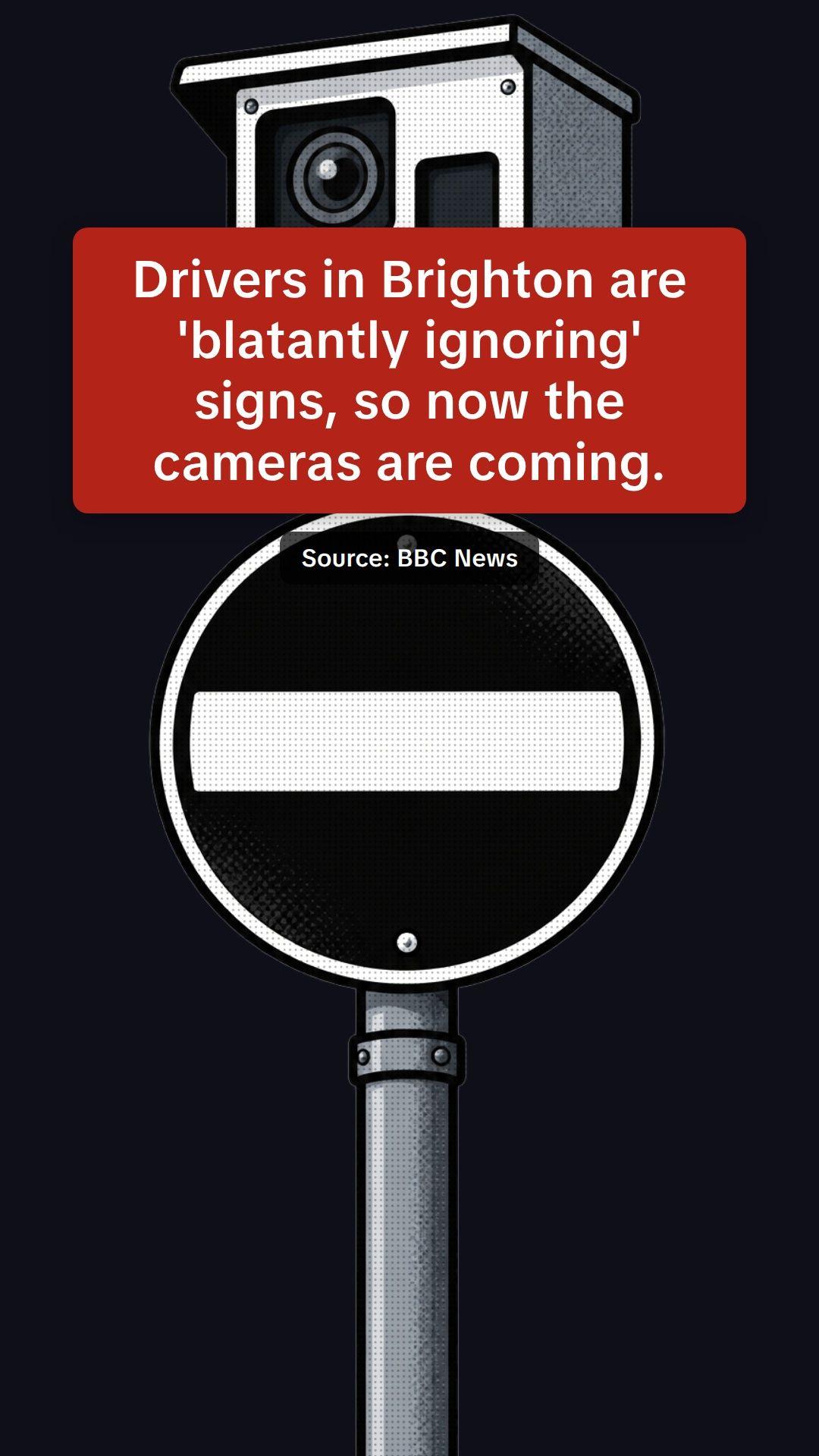
That is the scenario Brighton and Hove City Council appears to be preparing for on a bigger scale. According to BBC News, the council plans traffic-enforcement cameras at five more locations across central Brighton, Hollingbury and Rottingdean. The reason, as reported, is simple: motorists were repeatedly ignoring the restrictions at those sites.
Here is what that means in practice, how camera enforcement works, and what drivers should do to avoid becoming a statistic.
What has been announced
The core facts, as the BBC reports them, are fairly short:
- Brighton and Hove City Council plans to install enforcement cameras at five locations.
- The sites are in central Brighton, Hollingbury and Rottingdean.
- The locations were chosen because drivers were repeatedly ignoring the restrictions in place.
The summary does not set out which restriction applies at each site, how much the penalties will be, or when enforcement starts, so those details need to be checked in the council's own notices. That matters, because "traffic-enforcement camera" can cover very different rules, from bus lanes and no-entry signs to banned turns and yellow box junctions. The right advice depends on which one you are dealing with.
What the story does tell us is the logic behind the decision. The cameras are not being sited at random. They are going where non-compliance is already a known problem. That is the standard model for modern enforcement: identify a location where signs are being ignored, put up a camera, and let the penalty charge notices (PCNs) do the persuading.
Why this matters beyond Brighton
Brighton is a compact, busy city with a mix of seafront traffic, narrow streets, hills, buses and pedestrians, and councils everywhere are trying to make that kind of road space work harder. Restrictions that exist on paper only change behaviour if people believe they will be enforced. A bus lane that cars drift into, or a no-entry sign that drivers treat as a suggestion, undermines the whole scheme.
Cameras solve the council's practical problem. A civil enforcement officer can only be in one place at a time. A camera watches 24 hours a day, never gets tired, and produces video evidence for every contravention.
There is also a wider trend. Local authorities outside London have been gaining the ability to enforce certain moving traffic rules by camera, powers that London boroughs and Transport for London have held for far longer. Brighton's announcement fits that direction of travel. Drivers who are used to the idea that "nobody ever checks" at a particular junction should assume that, increasingly, somebody does.
The reaction to schemes like this usually splits in two. Supporters see safer streets, faster buses and fewer pavement conflicts. Critics suspect the real aim is revenue, especially where signage is confusing. Both views are common, and the truth varies location by location. What matters for you as a driver is understanding the rules and your rights, whichever side you take.
The legal angle: how camera enforcement works
This section is general information, not legal advice for your own situation. For anything with real money or a deadline attached, check the official guidance or speak to a qualified adviser.
Where the powers come from
Civil enforcement of traffic restrictions in England is governed mainly by the Traffic Management Act 2004 (TMA). Part 6 of the Act allows approved local authorities to issue penalty charge notices for certain moving traffic contraventions, rather than leaving them solely to the police. Outside London, councils have to apply for these powers, and the cameras they use must be approved devices under the relevant regulations.
In practice that means a council cannot simply put up a camera and start issuing fines for anything it likes. The restriction must be backed by a valid traffic regulation order, the signs and road markings must comply with the Traffic Signs Regulations and General Directions 2016, and the process must follow the statutory steps.
Who gets the notice?
With camera enforcement, there is no officer to hand you a ticket. The council identifies the vehicle through its number plate, obtains the registered keeper's details from the DVLA, and posts a PCN to that person. Liability for these civil penalties generally rests with the registered keeper, not necessarily whoever was driving.
That has some important knock-on effects:
- If you lent your car to someone, the notice still comes to you.
- If you hire or lease a vehicle, the company will typically pass the notice on, sometimes with an admin fee.
- If you have sold a car and the DVLA record has not been updated, the notice can reach the wrong person. That is a ground to challenge, but it takes effort.
The cost, and the clock
Moving traffic penalties are normally set at a higher penalty level than basic parking contraventions. In England outside London, that higher level is £70, and the standard approach is a 50% discount if you pay within 14 days. Always check the amounts and dates printed on the notice itself, because those are what count for your case.
If a PCN is not paid or challenged, the council can escalate to a Notice to Owner, which sets out your formal right to make representations. If those are rejected, you can usually appeal to the independent Traffic Penalty Tribunal, which hears appeals for councils in England outside London. Ignoring the paperwork is the one reliably bad strategy, because unpaid penalties can eventually be registered as debt and passed to enforcement agents, with added fees.
Grounds for challenge
The statutory grounds are fairly narrow, but they are real. They include, broadly, that the alleged contravention did not occur, that you were not the owner at the time, that the vehicle was taken without your consent, that the penalty exceeded the correct amount, or that there was a procedural impropriety by the council. Poor or missing signage, a defective traffic order or an unclear road layout are often argued under these headings.
Tribunal adjudicators look at evidence. A photo of an obscured sign carries more weight than a general feeling that "it wasn't clear".
What drivers should know: practical takeaways
1. Do not rely on memory or habit
Many camera penalties come from routes people have driven for years. A restriction introduced recently, or a camera added to an existing one, will catch regulars precisely because they stopped paying attention to the signs. If you live or work near central Brighton, Hollingbury or Rottingdean, take a fresh look at the signs on your usual route.
2. Do not trust your sat nav blindly
Navigation apps are good at the fastest route and variable at the legal one. They can be out of date on new restrictions, bus gates and turn bans. The sign in front of you outranks the voice on the dashboard.
3. Read the council's announcements
Councils normally publish information about new enforcement sites, including what is being enforced and when. Many also run an initial period of warning notices for new locations before issuing fines. Do not assume that applies, but do look for it. Whether a first-time warning is offered is worth knowing before you plan journeys.
4. Act on the 14-day window
If you receive a PCN and the contravention clearly occurred, paying inside the discount period usually saves half the cost. If you think it is wrong, do not let the discount deadline panic you into paying, but do not drift past it without checking how the council handles representations. The notice itself should explain the process, so read it properly.
5. Gather evidence early
If you plan to challenge, collect evidence while it is fresh:
- Photos of the signs and road markings from the driver's approach, in daylight.
- The date, time and location in the notice, checked against where you actually were.
- Dashcam footage if you have it, which can show obstructions, emergency situations or confusing layouts.
- Any proof that you were not the keeper, such as sale paperwork or hire agreements.
Compare the council's video and photos with what you remember. Occasionally the evidence shows something quite different from what you assumed.
6. Keep your DVLA details accurate
If you move house or sell a vehicle, update the DVLA promptly. A notice sent to an old address is easy to miss, and missing it does not stop the clock.
7. Understand the limits of "I didn't see the sign"
A busy junction, a tricky layout or a driver being unfamiliar are not automatic defences. A sign that is genuinely missing, obscured, damaged or non-compliant can be. Be honest with yourself about which one applies, because tribunals weigh the evidence, not the frustration.
The bigger question: safety or revenue?
Whenever cameras go up, drivers ask the same thing: is this about behaviour or about income? The BBC report frames the Brighton locations as places where restrictions were being ignored, which is a compliance rationale. That is a reasonable starting point, but it is also fair to ask for transparency. Good practice includes clear signs, published reasons for each site, a warning period where appropriate, and accessible information on how penalty income is used.
Councils that explain themselves tend to get more public support. Those that quietly install cameras and wait for the money to roll in tend to generate the opposite, along with a steady flow of appeals.
Looking ahead
Expect more of the same. As camera technology improves and councils gain confidence in using these powers, enforcement of moving traffic rules is likely to become more routine across English towns and cities. For Brighton, the five new locations will probably be watched closely, both by drivers and by the council, to see whether behaviour changes. If compliance improves, the sites may be judged a success and more could follow. If penalty numbers stay high, expect questions about signage and driver awareness.
For motorists, the message is a practical one rather than a scary one. Cameras are not trying to catch you out in the way people sometimes imagine. They are enforcing rules that are already there. If you know what the restrictions are, read the signs, and keep your paperwork in order, there is very little to fear. And if a notice does arrive that you think is unfair, the system gives you a route to challenge it, so long as you act on time and bring evidence.
This article is general information about UK motoring and parking rules and is not legal advice. If you have received a penalty charge notice, check the details on the notice itself, consult official guidance from the Traffic Penalty Tribunal or your council, and seek professional advice where the stakes are high.
Written by
The Parking Ticket Pal Editorial Team
Source-checked parking guidance