Brexit EV tariffs: Why car makers want another EU delay
UK and EU car makers are urging the European Commission to delay Brexit EV tariffs again, warning battery ‘rules of origin’ targets still can’t be met.

Grace O'Sullivan
7 June 2026
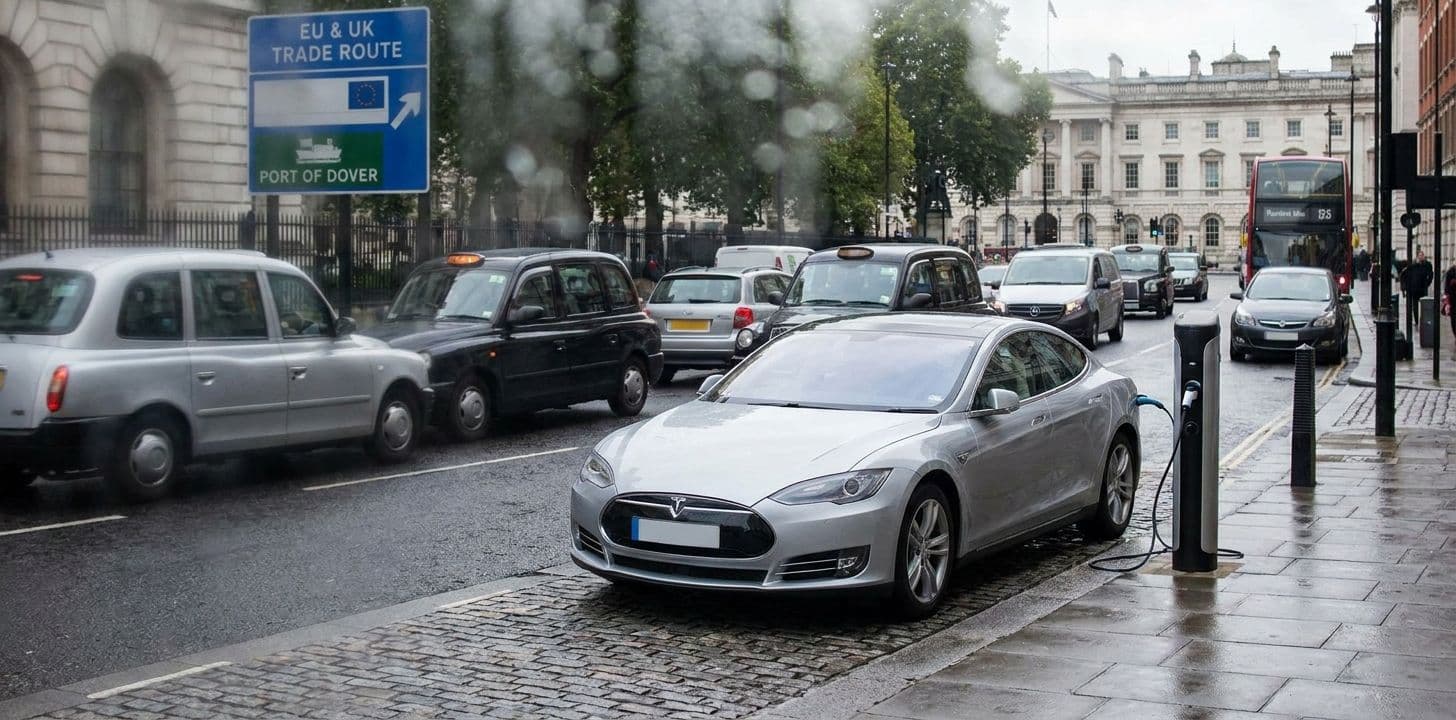
Brexit EV Tariffs: Why the Car Industry Wants More Time — and What It Means for Your Next Car Purchase
The battle over electric vehicle trade rules between the UK and EU is far from over — and the outcome will shape what you pay for your next car
Imagine spending years planning a major purchase, only to discover the goalposts keep moving just as you're about to commit. That's roughly where millions of UK car buyers find themselves right now, caught in the crossfire of a slow-burning trade dispute that has its roots in Brexit and its consequences in the showroom forecourt.
According to exclusive reporting by The Guardian, both UK and EU car manufacturers are once again lobbying the European Commission for a second delay to the Brexit-era electric vehicle tariffs — the same tariffs that were already pushed back once before. The reason? The industry still cannot meet the local battery-manufacturing targets that would allow them to avoid punishing import duties. This isn't a minor administrative wrangle. It's a fault line running through the future of affordable electric motoring in Britain.
What's Actually Happening
At the heart of this story is a trade mechanism called Rules of Origin (RoO), embedded within the UK–EU Trade and Cooperation Agreement (TCA) signed at the end of 2020. Under these rules, a vehicle must contain a certain proportion of locally manufactured components — including, critically, its battery — to qualify for zero-tariff trade between the UK and EU.
For electric vehicles, the thresholds were always ambitious. The original agreement required that, by 2024, EV batteries must contain a specified percentage of components sourced from within the UK or EU to avoid a 10% import tariff. That deadline was already pushed back once, to 2027, after the industry made clear it simply wasn't ready.
Now, as that revised deadline looms, manufacturers are back at the negotiating table asking for more time. The reason is structural: gigafactory capacity in both the UK and EU has grown, but not nearly fast enough. The supply chains for lithium, cobalt, nickel, and the refined materials needed for battery cells remain heavily dependent on China and other non-qualifying countries. Meeting the local content thresholds right now would, in many cases, be commercially impossible.
Why This Matters Far Beyond the Factory Floor
You might be thinking: this is a problem for Jaguar Land Rover, Volkswagen, and Stellantis — not for me. But the ripple effects reach every driver considering an EV purchase, and they reach them quickly.
The maths are stark. A 10% tariff on a £40,000 electric car adds £4,000 to the price. On a £25,000 entry-level EV, that's still £2,500 — enough to make the difference between an affordable monthly finance payment and an unaffordable one. If manufacturers absorb those costs, their margins collapse. If they pass them on, EV adoption stalls.
This matters especially in the context of the UK government's Zero Emission Vehicle (ZEV) mandate, introduced under the Zero Emission Vehicles, Infrastructure and Charging Act framework. Under this mandate, manufacturers must ensure a rising proportion of their UK new car sales are zero-emission vehicles each year, reaching 80% by 2030 and 100% by 2035. Fines for missing those targets are substantial — £15,000 per non-compliant vehicle sold above the threshold.
Here's the tension: the ZEV mandate pushes manufacturers to sell more EVs, but punishing tariffs make those EVs more expensive and therefore harder to sell. The two policy levers are pulling in opposite directions, and it's drivers who end up squeezed in the middle.
The Legal Architecture Underneath
The Rules of Origin provisions sit within Annex TradGoods-1 of the TCA, and they are legally binding on both parties. Any delay or renegotiation requires mutual agreement — neither side can simply opt out unilaterally.
The first delay, agreed in late 2023, was facilitated through a Joint Committee mechanism built into the TCA itself, which allows both parties to make amendments by mutual consent without reopening the entire agreement. That same mechanism would be used again for a second extension, which is why the lobbying effort is directed at the European Commission rather than Westminster alone.
From a UK domestic law perspective, the Taxation (Cross-border Trade) Act 2018 and subsequent statutory instruments govern how tariffs are applied at the border. If no extension is agreed and the 2027 deadline holds, HMRC would begin collecting the 10% duty on non-compliant vehicles entering the UK from the EU — and vice versa for UK-made cars heading to Europe.
It's also worth noting that World Trade Organisation (WTO) rules underpin the entire arrangement. The TCA's preferential zero-tariff terms are only permissible under WTO law because they come with genuine Rules of Origin requirements. A permanent waiver or indefinitely loose standards could, in theory, attract a legal challenge from third countries — another reason why a clean, time-limited extension is the most likely outcome rather than an outright scrapping of the rules.
What Drivers Should Actually Know
If you're in the market for an electric vehicle — or thinking about making the switch in the next two or three years — here's what this situation means for you practically:
- Prices could spike suddenly if no deal is reached. If the 2027 deadline holds and tariffs kick in, expect manufacturers to either raise prices or quietly withdraw certain models from the UK market. Watch for announcements in late 2026 as clarity emerges.
- UK-built EVs are relatively insulated. Cars assembled in Britain — such as the Nissan Leaf (Sunderland), the MINI Electric (Oxford), and the upcoming Jaguar EV range — are less exposed to EU-to-UK tariffs, though they may still face issues with component sourcing. If you're buying soon and want certainty, a domestically produced model is a safer bet.
- Chinese-brand EVs face a separate tariff issue. Brands such as BYD, MG, and Ora already face EU tariffs of up to 45% when sold into Europe, and their UK pricing is influenced by a different but related set of trade pressures. These are not covered by the TCA Rules of Origin provisions — that's a separate EU trade dispute — but it adds further complexity to the overall EV pricing landscape.
- Consider the timing of your purchase carefully. If you're planning to buy an EV in 2026 or early 2027, you may find yourself in a sweet spot before any tariff changes bite. Conversely, waiting until after 2027 without a deal in place could mean paying significantly more.
- Finance deals may be structured around current pricing. If you're looking at a PCP or HP agreement, the residual values used by finance companies are partly based on expected future market prices. A tariff-driven price increase could actually improve the residual value of EVs you buy now — worth factoring in when comparing deals.
Looking Ahead: What's Likely to Happen
The honest answer is that a second extension is probably the most politically and commercially realistic outcome. Both the UK and EU have strong incentives to avoid a trade war in the automotive sector — it's one of the most significant areas of mutual economic dependence that survived Brexit relatively intact.
The European Commission will face pressure from German, French, and Italian manufacturers who are just as exposed to this problem as their British counterparts. Volkswagen, Stellantis, and Renault all have extensive UK sales operations and supply chains that straddle the Channel.
However, a second delay is not guaranteed, and it won't be unconditional. Expect any extension to come with tighter interim benchmarks — perhaps requiring manufacturers to demonstrate credible investment plans for European battery production, or to hit intermediate local content targets as a condition of the extension. The Commission will want to show it isn't simply capitulating to industry lobbying indefinitely.
The broader question this episode raises is whether the Rules of Origin framework, as originally designed, was ever realistic. Building a fully European EV supply chain — from raw material extraction to cell manufacturing to pack assembly — in less than a decade was always an extraordinarily ambitious target. The automotive industry knew it, governments knew it, and yet the targets were written into law anyway.
For UK drivers, the lesson is this: the affordability and availability of electric cars in Britain is not just a function of technology or consumer preference. It's shaped by trade law, geopolitics, and industrial policy decisions made in Brussels and Westminster. Understanding that context makes you a smarter buyer — and a better-informed citizen when these debates play out in public.
The next few months of lobbying will be crucial. Keep watching this space.
Source: The Guardian, 7 June 2026. Original reporting by The Guardian; analysis and context by Parking Ticket Pal editorial team.
Written by
Grace O'Sullivan
Municipal Enforcement Expert
Ready to Challenge Your Ticket?
Let our AI analyse your PCN and generate a professional appeal letter in minutes.
Start Free Appeal