Bournemouth Parking Fines Double to £160: What It Means
Bournemouth, Christchurch and Poole's parking fines are rising to £160 in a new trial. Find out who is affected, plus towing and storage costs for drivers.

The Parking Ticket Pal Editorial Team
28 August 2026
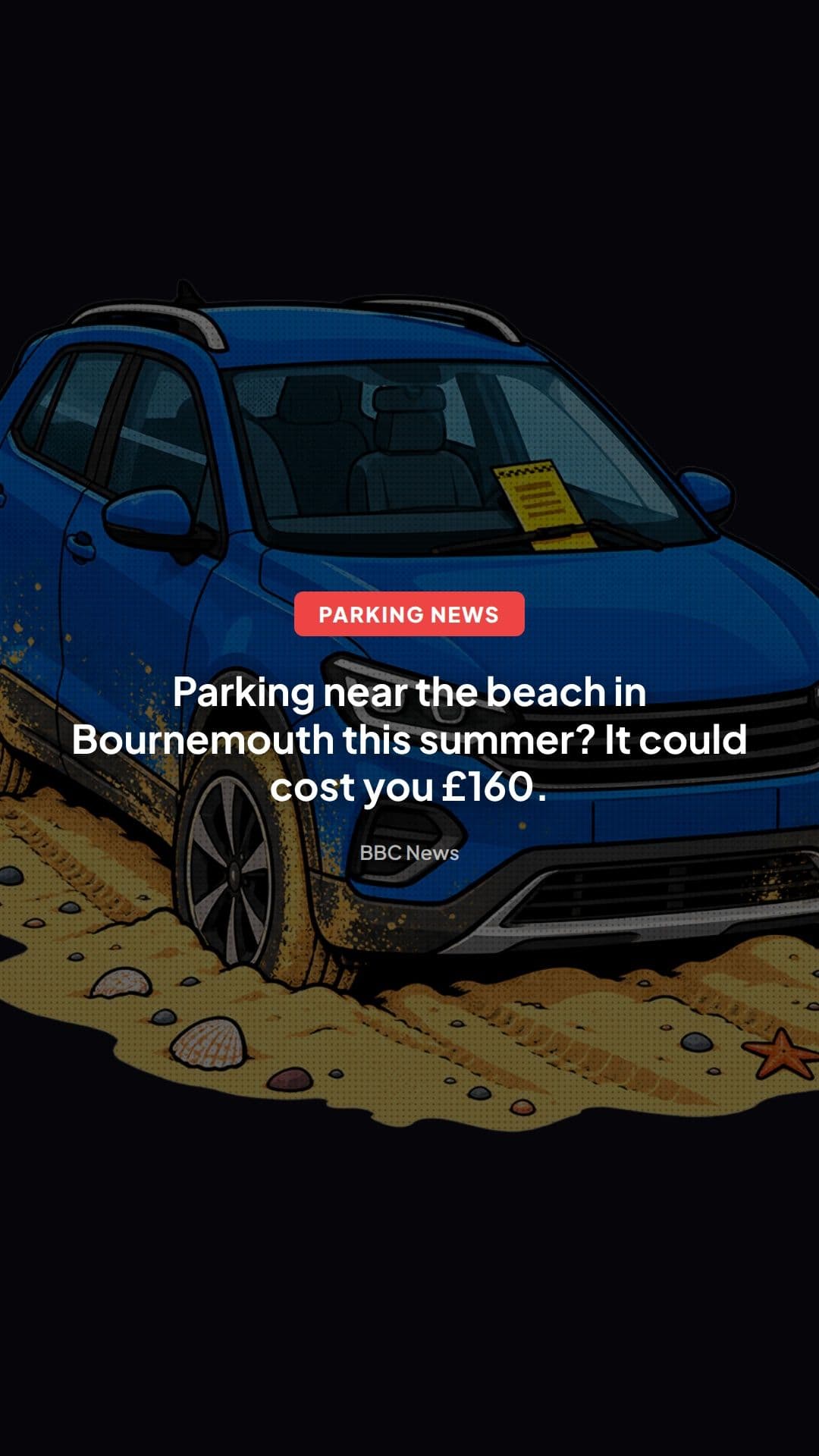
Second Time Around: Why Bournemouth, Christchurch and Poole Are Testing London-Style Parking Fines Again
If you're planning a trip to the Dorset coast this month, it might be worth checking your change before you park. Bournemouth, Christchurch and Poole (BCP) Council has quietly relaunched a controversial experiment: charging some of the highest parking penalties outside the capital, with fines now reaching £160 for the worst offences. This isn't the council's first attempt at this either. It's the second time BCP has trialled these steeper rates, and that repetition alone tells you something important about how local authorities are testing the boundaries of parking enforcement in 2025 and 2026.
What's Actually Happening
According to BBC News, the month-long trial sees BCP Council raising certain parking penalty charge notices (PCNs) to match rates typically seen in London boroughs. The top-tier fine has climbed to £160, a figure that would once have seemed unthinkable for a seaside town more associated with sandcastles than congestion charging zones. Alongside the headline fine increase, the council has also pushed up the costs associated with tow-away and vehicle storage, meaning drivers who are unlucky enough to have their car removed face a considerably steeper bill to get it back.
This is a trial, not a permanent change, at least for now. But the fact that BCP has run this experiment twice suggests the council sees enough value in higher fines, whether through revenue, deterrence, or both, to keep testing the model. Councils across England are increasingly comparing notes on parking charge income, and BCP's approach may be a bellwether for other coastal and tourist-heavy authorities watching closely to see what happens next.
Why This Matters Beyond Dorset
Parking penalties in England operate on a banded system set out under the Traffic Management Act 2004. Local authorities outside London have traditionally been restricted to lower penalty tiers than their London counterparts, reflecting the assumption that traffic pressures, congestion, and enforcement costs are less severe outside the capital. London boroughs, by contrast, have long been permitted to issue penalties at the higher end of the scale, currently up to £160 for the most serious contraventions, dropping to a discounted rate for prompt payment.
What BCP is doing is effectively borrowing that London-level structure and applying it locally, at least for a trial period. This matters because it signals a shift in how councils outside the capital are thinking about enforcement. Bournemouth, Christchurch and Poole is a major tourist destination, particularly in summer, and its beaches and seafront car parks come under enormous pressure during peak season. If higher fines prove effective at freeing up spaces, deterring illegal parking, or simply generating additional income to fund services, other seaside and city councils may follow suit.
There's also a wider financial backdrop here. English councils have collectively been reporting record parking surpluses in recent years, and local authorities under budget pressure are increasingly looking at every possible revenue stream, parking enforcement included. A trial like this allows a council to test driver behaviour and income levels without committing permanently, a sensible approach from a policy testing perspective, but one that leaves drivers navigating a moving target when it comes to understanding what they'll actually be charged.
The Legal Angle: What Governs These Charges
It's worth understanding the legal framework that allows councils to do this at all. Parking enforcement outside London is governed primarily by the Traffic Management Act 2004, which decriminalised most parking contraventions and handed enforcement powers to local authorities via Civil Enforcement Officers rather than police. The Secretary of State sets the maximum penalty bands that councils can apply, and historically these have differed between London and the rest of England.
Crucially, councils don't have unlimited discretion. Any change to penalty levels typically requires ministerial approval or falls within pre-approved bands, and trials of this nature are usually sanctioned specifically as pilots rather than blanket policy changes. This is why BCP's increases are described as a trial rather than a permanent fee schedule, at least in this instance.
The tow-away and storage charge increases raise a separate, though related, legal issue. When a vehicle is removed under civil enforcement powers, typically because it's causing an obstruction, parked illegally in a way that creates a hazard, or has accumulated unpaid penalties, the council or its contractor can charge for removal, storage, and release. These charges are governed by regulations that allow "reasonable" cost recovery, but what counts as reasonable has been the subject of dispute in the past, particularly where storage fees escalate quickly for vehicles left unclaimed. Drivers facing a tow-away should be aware that these charges can mount daily, making prompt action essential.
If you believe you've been wrongly fined, whether under the standard rate or the trial's higher rate, you retain the same legal rights as any other motorist. You can make informal representations to the council in the first instance, followed by formal representations if that fails, and ultimately an appeal to the Traffic Penalty Tribunal, which is free, independent, and doesn't require a solicitor. Our guide to formal representations for UK parking fines walks through this process in more detail if you find yourself contesting a PCN, and our informal PCN appeal template is a useful starting point if you want to challenge a ticket before it escalates.
What Drivers Should Know
If you're driving into or around BCP during this trial period, a few practical points are worth bearing in mind:
- Check signage carefully. Higher penalty rates don't change the fundamental rule that enforcement must be properly signed. If restrictions aren't clearly displayed, that can form the basis of a legitimate challenge.
- Don't assume old rates still apply. If you've parked in the area before and are used to lower fines, be aware the goalposts have moved, at least temporarily. What might have been a modest inconvenience before could now be a much costlier mistake.
- Understand the discount window. As with most PCNs, prompt payment usually secures a reduced rate, often 50% if paid within a set number of days (commonly 14 or 21). Missing that window can mean paying the full, higher amount.
- Be extra cautious about obstruction or dangerous parking. With tow-away and storage charges also rising, the financial risk of having your car removed has increased significantly. Recovering a towed vehicle can already be a stressful and expensive experience; doing so under these new elevated charges makes it considerably worse.
- Keep evidence if you plan to appeal. Photographs of signage, ticket machines, and your parking position can be invaluable if you need to challenge a penalty. This is standard advice for any PCN dispute, but it becomes more pressing when the financial stakes are higher.
If you do receive a PCN you believe is unfair, whether due to unclear signage, a broken meter, or a genuine dispute over the facts, you are not obliged to simply pay up. Councils get things wrong more often than many drivers realise, and the appeals system exists precisely for these situations.
Looking Ahead
The bigger question raised by BCP's second trial is whether this becomes the new normal, not just locally but nationally. If the council concludes that higher fines successfully manage parking pressure without triggering significant public backlash or a drop in visitor numbers, it's a reasonably safe bet that neighbouring authorities, and other tourist hotspots around the country, will be watching closely.
For drivers, the direction of travel is fairly clear. Parking enforcement is becoming more sophisticated, more consistently priced across regions, and, in many cases, considerably more expensive. Whether this particular trial becomes permanent policy in BCP will depend on how the numbers stack up once the month concludes, but it's a strong signal that the days of parking penalties being a purely London phenomenon may be numbered elsewhere too.
In the meantime, the safest approach for any driver heading to the Dorset coast is simple: read the signs, pay promptly, and don't assume the old rules still apply.
Written by
The Parking Ticket Pal Editorial Team
Source-checked parking guidance
Ready to Challenge Your Ticket?
Let our AI analyse your PCN and generate a professional appeal letter in minutes.
Start Free Appeal