Birmingham 20mph Plans: What Drivers Need to Know
Birmingham City Council is considering 20mph limits on hundreds of roads. Find out what the plans could mean for drivers, parking and enforcement.

The Parking Ticket Pal Editorial Team
26 August 2026
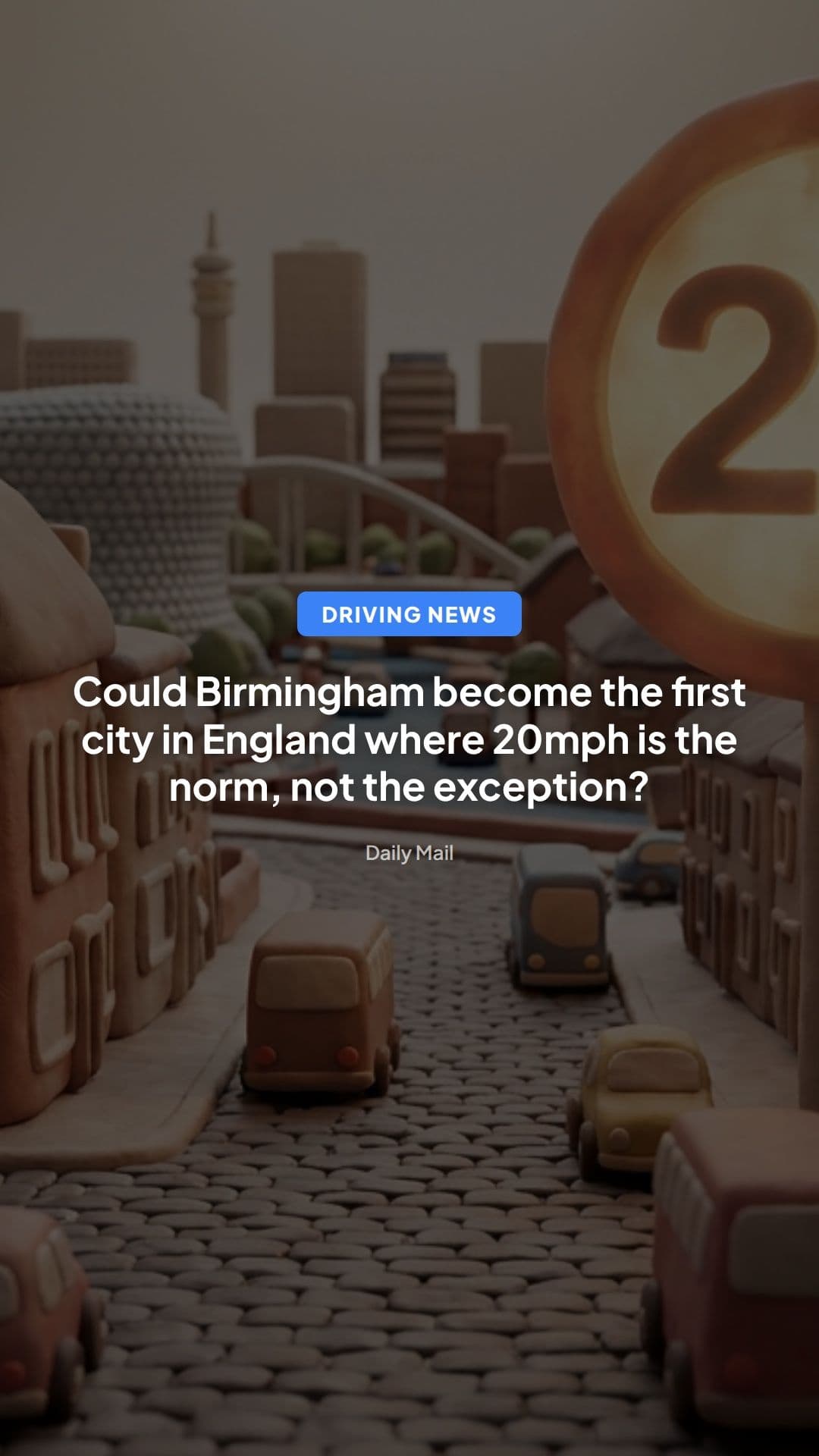
Birmingham Bids to Become England's First 20mph City: What Drivers Need to Know
If you drive regularly through Birmingham, brace yourself. The city that gave the world the National Exhibition Centre and the world's first purpose-built ring road is now considering a very different kind of first: becoming England's first city where 20mph, not 30mph, is the default speed limit on residential and urban roads.
It's a bold move, and one that will affect hundreds of thousands of daily journeys if it goes ahead. Here's what's actually being proposed, why it matters, and what it could mean for anyone getting behind the wheel in the West Midlands.
What Happened
According to reports, Birmingham City Council is looking at reducing speed limits across hundreds of roads within the city as part of a wider transport strategy. The stated aim isn't simply to slow traffic down for the sake of it. It's framed as a deliberate policy shift intended to encourage walking and cycling and to reduce what planners increasingly call "car dominance" in urban areas.
This isn't Birmingham dipping a toe in the water either. If the council pushes ahead with a blanket 20mph approach across large swathes of the city, it would mark the most ambitious speed limit change attempted by any English city to date, going further than the borough-by-borough or street-by-street reductions seen elsewhere.
It's worth being clear about what's being discussed at this stage: this is a policy direction under consideration, not a confirmed, dated rollout. Any changes of this scale in England require formal traffic regulation orders, public consultation, and sign-off through the council's own governance processes before a single speed limit sign actually changes.
Why It Matters
Speed limits might sound like a dry administrative detail, but they sit at the heart of one of the biggest tensions in modern British urban planning: how do you balance the needs of drivers with the needs of pedestrians, cyclists, and residents who simply want quieter, safer streets?
Birmingham is far from alone in wrestling with this. Wales controversially rolled out a default 20mph limit on restricted roads nationwide, and there has been ongoing debate at Westminster about whether England should follow suit with a national default rather than leaving it to individual councils. If Birmingham presses ahead as a single city taking this step voluntarily, it will be watched closely as a test case, both by other councils considering similar moves and by campaigners on both sides of the debate.
The "reduce car dominance" framing is significant too. It signals that this isn't just about crash statistics on specific dangerous junctions. It's part of a broader vision, similar to low-traffic neighbourhoods and active travel schemes seen in London and elsewhere, where local authorities are trying to reshape how city centres and residential streets are used altogether. That links directly to wider trends already reshaping the school run and daily commute, from active school travel initiatives to the growing debate around bigger vehicles dominating narrower urban streets.
For Birmingham drivers, the practical implication is that a much larger proportion of their daily route could soon be governed by a lower limit than they're used to, changing journey times, habits, and potentially exposing more drivers to the risk of speeding penalties simply because they haven't adjusted to a new normal on roads they've driven for years.
The Legal Angle
Speed limits in England are set under the Road Traffic Regulation Act 1984, and local authorities like Birmingham City Council have the legal power to introduce their own speed limits on roads within their area through Traffic Regulation Orders (TROs). This is exactly the same legal mechanism used for smaller-scale 20mph zones already dotted around Birmingham and other cities, so the council isn't asking for any special new powers. It's simply proposing to use existing powers on a much larger scale.
Before any TRO can be made permanent, the council is legally required to consult, publicise the proposals, and consider objections. That means residents, businesses, and drivers will have a formal opportunity to have their say before hundreds of roads are reclassified. Expect debate over exemptions for certain arterial routes, bus corridors, and roads primarily used for through-traffic rather than residential access, since a genuinely blanket approach with no distinctions tends to attract the strongest pushback.
Enforcement is the other crucial legal piece. A change in the speed limit is only meaningful if it's actually policed. Fixed and average-speed cameras are the most visible enforcement tool, but West Midlands Police would also need to factor a much larger 20mph network into how they prioritise mobile enforcement. Speeding in a 20mph zone carries exactly the same penalty framework as any other speed limit breach: a fixed penalty typically starts at three penalty points and a fine, rising for more serious excess-speed cases, or potentially a driver awareness course for lower-level, first-time offences. Our guide to Highway Code rules drivers often miss covers how these penalty point thresholds work in more detail.
One area worth watching is signage. Speed limit changes are only legally enforceable if they are properly signed in line with the Traffic Signs Regulations and General Directions. If Birmingham does introduce a large-scale 20mph default, there will need to be clear, consistent signage across affected roads, because unclear or missing signage has historically been a successful basis for challenging speeding tickets and other penalty notices in court.
What Drivers Should Know
If you drive in or through Birmingham, here's what's genuinely worth doing now, even before any final decision is confirmed:
- Keep an eye on local consultation notices. Councils are legally obliged to publicise TRO consultations, usually via local press, council websites, and roadside notices. This is your chance to understand exactly which roads would be affected and to have your say.
- Don't assume every road will change overnight. Even if the policy is approved, rollout is likely to be phased, road by road, rather than an instant switch across the entire city.
- Get used to checking signage rather than relying on habit. Muscle memory is one of the biggest risk factors when speed limits change on familiar routes. A road you've driven at 30mph for a decade could suddenly be 20mph, and "I didn't realise" is not a legal defence.
- Factor in journey time changes. Commuters and delivery drivers in particular should build slightly longer journey times into their planning if large parts of their regular route drop to 20mph.
- Be aware of enforcement technology. Any large-scale rollout is likely to be accompanied by increased camera enforcement, whether fixed cameras, average-speed cameras, or mobile units, so it's not a policy that will be introduced without teeth.
If you do end up receiving a speeding penalty notice on a road where the limit has recently changed, it's worth checking that signage was clear, correctly positioned, and compliant with regulations at the time of the alleged offence. That's a genuine and recognised basis for challenge, though anyone facing a serious allegation should seek proper legal advice rather than relying on general guidance, given the stakes involved with points and fines.
Looking Ahead
Birmingham's move, if it goes ahead, would put the city firmly at the front of a national conversation that shows no sign of slowing down. England has so far resisted a Wales-style national default 20mph limit, but individual councils experimenting with ambitious local versions could change that political calculus, either by proving the concept works or by generating enough backlash to strengthen the case against it.
For drivers, the sensible approach is to treat this as an evolving situation rather than a settled fact. Watch for consultation announcements, pay close attention to new signage as it appears, and don't assume the roads you know today will look the same in a year's time. Cities across the UK are increasingly designing streets around walking and cycling first, and Birmingham choosing to go all-in on that approach would be a genuine watershed moment, whether you're cheering it on or dreading the longer commute.
Written by
The Parking Ticket Pal Editorial Team
Source-checked parking guidance
Ready to Challenge Your Ticket?
Let our AI analyse your PCN and generate a professional appeal letter in minutes.
Start Free Appeal