Bath Parking Charges Plan: Why Critics Call It Unfair
Bath and North East Somerset Council is consulting on emissions-based parking charges. We examine concerns over the impact on lower-income drivers across Bath.

Oliver Johansson
22 July 2026
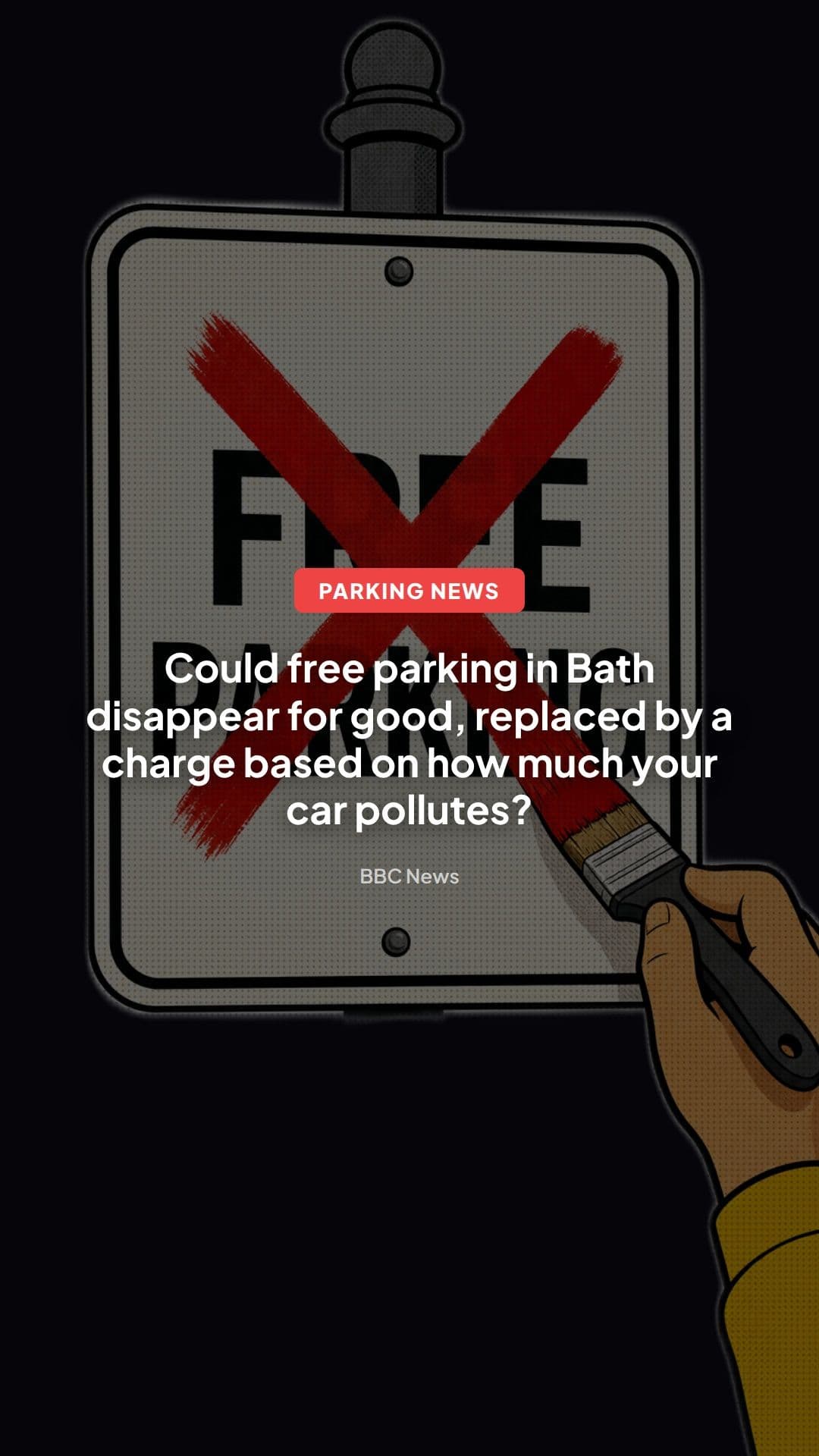
Emissions-Based Parking Charges: Is Bath's Plan Really a "Tax on the Poor"?
Picture this: you drive a twelve-year-old diesel hatchback, not because you love it, but because it's what you can afford. You've kept it running, taxed it, insured it, and used it responsibly for years. Now imagine your local council telling you that, because of that same car's emissions rating, you'll soon pay more to park than your neighbour with a brand new electric SUV. For many drivers in Bath and North East Somerset, that scenario may soon become reality, and it's sparked a row about who really pays the price of going green.
What Happened
Bath and North East Somerset Council has launched a public consultation on scrapping free parking in favour of a system where charges are linked to a vehicle's emissions. In simple terms, the dirtier your car's exhaust output, the more you'd pay to leave it in a council-run space. The idea sits within a broader push by local authorities to use parking policy as an environmental lever, nudging drivers towards cleaner vehicles by hitting older, higher-polluting cars in the pocket.
According to the BBC's coverage, critics have been quick to brand the plan a "tax on the poor". Their argument is straightforward: newer, low-emission and electric vehicles tend to be more expensive to buy, meaning wealthier drivers are more likely to already own the cars that would benefit from lower or no charges. Meanwhile, drivers on lower incomes, often reliant on older, cheaper, second-hand petrol or diesel cars because that's genuinely all they can afford, would be the ones footing higher parking bills simply for owning what they can afford, not what they'd ideally choose.
The consultation is still open, meaning nothing has been finalised. But the direction of travel is clear enough to have triggered a debate that goes well beyond Bath's city limits.
Why It Matters
This isn't just a local squabble over a few car parks. It taps into a much bigger and increasingly familiar argument playing out across the UK: how do you decarbonise transport without disproportionately punishing people who can least afford the transition?
We've seen versions of this tension before. Clean Air Zones in cities such as Bristol and Birmingham have faced similar criticism, with campaigners arguing that daily charges hit low-income commuters and small tradespeople hardest, even as wealthier drivers swap into exempt vehicles. Emissions-based parking charges are, in effect, a quieter cousin of these schemes, applied at kerbside level rather than through a citywide cordon.
Bath is a useful case study because the council has already faced scrutiny over how its parking policy generates revenue. There's a legitimate public interest question here: is the goal genuinely to improve air quality and cut emissions, or is it also, at least in part, about shoring up council finances at a time when local government budgets are under severe pressure? Both motivations can coexist, but the "tax on the poor" framing suggests many residents suspect the environmental rationale is being used to justify what is, in practice, a revenue-raising measure that lands unevenly.
There's also a fairness dimension specific to a city like Bath. It's an old, characterful place with a UNESCO World Heritage designation, narrow streets, and a housing stock that doesn't always come with driveways or off-street parking. For many residents, particularly those without access to home charging for an EV, owning an older combustion car isn't a lifestyle choice, it's often the only practical or affordable option. Emissions-based charges risk penalising exactly the people who have the fewest alternatives.
The Legal Angle
Councils in England have clear statutory powers to set parking charges and use them for specific purposes. Under the Road Traffic Regulation Act 1984, local authorities can charge for on-street parking, and under the Traffic Management Act 2004, they have a duty to manage their road networks efficiently, which includes decisions about parking policy.
Crucially, surplus income from on-street parking charges and penalty charge notices cannot simply disappear into a council's general coffers. It must, by law, be ring-fenced for transport-related purposes, such as highway maintenance, public transport improvements, or environmental initiatives. This is often cited by councils defending emissions-based schemes: any additional revenue raised, they argue, will be reinvested in ways that support the same environmental goals the charges are designed to encourage.
Before any such scheme can be implemented, councils are required to run a formal consultation process, exactly what's happening in Bath right now. This isn't just a courtesy, it's a legal obligation under the Local Authorities' Traffic Orders (Procedure) (England and Wales) Regulations 1996, which governs how traffic regulation orders, including parking charge changes, must be publicised and consulted on. Residents, businesses, and other stakeholders have a genuine opportunity to respond, and councils are expected to give due consideration to the feedback received before finalising any order.
There's also an equalities dimension worth noting. Public bodies in England are subject to the Public Sector Equality Duty under the Equality Act 2010, which requires them to have due regard to the impact of their decisions on people with protected characteristics, and more broadly, to consider socioeconomic impact where relevant policy frameworks apply. If a scheme can be shown to disproportionately and unjustifiably disadvantage lower-income groups without adequate mitigation, that's the kind of issue that could, in principle, form the basis of a legal challenge, similar in spirit to the judicial reviews we've seen mounted against low emission zone expansions elsewhere in the country. That said, courts have historically given councils considerable latitude on policy decisions of this kind, provided the proper process has been followed.
What Drivers Should Know
If you live in or regularly visit Bath and North East Somerset, or if your own council is watching this consultation with interest, here's what's worth keeping in mind.
Get involved in the consultation while it's open. This is genuinely the stage where public input can shape the final policy, whether that's on charge banding, exemptions, or transitional arrangements for lower-income households. Once a scheme is formally adopted through a traffic regulation order, options for challenging it become far more limited.
Check how "emissions" would actually be assessed. Many such schemes use a vehicle's official CO2 rating from its V5C registration document, or its Euro emissions standard, to determine the charge band. It's worth understanding exactly which metric is proposed, since older cars, even relatively fuel-efficient ones, can sometimes be classified less favourably simply due to their age and testing standards at the time of manufacture.
Don't assume an EV is automatically the answer. While electric vehicles would likely sit in the lowest charge band, the upfront cost, home charging access, and reliability of local infrastructure all remain real barriers for many households, something councils introducing these schemes need to grapple with honestly.
Keep an eye on any exemptions or discounts. Schemes like this sometimes include provisions for Blue Badge holders, low-income residents, or those without viable public transport alternatives. If you believe you'd be unfairly affected, responding directly to the consultation with your specific circumstances is far more effective than general objection after the fact.
Watch for how this interacts with existing charges. If you're already navigating council parking fees, permit rules, or penalty charge notices in the area, it's worth understanding how any new emissions-based tariff would sit alongside current rules on residents' parking permits, since eligibility and charging structures could shift together.
Looking Ahead
Bath's consultation is unlikely to be the last we hear of emissions-based parking. As councils across the country face growing pressure to meet air quality targets while managing squeezed budgets, expect more local authorities to explore similar schemes over the coming years. The fundamental tension, environmental ambition versus social fairness, isn't going away.
What will matter most is how well councils design mitigation into these policies from the outset. A scheme that layers charges onto low-income drivers without any transitional support or exemption pathway will keep attracting the "tax on the poor" label, and rightly so. One that pairs emissions-based charging with genuine investment in affordable public transport, accessible EV charging, and targeted support for those with no alternative, stands a far better chance of achieving its environmental goals without simply shifting the burden onto those least able to bear it.
For now, the ball is in the consultation's court. Anyone with a stake in the outcome, which, in a city as car-dependent in parts as Bath, is a great many residents, would do well to make their voice heard before the decision is made rather than after.
Written by
Oliver Johansson
Traffic Management Consultant
Ready to Challenge Your Ticket?
Let our AI analyse your PCN and generate a professional appeal letter in minutes.
Start Free Appeal