£2.50 Parking Rule: Why Drivers Face Millions in Fines
Campaigners want reform after private parking firms issued over £1.5bn in charges. We explain the £2.50 rule, your rights and how to challenge a PCN fairly.

The Parking Ticket Pal Editorial Team
21 August 2026
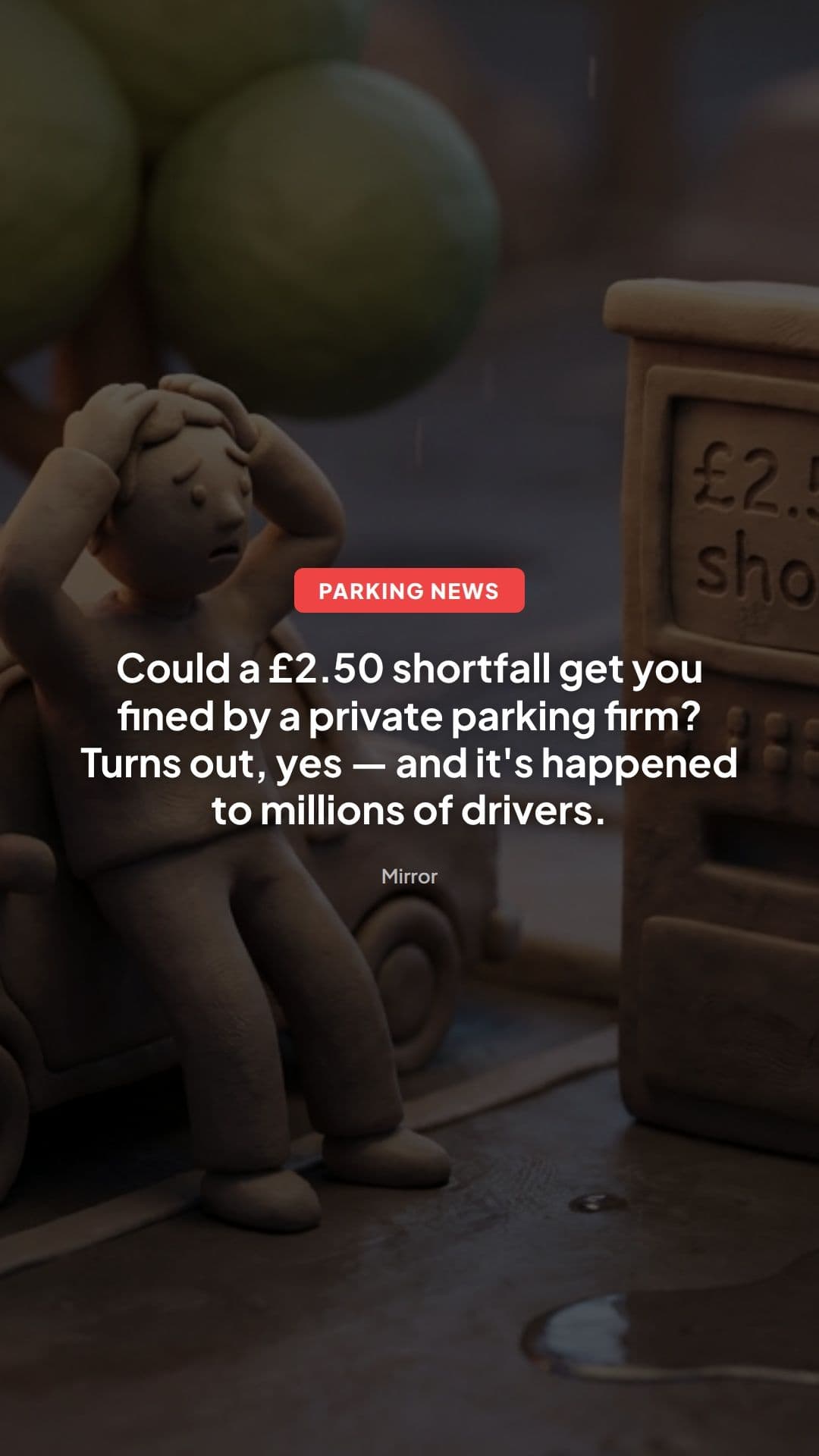
Drivers warned about £2.50 rule used to fine millions
A tiny fee with an enormous reach
Here's a number that rarely makes headlines but arguably does more to shape your parking experience than any yellow line or ticket machine ever could: £2.50. That's the fee the DVLA charges private parking companies every time they request your name and address from the vehicle register. It sounds almost trivial, the sort of amount you'd not bother picking up if you dropped it in the street. Yet this modest charge sits at the heart of a system that has issued more than £1.5 billion in parking charges in a single year, according to consumer campaigners cited by the Mirror.
Multiply £2.50 by the number of requests private operators make annually, and you begin to see why this "rule" has become such a lightning rod. It isn't just a processing fee. It's the mechanism that turns a camera pointed at a car park entrance into a legally enforceable demand for payment landing on someone's doormat weeks later.
What's actually happening
Private parking firms don't employ traffic wardens who tap on your window. In the vast majority of cases today, enforcement is done by Automatic Number Plate Recognition (ANPR) cameras that log when a vehicle enters and leaves a site. If the software decides you've overstayed, not paid, or breached some other condition, the operator doesn't know who you are. All it has is a number plate.
To turn that plate into a person, the company applies to the DVLA under what's known as the Keeper At Date of Event (KADOE) scheme, paying £2.50 for each lookup. The DVLA hands over the registered keeper's name and address, and the parking firm then issues what's technically called a Parking Charge Notice (not, strictly speaking, a "fine" or "ticket" in the same legal sense as a council penalty).
Because this system is cheap, automated and scalable, it has allowed the private parking industry to issue notices in the millions rather than the thousands. Campaigners quoted in the Mirror's report argue that a fee this low, combined with weak oversight, has effectively subsidised mass enforcement rather than encouraging fair or proportionate parking management. The RAC and other motoring bodies have been pushing for a rethink of how this data-sharing arrangement works, alongside broader reform of the private parking sector.
Why this matters more than it looks
It's easy to dismiss £2.50 as an accounting footnote, but the knock-on effects are significant.
First, volume. When the cost of identifying a driver is so low, there's little financial disincentive for a parking operator to chase every borderline case, including ones where the driver might have a perfectly reasonable defence, such as a broken payment machine, unclear signage, or a genuine mistake. The economics favour issuing as many notices as possible and letting a percentage go unchallenged or get paid out of convenience.
Second, trust. Many drivers still don't fully understand the difference between a parking charge issued by a private company on land such as a supermarket, retail park or private road, and a Penalty Charge Notice issued by a local council or Transport for London under statutory powers. The former is a civil contractual matter; the latter is a statutory penalty with different rights of appeal. The DVLA's willingness to hand over keeper details to private firms blurs this distinction in the public mind, making unofficial-looking parking charges feel just as authoritative as council fines, even though the legal footing is quite different.
Third, scale of enforcement without proportionate scrutiny. Consumer groups have long argued that private parking companies benefit from a regulatory gap. Unlike councils, which operate under detailed statutory guidance, private operators are largely governed by industry codes of conduct overseen by trade bodies such as the British Parking Association (BPA) and the International Parking Community (IPC). Reform proposals, including a single, government-approved code of practice, have been delayed and revised multiple times over recent years, leaving the current fragmented system in place for longer than many campaigners would like.
The legal angle: what gives private firms this power at all
To understand why £2.50 matters, it helps to understand the legal chain that makes DVLA data-sharing possible in the first place.
Private parking enforcement on private land relies on contract law, not criminal or statutory traffic law. When you drive onto a car park displaying terms and conditions on a sign, you're deemed to have entered into a contract with the landowner or operator. If you breach those terms, such as by overstaying a free period, the operator can pursue you for a "parking charge" as a breach of contract, not a legal penalty in the traditional sense.
The Protection of Freedoms Act 2012 (Schedule 4) is the key piece of legislation here. It allows private parking companies to pursue the registered keeper of a vehicle for unpaid charges, even if the keeper wasn't the one driving, provided the company follows a strict process. This includes issuing the notice within a set timeframe, sending a proper "Notice to Keeper" if the driver hasn't paid, and meeting requirements around the wording and timing of correspondence. If the company gets any of this wrong, keeper liability can fall away entirely, which is one reason procedural challenges are often a strong route for appeal.
To even get to the point of sending that Notice to Keeper, though, the operator needs your address. That's where the DVLA's data-sharing arrangement, and its £2.50 fee, comes in. Access to the vehicle register isn't unconditional. Parking companies must be members of an accredited trade association (the BPA or IPC) and abide by that body's code of practice to retain DVLA access. In theory, this is meant to filter out rogue operators. In practice, critics argue enforcement of the codes has been inconsistent, and the volume of requests suggests the safeguard isn't doing much to slow the flow of charges.
What drivers should know
If you've ever wondered how a parking company you never spoke to found your home address, this is almost always the answer: a £2.50 DVLA request. A few practical points follow from that.
- Not every parking charge is a fine in the legal sense. Charges from private operators are contractual claims, not statutory penalties. This affects how you challenge them and what happens if you ignore one.
- Check the operator's accreditation. Legitimate private parking firms must belong to the BPA or IPC to access DVLA data. If a company can't show accreditation, its ability to pursue you may be limited.
- Time limits matter. Under the POFA rules, operators must send a Notice to Keeper within a specific window after the alleged contravention. Missing this deadline can undermine their ability to hold the keeper liable.
- You can challenge notices formally. Both trade bodies run independent appeals services, POPLA for BPA members and the Independent Appeals Service for IPC members, and it costs nothing to appeal through them.
- Don't ignore correspondence, but don't panic either. Genuine errors, unclear signage or broken payment machines are all recognised grounds for challenge, and plenty of charges are successfully overturned when drivers respond promptly and keep evidence such as photos and receipts.
- Be wary of aggressive follow-up letters. Debt collection language before any court process has begun is common in this sector, and it doesn't automatically mean the underlying charge is valid.
For anyone facing a live parking charge, it's worth reading up on the specific reason code on your notice and the formal appeals process available, rather than relying on general assumptions about "parking fines."
Looking ahead
The £2.50 fee itself may not change, but the pressure building around private parking enforcement is unlikely to ease. Campaigners and motoring organisations continue to push for a genuinely independent, statutory code of practice covering the whole sector, tighter conditions on DVLA data access, and clearer distinctions for drivers between council penalties and private charges. Until reform arrives, though, that small £2.50 transaction will keep quietly powering one of the biggest and most contested corners of UK motoring enforcement, and it pays for drivers to understand exactly how it works before a notice lands on their doormat.
Written by
The Parking Ticket Pal Editorial Team
Source-checked parking guidance
Ready to Challenge Your Ticket?
Let our AI analyse your PCN and generate a professional appeal letter in minutes.
Start Free Appeal