
2035 Petrol Car Ban: Could Carmakers Force a Rethink?
Car makers are reportedly urging ministers to let efficient petrol and diesel cars stay on sale after 2035. What a change to the UK ban could mean for drivers.

The Parking Ticket Pal Editorial Team
9 October 2026
Car Makers Lobbied to Scrap the 2035 Petrol and Diesel Ban: What Drivers Should Know
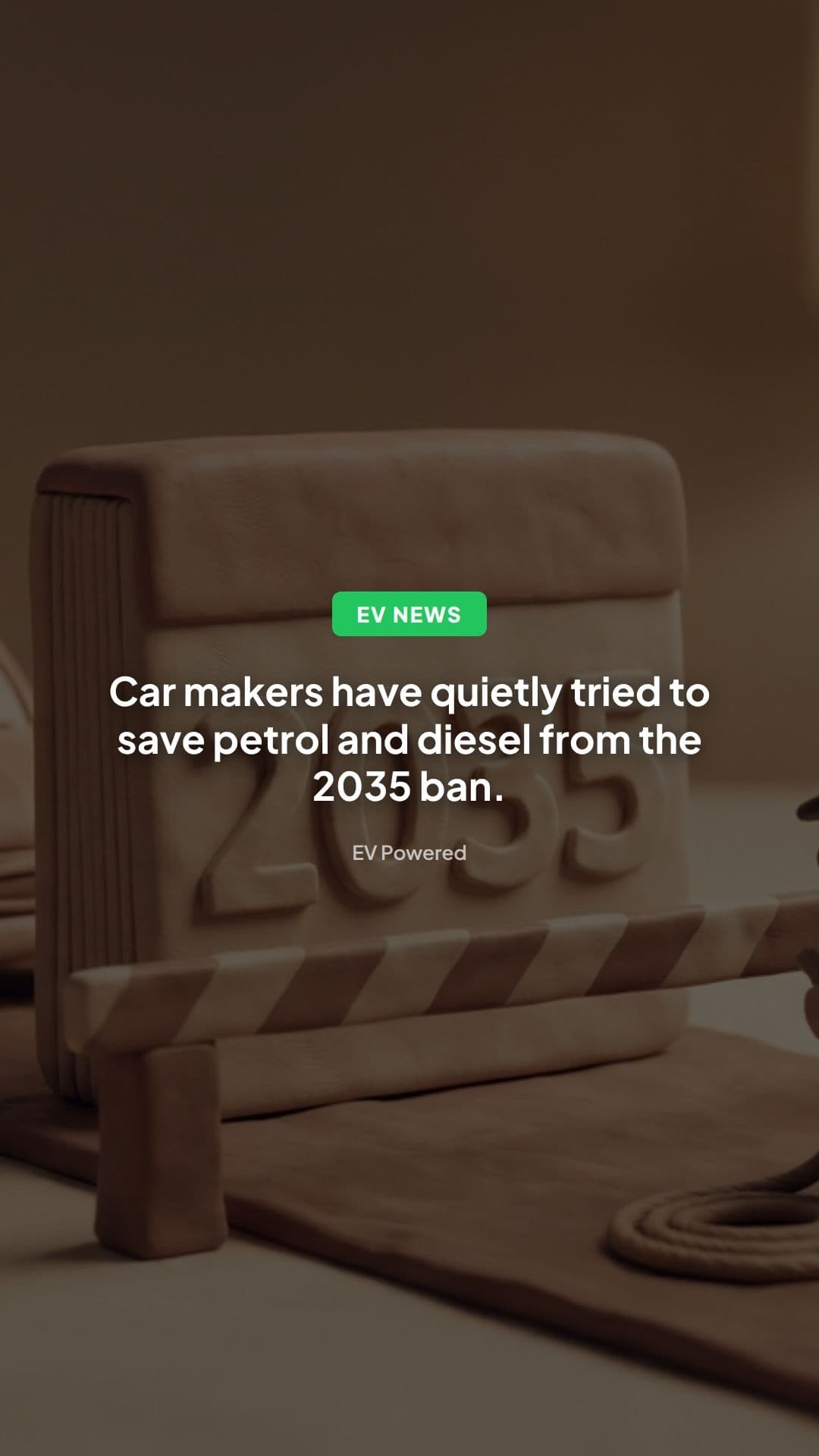
Every few months, the date on which Britain stops selling new petrol and diesel cars gets a fresh round of headlines. The latest is a report from EV Powered claiming that major manufacturers have lobbied ministers to scrap, or at least soften, the 2035 end date. The ask is not for a free-for-all. It is reportedly for some highly efficient petrol and diesel cars to remain on sale beyond 2035. The government says it remains committed to phasing out new non-zero-emission cars and vans by that date.
If you drive a car, plan to buy one, or simply wonder whether your next purchase will be obsolete, this matters. So let's separate the lobbying from the legal reality, and look at what it could mean for your wallet and your parking.
What has been reported
According to EV Powered's report, major car makers urged ministers to allow some highly efficient internal combustion engine (ICE) vehicles to stay on sale after 2035. The article's web address names Ford, BMW, Toyota and Nissan, though the summary itself only refers to "major manufacturers", so it is worth reading the full piece for detail on who said what.
The government's response, as summarised by the source, is that it remains committed to phasing out new non-zero-emission cars and vans by 2035. There is no suggestion in the source that ministers have agreed to change anything. This is reported lobbying, not a policy change.
It is also worth being clear about what the lobbying does not say. Nobody is reported to be asking for the ban on petrol and diesel to be ripped up entirely. The argument, as summarised, is about highly efficient vehicles. That distinction is where the real debate sits.
Why "highly efficient" is the key phrase
Most drivers hear "2035 ban" and assume it works like a switch: on one day you can buy a petrol car, the next you cannot. The reality is more layered.
Under the current framework, the Zero Emission Vehicle (ZEV) mandate sets annual targets for the share of new cars and vans that manufacturers must sell as zero emission. The target rises each year, reaching 80% of new car sales by 2030 and 100% by 2035. The government's position is that from 2030, new pure petrol and diesel cars are phased out, while certain hybrids can continue to be sold until 2035. After that, new cars must be zero emission at the tailpipe.
So when manufacturers talk about "highly efficient" ICE vehicles, they are presumably arguing for the kind of technology that already sits in that grey area, such as full hybrids and plug-in hybrids, or very efficient combustion engines, being allowed to continue after 2035. Their case is generally one of flexibility: that the end result of lower emissions can be achieved by more than one route.
The counter-argument is that a firm date gives certainty to investors, charging networks and consumers. Loosening it, critics say, risks slowing the investment the transition depends on. Both sides have a point, which is why this keeps coming back.
For a deeper look at the earlier stage of the phase-out, our guide to the 2030 petrol and diesel ban and which cars are affected explains the hybrid rules in more detail, and our piece on carmakers urging the UK to rethink its 2035 plans covers earlier lobbying.
Why it matters beyond the boardroom
Industry planning
Car manufacturers plan models and factory investment years ahead. A date that might move creates uncertainty about what to build and where. Some will welcome flexibility, while others who have already committed heavily to electric models may feel a softened date undermines their investment. This is analysis rather than anything stated in the source, but it explains why the lobbying is not unanimous in spirit across the industry, and why governments tread carefully.
Consumer confidence
If you are considering a new car today, the possibility of rule changes can feel paralysing. Will a hybrid bought now hold its value? Will a new diesel be penalised by the time you sell it? Uncertainty tends to push buyers into waiting, and waiting is exactly what both industry and government say they want to avoid.
The used market
Here is the part many drivers miss. The 2035 date concerns the sale of new vehicles. It does not make existing petrol or diesel cars illegal to own, drive, sell or buy second-hand. Used ICE cars will remain a legal, everyday part of the market for many years after 2035. Our look at used EVs and hybrids surging while ICE still leads shows how gradual this shift really is.
The legal angle
Let's be precise about what the law does and does not say, because this is where misunderstandings spread fastest.
It regulates manufacturers, not drivers. The ZEV mandate places obligations on car makers regarding the proportion of zero-emission vehicles they sell. It is not a rule that stops an individual from owning or using a petrol or diesel car. It is set out in legislation made under the Climate Change Act framework, with the UK's wider legal commitment to reach net zero by 2050.
Penalties fall on manufacturers. Companies that miss targets can face financial penalties, though the scheme includes flexibilities such as credit trading and borrowing. These have been adjusted by government over time, so anyone wanting the current detail should check GOV.UK rather than rely on older reporting.
Changing the date needs a formal process. A shift in the 2035 end date would require the government to amend the underlying regulations, which involves consultation and parliamentary approval. Reported lobbying is only the first step in a long process, and the government's stated position is currently unchanged. For the broader question of whether targets might ease, see our explainer on the ZEV mandate review.
Local rules operate separately. Congestion charges, clean air zones and parking policies are set by councils and Transport for London, not by the 2035 rules. A highly efficient petrol car allowed on sale in 2036 would still be judged by local emissions standards wherever you drive it.
This is general information, not legal advice. If you have a specific dispute, check official guidance on GOV.UK or speak to a qualified adviser.
The parking and charging angle most people overlook
Why does a story about car-making policy matter to someone worried about parking fines? Because the type of vehicle you drive increasingly shapes the rules you face on the street.
Emissions-linked permits and charges. Many councils price resident permits, visitor permits or paid parking according to a vehicle's emissions or fuel type. Whatever happens to the 2035 date, councils can keep tying costs to tailpipe emissions. If you are weighing a hybrid against an EV, check how your own council classifies each. Our guide to residents' parking permit rules covers common traps.
Congestion Charge and clean air zones. Discounts and exemptions depend on specific vehicle criteria, and these have been changing. See our breakdown of which cars get Congestion Charge discounts before assuming a hybrid qualifies for anything.
EV bay rules. As the zero-emission share of new cars grows, so does competition for charging bays. Parking in a charging bay without charging, or overstaying, is a common source of penalties. Our explainer on EV charging parking fines shows how easily drivers get caught out. Notably, plug-in hybrids are sometimes treated differently from pure EVs under bay signage, so read the signs carefully.
Practical takeaways for drivers
- Do not panic-buy or panic-sell. Nothing in this story changes the law today. The government's stated position is that the 2035 phase-out stands, and even if it moved, existing cars would be unaffected.
- Understand the 2030 and 2035 distinction. The first stage affects pure petrol and diesel sales. The second affects hybrids too. Knowing which category your next car falls into helps you judge future resale appeal.
- Think about your actual driving. If you have off-street parking and a predictable commute, the case for an EV is often different from that of someone relying on public charging. Lobbying headlines should not outweigh your own circumstances.
- Check local rules before you buy. Look at your council's permit pricing, nearby clean air zones and any parking schemes tied to emissions. This is the practical area where fuel type already affects you.
- Keep an eye on official sources. Policy updates are published on GOV.UK. Treat reports of lobbying as a signal of debate, not a decision.
- Read bay signs and keep evidence. Whether you drive petrol, hybrid or electric, photograph signs and payment confirmations. If you receive a penalty charge notice you believe is wrong, there are formal routes to challenge it, and our PCN appeal resources can help you get started.
Looking ahead
Expect this debate to continue. The tension is genuine: the government wants a clear, predictable path to zero-emission sales, while manufacturers want room to sell the vehicles they can profitably make while still cutting emissions. The phrase "highly efficient" suggests a compromise might be sought, perhaps based on measurable performance rather than a blanket fuel-type rule. Whether ministers are persuaded is another matter, and the source makes clear they are, for now, holding firm.
Some factors will shape how this plays out. The pace of public charging growth, the cost of electric cars compared with petrol equivalents, and the broader political climate will all influence how comfortable policymakers feel with the date. Any formal change would need to go through consultation, which would give drivers, businesses and campaigners a chance to respond.
For drivers, the sensible stance is calm awareness. The legal position today is clear: you can keep driving, buying and selling petrol and diesel cars well beyond 2035. What may change is the mix of new models on forecourts, the cost of charging and the local rules around emissions and parking. Those are the things worth watching, and worth planning around, rather than any single headline about lobbying.
This article provides general information only and does not constitute legal advice. For official policy details, consult GOV.UK.
Written by
The Parking Ticket Pal Editorial Team
Source-checked parking guidance
Ready to Challenge Your Ticket?
Let our AI analyse your PCN and generate a professional appeal letter in minutes.
Start Free Appeal