2030 Petrol Car Ban Stays: What UK Drivers Need to Know
Labour will retain the 2030 petrol and diesel car sales ban. Find out what it means for UK drivers, car buyers and the transition to zero-emission vehicles.

The Parking Ticket Pal Editorial Team
12 September 2026
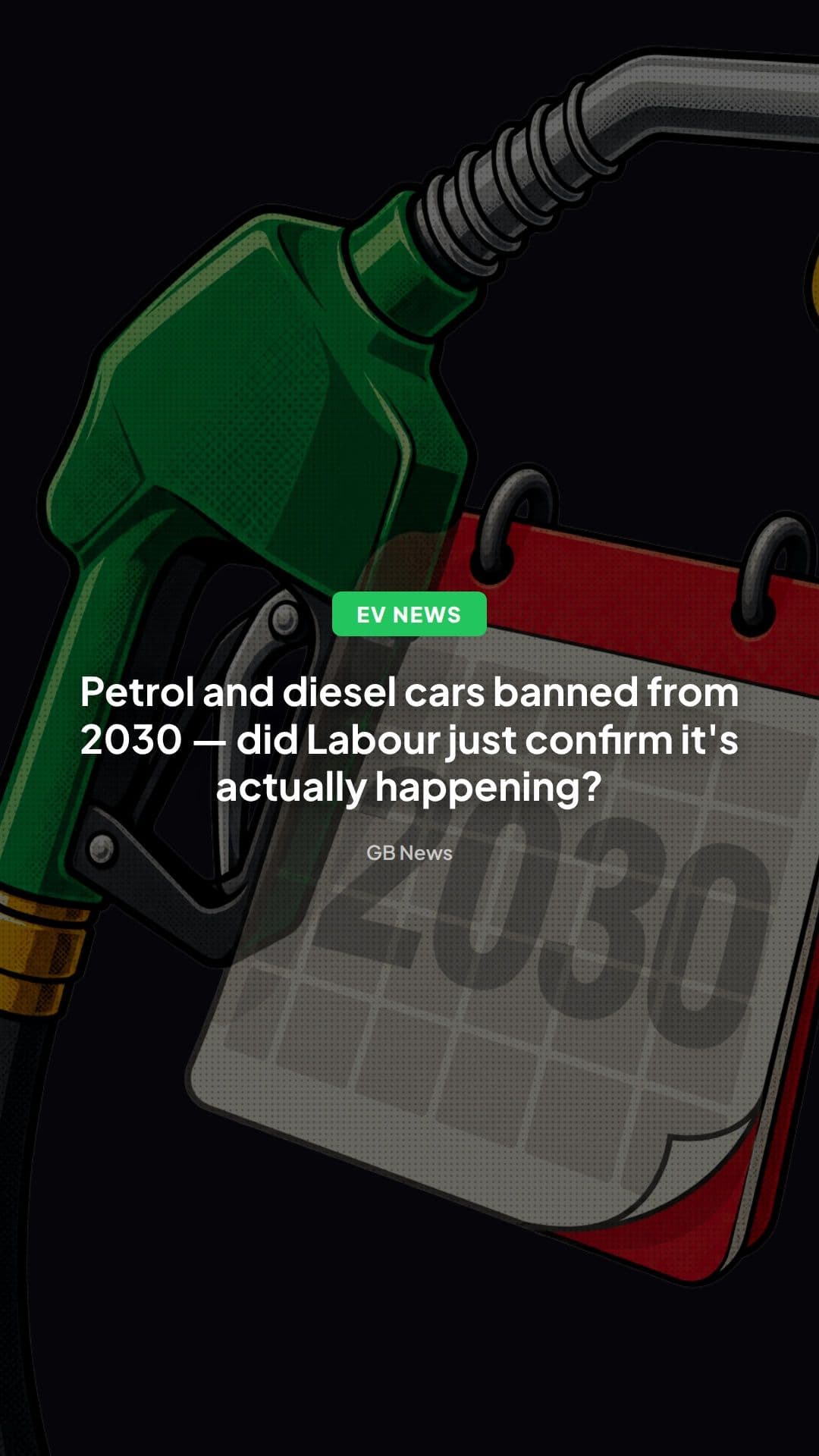
Labour Holds the Line on 2030: What the Petrol and Diesel Ban U-Turn That Wasn't Actually Means for You
Picture this: you're eyeing up a new car, weighing up whether to stick with what you know or finally take the plunge on an EV. For months, rumours have swirled that the government might quietly kick the 2030 petrol and diesel ban into the long grass, just as it did once before. If you were hoping for a reprieve, the latest news from Westminster will come as a surprise. Labour has confirmed the ban stays exactly where it is.
Despite mounting pressure from car manufacturers warning of falling sales and financial strain, ministers have refused to budge. The policy ending sales of new purely petrol and diesel cars in 2030 remains firmly in place, with the expectation that zero-emission vehicles will make up the vast majority of new car sales by 2035.
For drivers trying to plan their next purchase, whether that's this year or in five years' time, this confirmation matters a great deal. Let's unpack what's actually happening, why the car industry isn't happy, and what it genuinely means for you behind the wheel.
What Happened
According to reporting from GB News, the government has rejected calls to soften or delay the 2030 cut-off for new petrol and diesel car sales, despite the car industry flagging concerns about losses and the pace of the transition. The framework remains consistent with what's been signalled for some time: new sales of pure combustion-engine cars end in 2030, certain hybrids get a stay of execution until 2035, and from that point onwards zero-emission vehicles are expected to dominate the new car market entirely.
This isn't a brand new announcement out of nowhere. It's a reaffirmation of a policy path that has already been through several twists and turns. The original 2030 target was set under Boris Johnson's government in 2020 as part of the UK's broader Net Zero strategy. Rishi Sunak's government pushed that date back to 2035 in 2023, arguing that drivers needed more time and that the cost of the transition was landing unfairly on ordinary households. Labour, after winning the 2024 general election, restored the 2030 date, framing it as essential to meeting the UK's climate commitments and boosting the domestic EV supply chain.
So what we're seeing now is Labour standing firm against a fresh wave of lobbying, this time from manufacturers who are feeling the financial pinch of building enough electric cars to hit sales quotas while demand hasn't always kept pace with supply.
Why It Matters
This isn't just a technical detail for policy wonks. The 2030 deadline shapes decisions across the entire automotive industry, from where manufacturers build their factories to how dealerships stock their forecourts, right down to what's sitting on driveways in ten years' time.
Car makers have genuine grounds for concern. Producing enough zero-emission vehicles to satisfy annual sales quotas is expensive, and if demand from buyers doesn't rise at the same rate, manufacturers can find themselves stuck holding stock they can't shift, or forced to discount heavily to hit targets. Several manufacturers have already voiced worries about the financial strain this creates, and some have previously flagged that quotas set under the current rules risk being unrealistic without stronger incentives for buyers.
At the same time, the government has its own pressures. The UK is legally committed to reaching Net Zero emissions by 2050 under the Climate Change Act 2008, and transport remains one of the largest sources of domestic carbon emissions. Softening the 2030 target would send a signal that the government is willing to compromise on climate commitments under industry pressure, something Labour has clearly decided it doesn't want to do, at least for now.
There's also a competitiveness angle. The UK wants a slice of the growing global EV manufacturing and battery supply chain. Firms making long-term investment decisions about where to build gigafactories or assembly lines want policy certainty. Chopping and changing the target, as happened under the previous government, arguably did more harm than good by leaving manufacturers unsure what to plan for.
The Legal Angle
It's worth understanding that the 2030 ban isn't really a ban in the sense of a single law that says "you cannot buy a diesel car after this date." Rather, it operates through the Zero Emission Vehicle (ZEV) Mandate, a regulatory framework that sets manufacturers binding annual targets for the proportion of zero-emission vehicles they must sell as part of their overall new car sales in Great Britain.
Manufacturers who fall short of their required percentage face penalties, and the mandate includes some flexibilities, such as allowances to borrow against future targets, trade credits with other manufacturers, or count certain hybrid sales towards compliance in the run-up to 2035. This is a statutory instrument with real teeth for carmakers, even though it doesn't directly restrict individual drivers from owning or driving a petrol or diesel car.
That last point is crucial and often misunderstood. The 2030 date affects the sale of new pure petrol and diesel cars by manufacturers and dealers. It does not:
- Ban you from driving your existing petrol or diesel car after 2030
- Prevent you from buying a used petrol or diesel car after 2030
- Require you to scrap or replace a working combustion vehicle
Hybrids occupy a middle ground. Certain hybrid models will still be sellable as new cars until 2035, giving manufacturers and drivers alike a longer runway before the market becomes exclusively zero-emission.
Because this is a matter of government policy backed by secondary legislation rather than settled primary legislation, it remains, in theory, changeable by a future government or through amendments to the mandate itself. That's precisely why the car industry keeps lobbying, and why previous administrations have already moved the goalposts once. Drivers relying on long-term certainty should treat this as the current settled position rather than an immovable fact of life, and keep an eye on official updates from the Department for Transport rather than assuming today's rules will necessarily hold indefinitely.
What Drivers Should Know
If you're trying to work out what this means practically, here's the sensible way to think about it:
Your current car is unaffected. Whatever you drive now, petrol, diesel or otherwise, you can continue to own, insure, tax and drive it well beyond 2030. There is no mechanism forcing existing vehicles off the road because of this policy.
New car buyers have a decision window. If you're planning to buy new around 2029 or 2030, it's worth researching now whether the model you want will still be available as a pure combustion option, or whether you'll be looking at hybrid or fully electric alternatives by then.
Used petrol and diesel cars will remain widely available. The secondhand market isn't directly affected by the 2030 mandate, so there's no need to panic about scarcity of used combustion vehicles for years after the cut-off.
Financial incentives are part of the picture. With EV uptake central to hitting these targets, government grants and incentives for electric vehicle purchases are likely to remain a feature of the market. It's worth checking current eligibility for schemes designed to bring EV costs down before committing either way.
Infrastructure still matters. Anyone weighing up an EV purchase should factor in access to home or workplace charging, and realistic expectations around public charging costs and availability, rather than assuming the switch will be identical to running a combustion car.
None of this constitutes legal or financial advice tailored to your circumstances, and anyone with specific concerns about vehicle purchases, finance agreements, or compliance obligations should seek guidance from the relevant official sources or a qualified adviser.
Looking Ahead
Labour's refusal to shift on 2030 signals a government keen to project stability and climate commitment, even in the face of industry pushback. But the underlying tension isn't going away. Manufacturers will keep pressing for flexibility, particularly if EV sales growth stalls or economic conditions squeeze household budgets further.
Expect continued debate over the mechanics of the ZEV Mandate itself, including how quotas are set year on year and what counts towards compliance, even if the headline 2030 and 2035 dates hold firm. Drivers should watch for any announcements around incentives, grants or infrastructure investment, since these are the levers most likely to move as the government tries to keep both the industry and the electorate on side.
For now, though, the message from Westminster is clear: the destination hasn't changed, even if the road to get there remains bumpy.
Written by
The Parking Ticket Pal Editorial Team
Source-checked parking guidance
Ready to Challenge Your Ticket?
Let our AI analyse your PCN and generate a professional appeal letter in minutes.
Start Free Appeal