
£2-a-Litre Fuel: What It Means for UK Drivers' Budgets
Hundreds of UK forecourts are charging £2 a litre for diesel. Explore the impact on household budgets, fuel duty and what drivers can do to cut costs.

The Parking Ticket Pal Editorial Team
16 September 2026
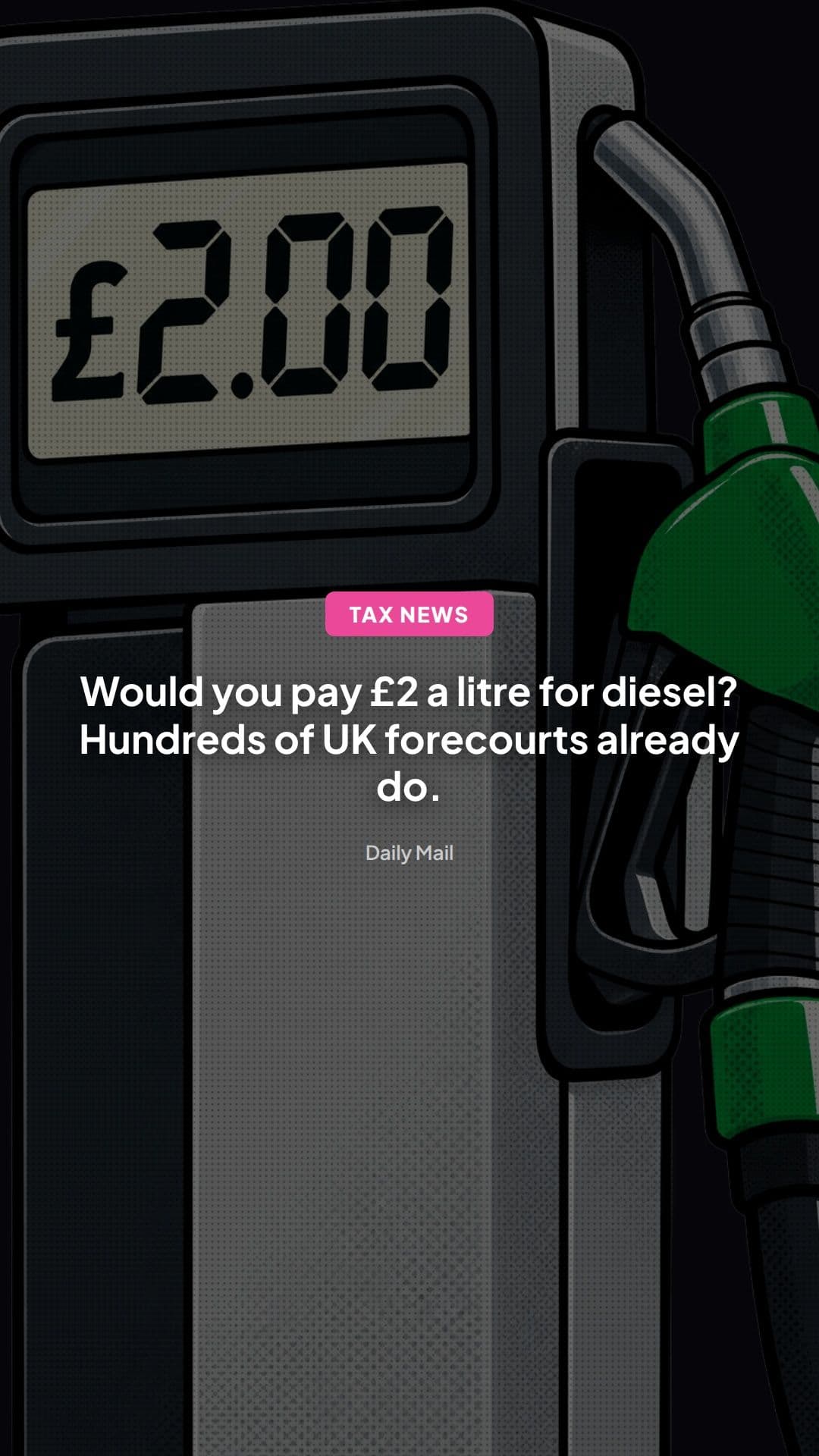
Hundreds Of Forecourts Now Charging £2 A Litre For Diesel: What's Really Driving The Price Surge
Fill up a family diesel car with a 55-litre tank at £2 a litre and you're looking at £110 just to get moving. That's not a hypothetical scenario anymore. It's the reality facing drivers at hundreds of forecourts across the UK right now, according to fresh analysis reported by the Daily Mail. For many households already squeezed by mortgage rates, energy bills and rising food costs, the sight of diesel prices ticking past the £2 mark feels like a psychological line has been crossed, and it's reigniting a debate about how much of what we pay at the pump is actually fuel, and how much is tax.
What The Analysis Found
The Daily Mail's review of forecourt pricing identified hundreds of individual sites where diesel has climbed to or beyond £2 per litre. This isn't a story about a handful of remote petrol stations charging opportunistic prices on quiet country roads. It reflects a broader pattern across the network, adding weight to concerns that fuel costs are becoming a structural problem for household budgets rather than a temporary blip.
Diesel has historically traded close to, and sometimes below, petrol prices, but the two fuels don't always move in lockstep. Diesel is more exposed to international demand swings, refining capacity constraints, and geopolitical shocks affecting supply chains, which means it can spike faster and stay elevated longer than unleaded. When wholesale costs rise, retailers pass them on, and the gap between what a fuel actually costs to produce and refine, and what drivers pay at the pump, is where things get politically sensitive.
Why This Matters Beyond The Numbers
Fuel isn't a discretionary purchase for most people. Tradespeople, delivery drivers, commuters without viable public transport alternatives, and rural households all rely on diesel and petrol simply to get through daily life. When forecourt prices climb towards £2 a litre, the impact isn't evenly spread. Rural and semi-rural areas, where public transport is patchier and journeys tend to be longer, often feel it hardest. Small businesses running vans and diesel fleets face rising overheads that eventually filter through to the cost of goods and services for everyone else.
There's also a wider economic ripple effect. Fuel costs feed directly into inflation figures because haulage and logistics costs are baked into the price of almost everything on supermarket shelves. A sustained period of £2-a-litre diesel doesn't just hit drivers at the pump, it quietly pushes up the cost of living more broadly.
This is precisely why fuel pricing keeps landing back on the government's desk. Fuel duty, currently frozen, has been a political football for over a decade, and pressure is mounting again for ministers to explain what, if anything, they intend to do as prices creep upward.
The Legal And Tax Angle
To understand why UK pump prices are so sensitive to global shocks, it helps to understand the layers of tax involved. Every litre of fuel sold in the UK carries fuel duty, a fixed levy charged per litre regardless of the underlying wholesale cost. On top of that, VAT at 20% is charged not just on the fuel itself but on the duty too, meaning drivers are effectively taxed on a tax. Fuel duty has been frozen since 2011, with a temporary 5p cut introduced in March 2022 that has been repeatedly extended rather than reversed, largely because scrapping it would be politically unpalatable given the impact on household budgets.
When wholesale diesel prices rise sharply, as they can during periods of geopolitical instability affecting oil supply, the fixed nature of duty means the tax burden as a proportion of the total price actually shrinks, even though the government still collects roughly the same amount per litre. Critics argue this shows fuel duty reform is overdue. Others point out that any change risks either starving the Treasury of a major revenue stream or failing to meaningfully cut prices at the pump, since retailer margins and wholesale costs play just as large a role.
There is also a regulatory dimension worth knowing about. Fuel retailers are required under general consumer protection law, including the Price Marking Order, to display prices clearly and accurately, so drivers can see what they're being charged before committing to a purchase. Separately, the Competition and Markets Authority has previously investigated the road fuel market and raised concerns about a lack of transparency in how prices are set, which contributed to the development of a fuel price transparency scheme requiring larger retailers to share near-live pricing data. The aim is to let drivers and price comparison tools see, in close to real time, where the cheapest fuel is available locally, rather than relying on guesswork or brand loyalty.
None of this amounts to price controls. The UK does not cap what forecourts can charge, and retailers remain free to set their own prices based on wholesale costs, location, competition, and operating expenses. What the law does insist on is honesty and transparency in how those prices are communicated, and fair competition between retailers rather than coordinated price-fixing, which would fall foul of competition law.
What Drivers Should Know And Do
If you're feeling the pinch at the pump, there are practical steps that can genuinely soften the blow, even if they won't solve the underlying tax and market pressures.
Use price comparison tools before you fill up. With the fuel price transparency initiative now bedding in, apps and websites that aggregate near-live forecourt prices have become far more reliable than they once were. A five-minute check before a long journey can reveal significant differences between nearby stations, sometimes several pence per litre, which adds up quickly on a big tank.
Avoid motorway service stations for routine fills. Prices at service areas are almost always higher than supermarket forecourts or high street stations just a short distance off the motorway, reflecting higher operating costs and a captive audience. Planning ahead to fill up before joining a motorway, or exiting briefly, can save a meaningful amount over a year of regular driving.
Consider supermarket loyalty schemes. Many supermarket forecourts offer small per-litre discounts tied to loyalty cards or minimum in-store spend. These aren't game-changing, but combined with generally competitive base pricing, supermarket fuel is often among the cheapest available.
Review your driving habits. Harsh acceleration, high motorway speeds, underinflated tyres and unnecessary idling all increase fuel consumption. Small adjustments, such as maintaining steady speeds and keeping tyres properly inflated, can improve fuel economy by a noticeable margin over time, effectively reducing the number of fill-ups needed.
Keep an eye on regional variation. Fuel prices are not uniform across the UK. Rural areas, particularly in parts of Scotland, Wales, and the South West, have historically recorded higher average prices than major cities, partly due to distribution costs and reduced competition between local retailers. If you're planning a longer trip, filling up before entering a known high-price region can make sense.
For those who genuinely cannot avoid heavy fuel use, whether through work, caring responsibilities, or living in an area with poor transport links, it's worth keeping records of fuel spending, since business mileage claims and certain benefit calculations do take fuel costs into account, and it's sensible to check current HMRC advisory fuel rates if you're claiming mileage through an employer.
Looking Ahead
The reappearance of £2-a-litre diesel headlines is a reminder that fuel pricing remains one of the most politically charged corners of UK motoring. With fuel duty frozen for well over a decade and successive chancellors reluctant to let it rise for fear of a public backlash, the structural tension between tax revenue, environmental policy, and household affordability isn't going away.
Expect continued scrutiny of forecourt pricing transparency, further pressure on the government to clarify its long-term fuel duty position, and ongoing debate about whether the current freeze is sustainable given wider fiscal pressures. For now, drivers are left doing what they've always done during periods of high fuel costs: shopping around, adjusting habits, and hoping the next budget doesn't bring further bad news at the pump. Keeping informed through official government guidance and reputable fuel price monitoring services remains the most reliable way to stay ahead of a market that can shift quickly and without much warning.
Written by
The Parking Ticket Pal Editorial Team
Source-checked parking guidance
Ready to Challenge Your Ticket?
Let our AI analyse your PCN and generate a professional appeal letter in minutes.
Start Free Appeal