£1m AI Speed Cameras: What UK Drivers Need to Know
A dangerous UK road is receiving £1m for fixed and average-speed cameras, plus AI monitoring. Learn how this enforcement upgrade could affect local drivers.

The Parking Ticket Pal Editorial Team
19 August 2026
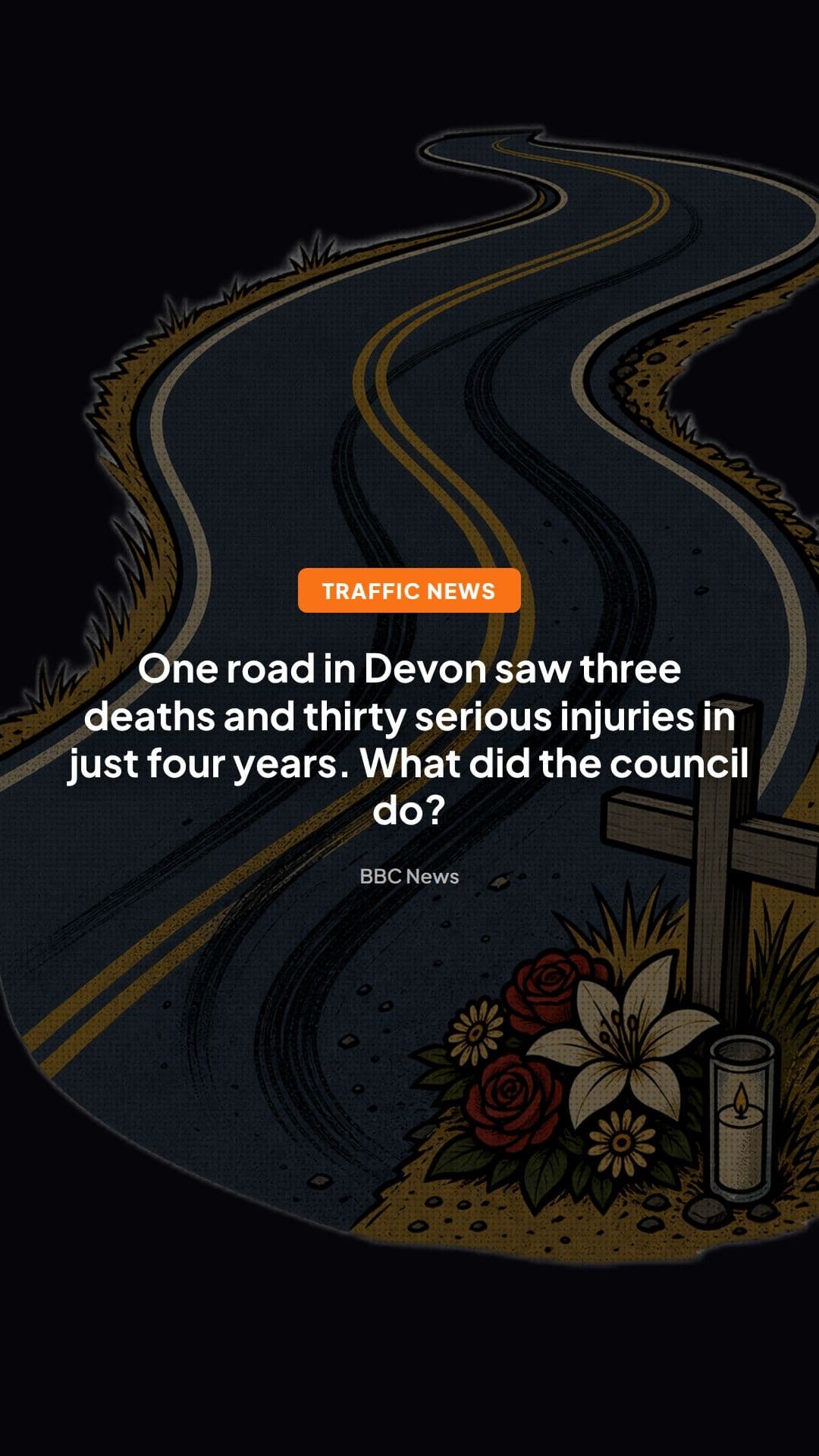
Speed Cameras and AI: Why One "Dangerous Road" Is Getting £1m to Fight Bad Driving
Picture a stretch of road where locals dread the school run, where lorries and cars regularly clip verges on tight bends, and where "another crash on that bit" has become a grim local catchphrase. Now imagine that road suddenly attracting serious money, not for resurfacing or new barriers, but for a network of cameras and artificial intelligence designed to watch every vehicle that passes through.
That is exactly what is happening, according to a BBC News report confirming that authorities are pouring £1m into fixed and average-speed cameras, backed by AI monitoring, to crack down on unsafe driving on a road officially flagged as dangerous. It is a small, specific story on the surface, but it points to a much bigger shift in how Britain polices its riskiest routes, and it raises real questions for ordinary drivers about what these systems can see, how they work, and what happens if you get caught out.
What's Actually Happening
The BBC's reporting is deliberately narrow: a dangerous road is getting fixed cameras, average-speed cameras, and AI monitoring, funded to the tune of £1m. That combination is worth unpacking, because each element does a slightly different job.
Fixed cameras are the traditional yellow boxes most drivers instantly recognise. They catch a vehicle's speed at a single point in the road, using radar or laser detection linked to a camera that photographs the number plate.
Average-speed cameras, often known by the brand name SPECS, work differently. Rather than measuring speed at one spot, they track a vehicle between two or more points using automatic number plate recognition (ANPR) and calculate its average speed over that distance. These systems are particularly effective on longer stretches of dangerous road because a driver cannot simply brake hard for one camera and then accelerate away again. They have to maintain a legal speed the whole way through.
AI monitoring is the newer and more interesting piece of the puzzle. Increasingly, UK roads are being fitted with camera systems that use computer vision and machine learning to spot far more than just excess speed. Depending on how they are configured, these systems can flag drivers using mobile phones, failing to wear seatbelts, tailgating the vehicle in front, or driving without due care. Some trial schemes elsewhere in the country have already demonstrated this capability, and the direction of travel is clear: cameras are moving from single-purpose speed detectors to multi-purpose behaviour monitors.
Put together, a £1m investment like this suggests a serious, sustained enforcement effort rather than a token gesture, likely combining physical camera housings, back-office ANPR infrastructure, and the software needed to process and act on AI-flagged incidents.
Why This Matters Beyond One Road
It would be easy to read this as a one-off local story, but it fits a much wider pattern. Roads policing budgets have been squeezed for years, and traffic officers cannot be everywhere at once. Technology has increasingly stepped in to fill that gap, and funding bodies, whether local councils, police and crime commissioners, or national road safety pots, are clearly willing to spend serious money where a road's casualty record justifies it.
This also reflects a broader move away from "dumb" enforcement towards smarter, data-driven systems. A basic speed camera only ever tells you one thing: was this vehicle over the limit at this exact point? AI-enhanced systems can build a much richer picture of driving behaviour along an entire route, which in theory allows authorities to target the specific dangerous behaviours that are actually causing crashes on that road, rather than just speed in isolation.
For residents near roads like this, the appeal is obvious. Dangerous roads tend to have a grim, well-documented history of serious or fatal collisions, and investment in enforcement is often a direct response to local campaigning and coroner recommendations. For drivers more generally, though, it is a signal that the era of "the cameras only catch speeding" is ending. If similar AI-monitoring schemes prove effective, expect to see them rolled out well beyond this single road.
The Legal Angle: What the Rules Actually Say
Speed camera enforcement in the UK sits on a well-established legal footing, but AI-enhanced monitoring pushes into newer territory that drivers should understand.
Speeding enforcement itself is governed primarily by the Road Traffic Regulation Act 1984, with camera devices required to meet Home Office Type Approval before their evidence can be used in court. For a driver caught by camera, the police must generally send a Notice of Intended Prosecution (NIP) within 14 days of the offence, giving the registered keeper the chance to identify who was driving. Penalties typically start at three penalty points and a fixed penalty fine, though depending on how far over the limit you were travelling, prosecutors can escalate to a court summons with higher fines and more points, or even disqualification in serious cases. Many first-time, lower-level offenders are instead offered a speed awareness course as an alternative to points, though eligibility depends on force policy and how recently you last attended one.
Average-speed cameras raise their own quirks. Because they calculate speed over a distance rather than a single point, there is sometimes confusion among drivers about exactly where enforcement begins and ends. The legal position is that as long as the camera system is properly calibrated, Type Approved, and clearly signed in line with the Traffic Signs Regulations and General Directions, evidence from these systems is treated the same as any fixed camera in court.
AI monitoring is where things get more legally interesting. Systems that detect phone use, seatbelt non-compliance, or tailgating raise fresh questions around data protection and proportionality. The Information Commissioner's Office has issued guidance on the use of ANPR and surveillance technology, and any AI system processing footage of drivers and passengers needs to operate within UK GDPR principles, including clear justification for what data is captured, how long it is retained, and who can access it. In practice, most AI-flagged incidents are reviewed by a human officer before any enforcement action is taken, which mirrors the approach used elsewhere with automated systems.
If you are ever unsure whether a specific penalty notice arising from one of these systems is valid, it is always worth having it checked properly rather than assuming the technology is infallible. Camera evidence can be challenged where there are errors in signage, calibration, or notice timing, much as it can with any other automated enforcement.
What Drivers Should Actually Do
None of this needs to be intimidating if you approach it sensibly.
- Assume any dangerous road is being watched more closely than it looks. Investment like this often comes with little visible warning beyond standard camera signage, so treat known accident blackspots with extra caution regardless of whether you can spot the hardware.
- Remember AI cameras may be watching more than your speedometer. Phone use, seatbelt compliance, and safe following distances are increasingly fair game, not just how fast you are going.
- Don't panic if you receive a Notice of Intended Prosecution. Respond within the legal timeframe, check the details carefully, and consider whether a speed awareness course might be offered as an alternative to points.
- Keep an eye on average-speed camera zones specifically. Because these systems track you over distance, there is no benefit to slowing for a sign and speeding up again. Maintain a consistent, legal speed throughout the zone.
- Challenge genuine errors, but don't assume every ticket is wrong. If you believe a notice is inaccurate, whether due to signage problems, vehicle identification issues, or a calibration question, there are formal routes to query it, but these should be used where you have a real basis for doing so rather than as a default response.
Readers wanting a deeper dive into how AI-powered enforcement is spreading across the country more broadly may find it useful to look at how similar technology is already being trialled and expanded in other parts of the UK, including discussions around wider rollout calls from road safety charities and the growth of AI-enabled mobile camera units in major cities.
Looking Ahead
This £1m scheme is unlikely to be the last of its kind. As roads policing resources remain stretched and road safety campaigners continue pushing for tougher enforcement on Britain's worst-performing routes, AI-enhanced camera networks look set to become a standard feature of dangerous road upgrades rather than an experimental add-on.
For drivers, the practical takeaway is simple even if the technology behind it isn't: driving properly, at a sensible speed, without distraction, and with adequate following distance, is quickly becoming non-negotiable on the roads authorities have identified as highest risk. The cameras are getting smarter. The margin for careless driving is shrinking with them.
Written by
The Parking Ticket Pal Editorial Team
Source-checked parking guidance
Ready to Challenge Your Ticket?
Let our AI analyse your PCN and generate a professional appeal letter in minutes.
Start Free Appeal