17 City Car Parks to Introduce New Parking Charges
Drivers will lose free two-hour parking at 17 city car parks under revised council tariffs. Find out what is changing, who is affected and how to prepare.

Kwame Asante
25 July 2026
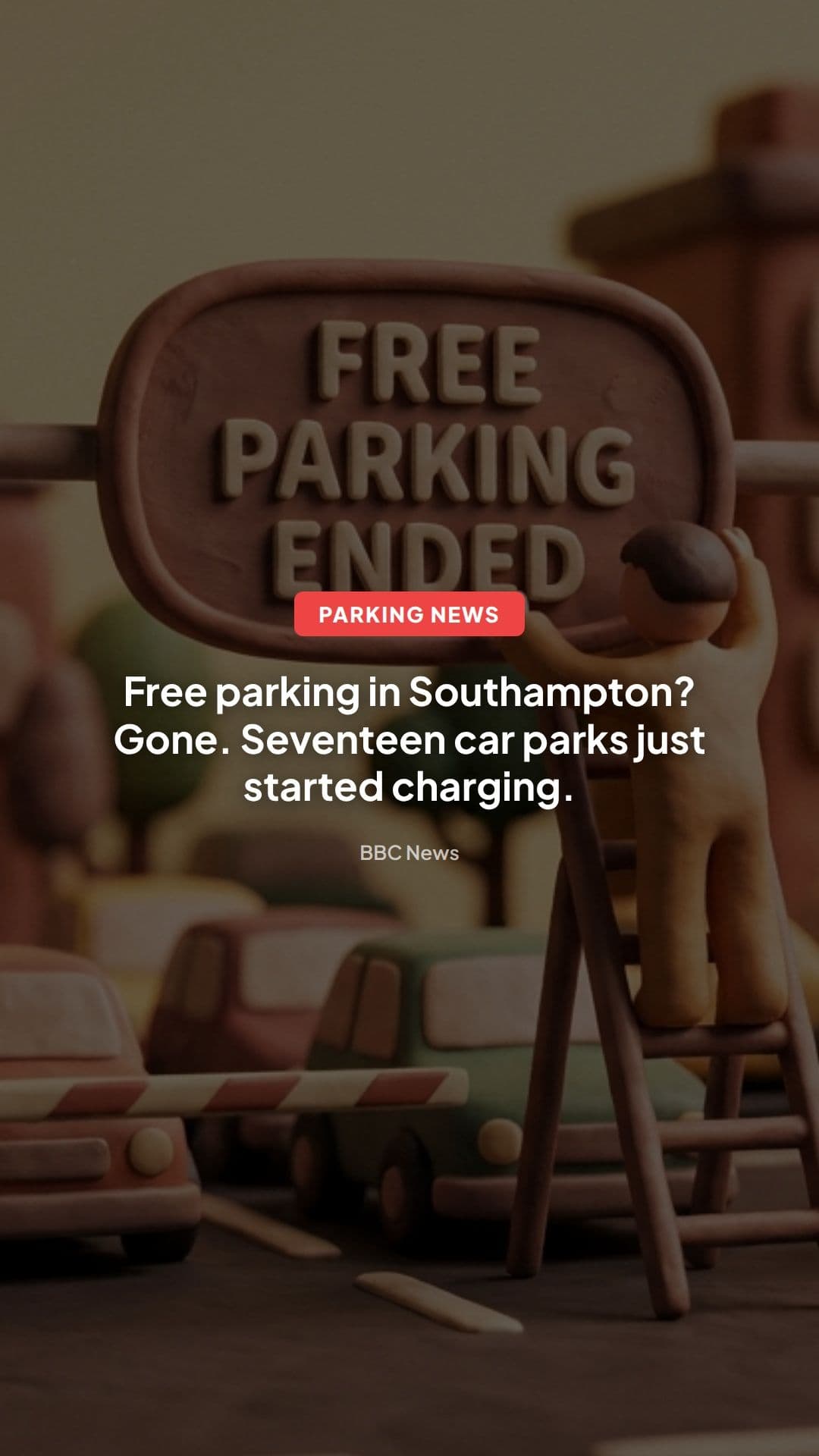
New Charges in 17 City Car Parks: What the End of Free Parking Really Means
For years, a quiet perk existed for anyone popping into town for a quick errand: park for free, so long as you were back within two hours. That small courtesy is about to disappear. According to a BBC News report, new charges are set to be introduced across 17 city car parks, scrapping the previously free two-hour window as part of a broader shake-up of local parking tariffs.
It sounds like a minor administrative tweak. It isn't. For thousands of regular drivers, this is the difference between a free trip to the shops and a daily cost that adds up fast, and it's a pattern being repeated in towns and cities across the country.
What Actually Happened
The change, confirmed to go ahead despite what was likely local pushback, will see charges applied to 17 car parks that previously offered a free two-hour grace period. This wasn't an isolated decision. The BBC frames it as part of a "wider overhaul of local parking tariffs", suggesting the council involved has reviewed its entire pricing structure rather than tweaking a single site.
This matters because it tells us something important: this isn't a one-off revenue grab on a handful of car parks. It's a strategic recalibration of how the local authority prices parking across the board, likely balancing several competing pressures at once, budget shortfalls, town centre footfall concerns, and the ongoing debate about how car parks should be used and funded.
For drivers who've built the free two-hour window into their daily or weekly routine, whether that's the school run, a gym visit, or a lunchtime dash into the office car park, the change means recalculating costs that used to be zero.
Why This Matters Beyond One City
This story is a symptom of a much bigger trend. Local authorities across the UK have been steadily reviewing, and in most cases increasing, their parking tariffs. Councils operate car parks as a mix of public service and revenue stream, and with local government budgets under sustained pressure, off-street parking has become an increasingly attractive lever to pull.
There's a genuine tension here. On one hand, councils argue that parking charges fund essential services, maintenance of the car parks themselves, road repairs, and wider transport initiatives. On the other, retailers and business groups in town and city centres often warn that removing free parking periods drives shoppers towards out-of-town retail parks or online spending instead, further hollowing out high streets that are already struggling.
There's also a fairness question buried in here. A free two-hour period disproportionately benefits people who make short, frequent trips, which tends to include parents, older residents, and people without workplace parking. Removing it changes the economics of visiting a town centre in a way that isn't always immediately obvious until the first invoice or Penalty Charge Notice lands.
Councils considering these changes typically point to the need to keep pace with rising costs and to encourage turnover of spaces so that car parks don't fill up with all-day parkers taking advantage of free periods. Whether that logic holds in practice varies enormously from location to location.
The Legal Angle: What Powers Do Councils Actually Have?
Local authorities don't set parking charges on a whim. Off-street car parks run by councils are typically governed by the Road Traffic Regulation Act 1984, alongside powers under the Local Government (Miscellaneous Provisions) Act 1976 and, in many cases, general well-being powers under the Local Government Act 2000. These give councils fairly wide discretion to set, vary, and enforce their own tariffs, provided the process is carried out properly.
That process usually involves a formal decision by the council (often through a cabinet or committee report), and in many cases a public consultation exercise, though the legal requirement to consult and the weight given to consultation responses varies depending on the specific power being used and the council's own constitution. This is worth understanding because it's the basis on which residents sometimes challenge these decisions.
If a council fails to follow its own proper decision-making process, or acts in a way that's so unreasonable no rational authority could have reached that conclusion, a legal challenge by way of judicial review is theoretically possible. In practice, these challenges are rare, expensive, and difficult to win purely on the basis of a tariff increase, courts are generally reluctant to interfere with councils' discretion over fee-setting unless there's a clear procedural failure.
Enforcement of these car parks typically falls under civil parking enforcement, meaning failure to pay results in a Penalty Charge Notice (PCN) rather than a criminal fixed penalty. This gives drivers statutory rights to challenge a PCN through informal representations, formal representations, and ultimately an independent tribunal, usually the Traffic Penalty Tribunal in England and Wales outside London, or the Environment and Traffic Adjudicators for London boroughs.
What Drivers Should Know
If you regularly use any of the affected car parks, or suspect your own local council might be reviewing its tariffs, there are some practical steps worth taking:
Check the signage every single visit. Tariff boards at car park entrances are legally significant. If charges have changed, the signage must reflect this clearly before enforcement action can reasonably be taken. Don't rely on memory or previous visits, always look for updated boards.
Keep proof of payment. Whether you're using a pay-and-display machine, a cashless parking app, or a barrier-entry ticket, retain your receipt or app confirmation until you're confident no dispute will arise. This is especially important with app-based payments, where technical glitches can occasionally cause legitimate payments not to register.
Understand the new tariff structure fully. A "wider overhaul" often means more than removing a free period, it can involve changes to hourly rates, maximum stay times, and even different pricing depending on time of day. Read the full schedule rather than assuming it's simply the old tariff plus a small charge for the first two hours.
Factor the cost into regular routines. If you've relied on free short-stay parking for regular trips, it's worth comparing the new charges against alternatives, nearby free parking, public transport, or season tickets or multi-use passes some councils offer for frequent users.
Know your rights if you receive a PCN. Receiving a penalty notice isn't the end of the story. You're entitled to make representations, and if those are rejected, to escalate to an independent tribunal. Genuine payment or signage errors are common grounds for successful challenges, so it's always worth reviewing the specifics of your case rather than simply paying up out of frustration.
Looking Ahead
This change to 17 car parks is unlikely to be the last such announcement this year. With local government finances remaining tight and parking revenue an easy target for balancing budgets, expect more councils to follow suit, either by trimming free periods, raising hourly rates, or restructuring tariffs entirely under the banner of a "wider review".
For drivers, the sensible response isn't panic but adaptation. Build in the habit of checking signage and tariffs every time you park, rather than assuming yesterday's rules still apply. Councils are required to give proper notice and follow lawful decision-making processes, but they aren't required to keep prices static forever, and increasingly, they won't.
The broader debate, whether removing free parking periods actually helps or harms town centres, will likely rumble on well beyond this particular announcement. But for the drivers who use these 17 car parks day to day, the practical reality is simpler: what used to be free is about to cost money, and it pays to know exactly how much, and when.
Written by
Kwame Asante
Community Rights Advisor
Ready to Challenge Your Ticket?
Let our AI analyse your PCN and generate a professional appeal letter in minutes.
Start Free Appeal